Ice cream social day


Today was ice cream social day! Been a while since I had ice cream and it was great to eat it outside in the sunshine.
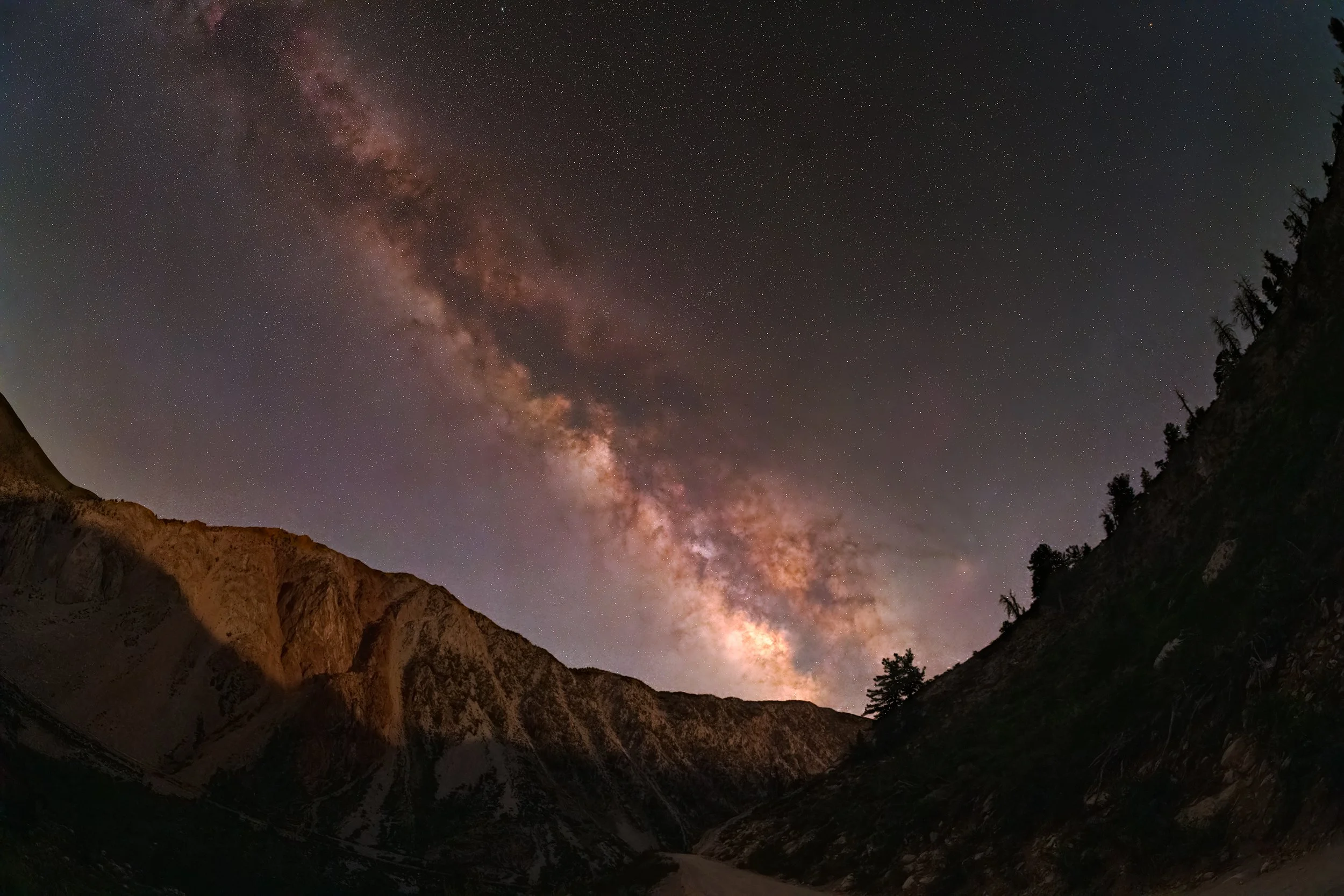
I hope you can tell by the photo of the scope area above that the sky is currently looking extremely nice and we are hopeful for a killer night tonight.
Today was very productive on the multimedia front as I conducted two additional astrophoto interviews including al nagler. I can't wait to work on this project.
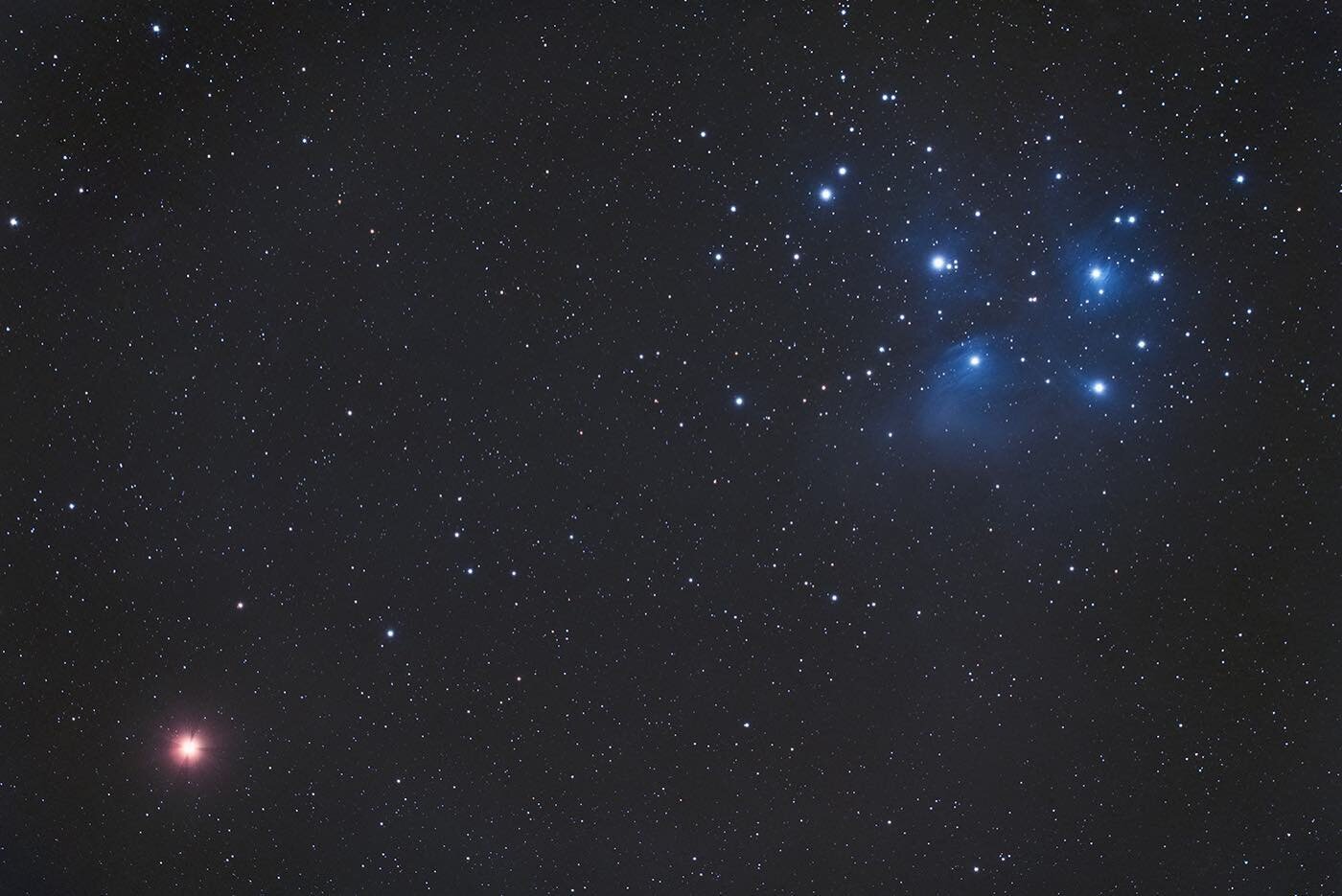
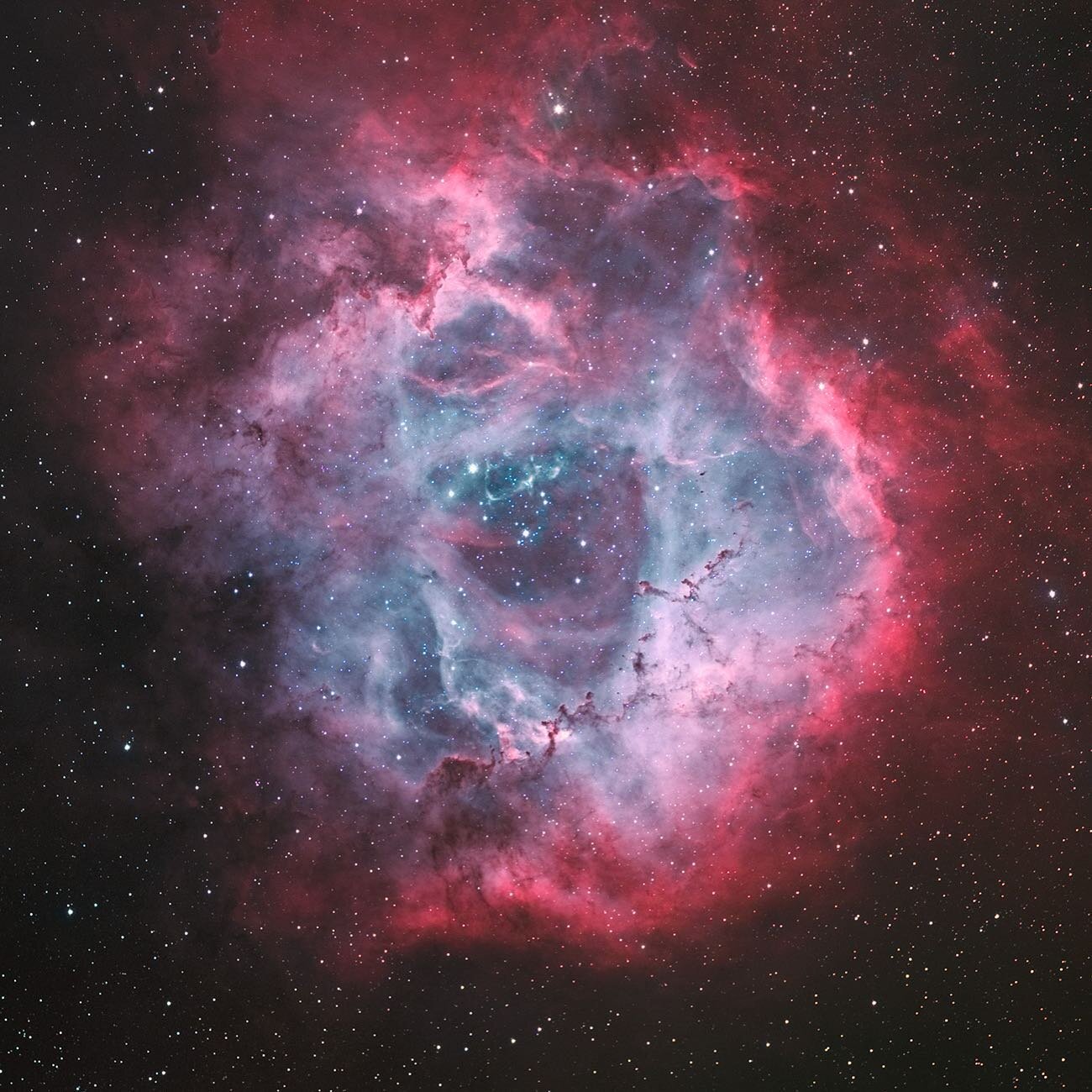
Tonight's targets are the witchead, rosette, and maybe eta carinae. Much more to come so stay tuned.
An industry icon: Mr. Al Nagler

The astronomical marketplace is certainly a small one compared to other similar discretionary spending hobbies. But within all industries there are icons and founder/owner/optical designer of Televue optics, Al Nagler is one of those.
Televue is known for their excellent portable refractors and wide field eyepieces. Mr. Nagler is possibly the industry expert on eyepiece design. His eyepieces have taken astronomers from a very restricted view through the eyepiece to one that resembles a walk in space. The innovative eyepieces he and his team have designed have revolutionized the visual market and command a premium price.
Mr. Nagler is not only an icon for the amateur astronomer, but he is also an ambassador for the hobby. He is most kind with his time and knowledge to all who seek it. I had a wonderful conversation with him on Monday about his newly tweaked tv127 shown in the photo. The optics are largely unchanged at 660mm focal length, but he has extended the tube to achieve better scope balance as well as added a 10:1 microfocuser to improve fine focus performance. The views through the binoviewer in daylight were very enjoyable. The 127 would certainly make a very effective astrophotography scope being a native f5.2. Pricing for the 127 is over $6000.
Mr. Nagler also educated me on the importance of knowing the field stop for a given eyepiece so that one can make an accurate comparison from one eyepiece to the next on effective field of view. The calculations are available on the Televue website and Televue provides the field stop data for all of their eyepieces. The field stop calculation may also be utilized in photography for calculating the field of view for any given focal length lens and chip combination. Since I am writing this blog mobile while on the trip, I cannot provide links and data as I would like.
Mr. Nagler is an icon in the amateur astronomer industry. His telescope and eyepieces have enhanced the visual astronomer's as well as astrophotgrapher's experience immensely. If you ever have an opportunity to have conversation with him I highly recommend that you do so; I think you might just learn something.
Stay tuned for more info and images from wsp 2010.
Hello from the Florida keys
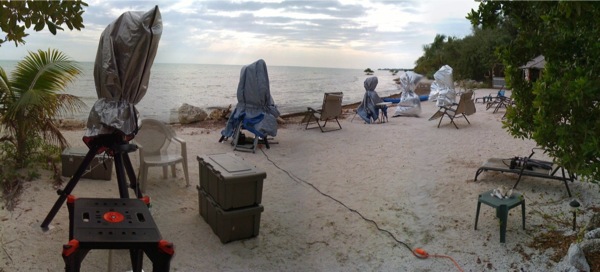

The winter star party is an annual event held around new moon in February each year. Approximately 600 amateur astronomers leave the cold confines of the north and pack their astro gear for a one week escape to the warm Florida sunshine.
I have joined a small group of astronomers in staying just down the road from the wsp at bararnacles bed and breakfast. After 3 nights I can say that I am very happy with the astro-friendly atmosphere
I have been working very hard at the party speaking with vendors and beginning video segments of an upcoming video presentation I am producing.
Please check back tomorrow with more information from wsp 2010.
Scout out shuttle launch.
In Port Orange FL visiting relatives prior to the final journey to the keys tomorrow. So today we scouted out a photographic location for the shuttle launch at 4:30 in the morning. This will be the final night time launch of the shuttle program. Modern technology proved invaluable today as the satellite imagery via the iPhone assisted greatly in our efforts to find a location that meets our composition needs. We are excited and I hope all comes off as planned. I will report back tomorrow on our success and maybe failures.
4 weeks and counting...
 As most of you in the U.S. know, this winter has already been brutal. So today begins my 4 week countdown to the Winter Star Party near Marathon, FL. I plan on blogging daily from WSP and hope to incorporate video for those of you just finishing your snow shoveling:-) The star party is really a wonderful break from the winter climate of the mid-Atlantic area. I spent some time today working on compositions for the week and hope to bring back some wonderful data. I also have plans for documentary work that I hope to share on the site sometime down the road. So I post an image today taken from the 2009 WSP as I longingly look forward to the 2010 event. Stay tuned for much more to come...
The Herschel 400 Astronomical League Project is underway
It’s not too late to join. We are about 30 objects into the Herschel 400. Hope to get another session in soon. Please subscribe to the YouTube channel so you get notifications on LIVE STREAMS.
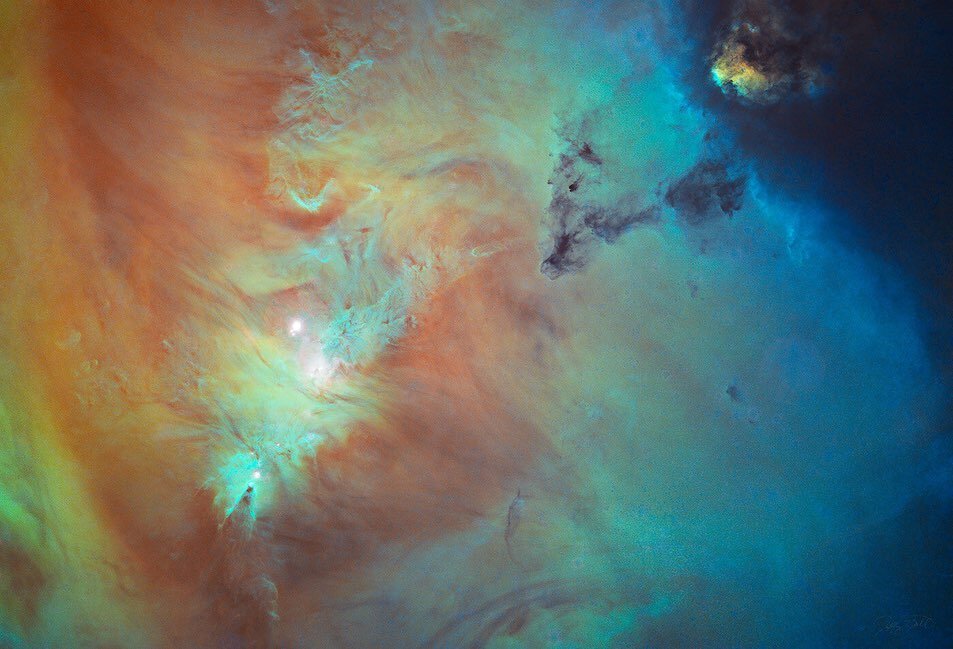
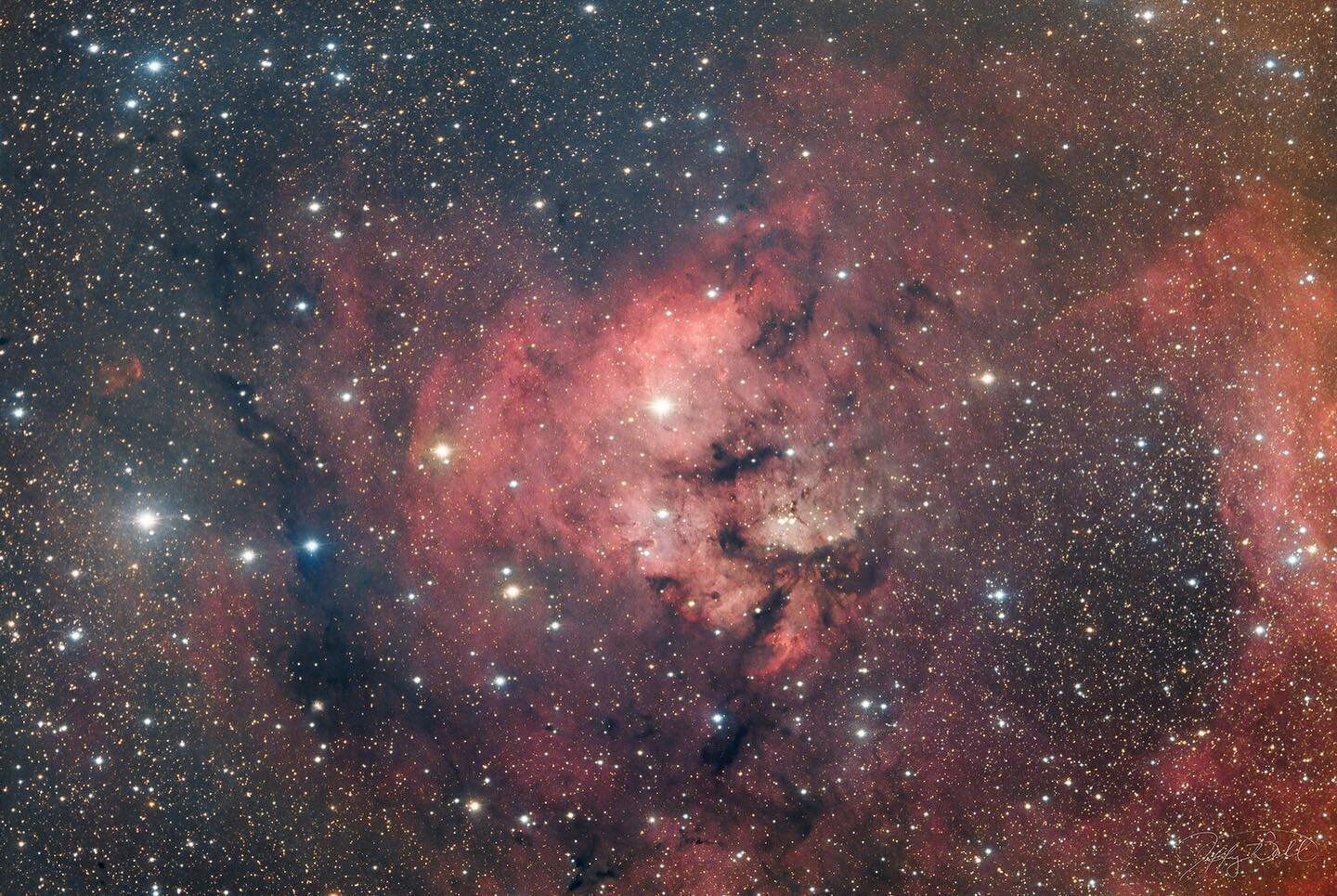
Angels in Monoceros: The Monoceros M2 Complex
The Monoceros R2 molecular complex (often shortened to Mon R2) is a massive giant molecular cloud and one of the nearest active star-forming regions to Earth. It's a dynamic stellar nursery embedded in dense gas and dust, where new stars—particularly massive ones—are actively being born.
Key Facts
Location: Southwestern part of the constellation Monoceros (the Unicorn), near the border with Orion. It's part of the larger Orion-Monoceros cloud complex.
Distance: Approximately 2,400–2,700 light-years (around 830 parsecs).
Size and Structure: The main dense core is relatively compact (a few light-years across), but the overall molecular cloud and associated nebulae span a wide area—reflection nebulae alone stretch up to about 2° in the sky. It's situated well below the galactic plane, which makes it stand out in certain observations.
Age and Activity: Star formation here began roughly 6–10 million years ago. It hosts an OB association (young, hot, massive B- and A-type stars) that illuminates surrounding dust, creating prominent reflection nebulae with bluish hues. There's also significant emission from ionized gas (red glows) and dark nebulae that appear as shadowy silhouettes blocking background light.
Notable Features:
A central hub of massive star formation with embedded clusters, molecular outflows, and HII regions.
Infrared observations (like those from VISTA or 2MASS) penetrate the dust to reveal hidden young stars and protoplanetary disks.
It's a key site for studying early stellar evolution, variability in young stellar objects (YSOs), and the interplay between massive stars and their natal clouds.
The most famous and photogenic part of Mon R2 is the region around NGC 2170 (the Angel Nebula), a striking reflection nebula with wing-like dust structures, glowing blue from scattered starlight, mixed with red emission and dark lanes. Wider views of the complex reveal a richer tapestry of colorful gas, dust filaments, and star clusters.
Credit: GROK 2/28/26
Click on image for larger view.
New Astro Camera: OM-3
Join me for a LIVE conversation about this new astro camera coming to the market. Is this the best option for you? How does it compare to other options? https://www.earthandskyphoto.com Correction: when discussing Bulb mode with Canon, I incorrectly said it had a limit of 30”. I meant to say manual exposure has a max of 30”. In bulb, you need to use a remote control or app for exposure time control. The problem is you can’t set exposure time for stills in the camera menu. I was made aware that Olympus no longer owns the OM system. It is owned by Japanese industrial Partners, a private equity firm. For content on the OM-3 for astrophotography, please see Ben Chapell’s Narrow Band channel. https://youtube.com/@TheNarrowbandChannel?si=GcWY-BM9skG9LPhY
Jeff's Blog
Join me on photography journeys from desert landscapes to deep sky wonders.