Florida or bust!
Plans have been finalized for a photographic journey to southern Florida in February. The itinerary is full:
- Visit an Ansel Adams/Clyde Butcher exhibit
- Visit the Clyde Butcher Big Cypress Gallery
- Photograph in Big Cyprus Nature Preserve and the Loxahatchee River via canoe
- Scout art shows for future participation
Mastering Landscape Photography by Alain Briot now available

A collection of writings by Alain Briot on "Mastering Landscape Photography" is now available directly from Alain with a very special offer or from on-line booksellers. I highly recommend checking out Alain's very special offer which includes a companion print at a very nice price. This book will serve as a central repository for Alain's writings which have greatly accelerated my learnings on fine art landscape photography and I am confident it will help you reach your photographic goals as well. Highly recommended!
Alain Briot Interview Part 1
Alain Briot is one of the most accomplished landscape photographers in the world today and is also one of the finest contemporary writers and educators on the subject of fine art landscape photography. I was prividged to interview Alain after attending my 6th workshop with him, the Fine Art Printing Summit in Page, AZ, via the phone. In our first installment Alain discusses his motivations for teaching photography. The interview is available via an .m4a file which is playable in iTunes and can be found by subscribing to my Podcast.
New for 2007
The What's New content has now gone to an RSS feed via Blogger and Feedburner. Now you can stay up on the latest news from Jeff Ball Photography by subscribing to the feed. The January newsletter was mailed to subscribers yesterday with some very important information. The January Print of the Month now utilizes a special promotion code that is available to newsletter subscribers in order to receive an additional discount on the Print of the Month pricing. Sign up for the newsletter today by visiting earthandskyphoto.com today.
 The January Print of the Month is titled "wo-chi-ha-yeli-kahn" which in Navajo can be translated to be "light up dawn." I think when you see the image you will understand why I chose that title. Please visit the image at the January Print of the Month webpage.
The Herschel 400 Astronomical League Project is underway
It’s not too late to join. We are about 30 objects into the Herschel 400. Hope to get another session in soon. Please subscribe to the YouTube channel so you get notifications on LIVE STREAMS.
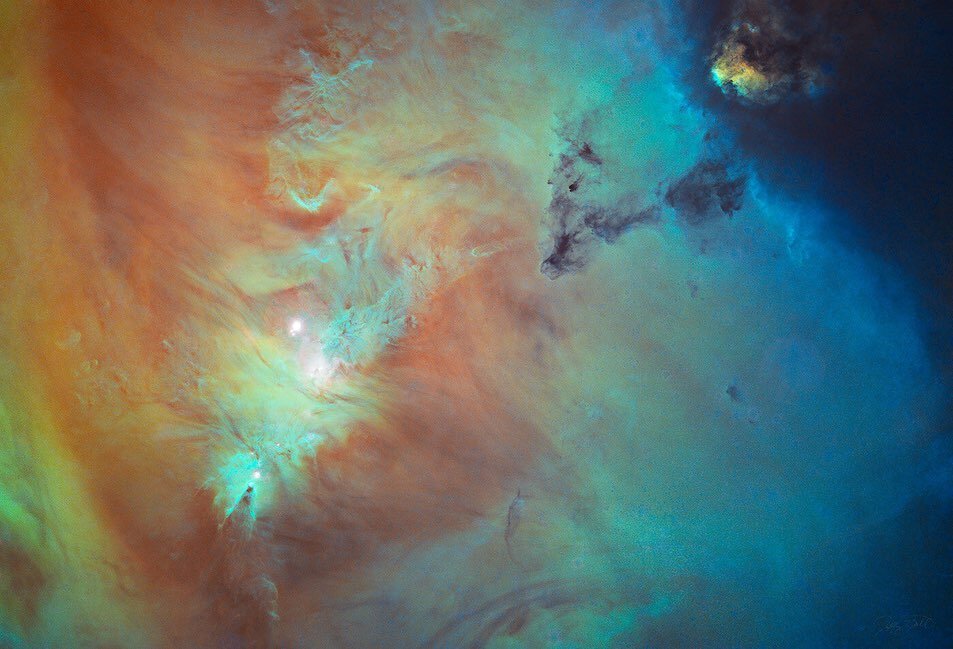
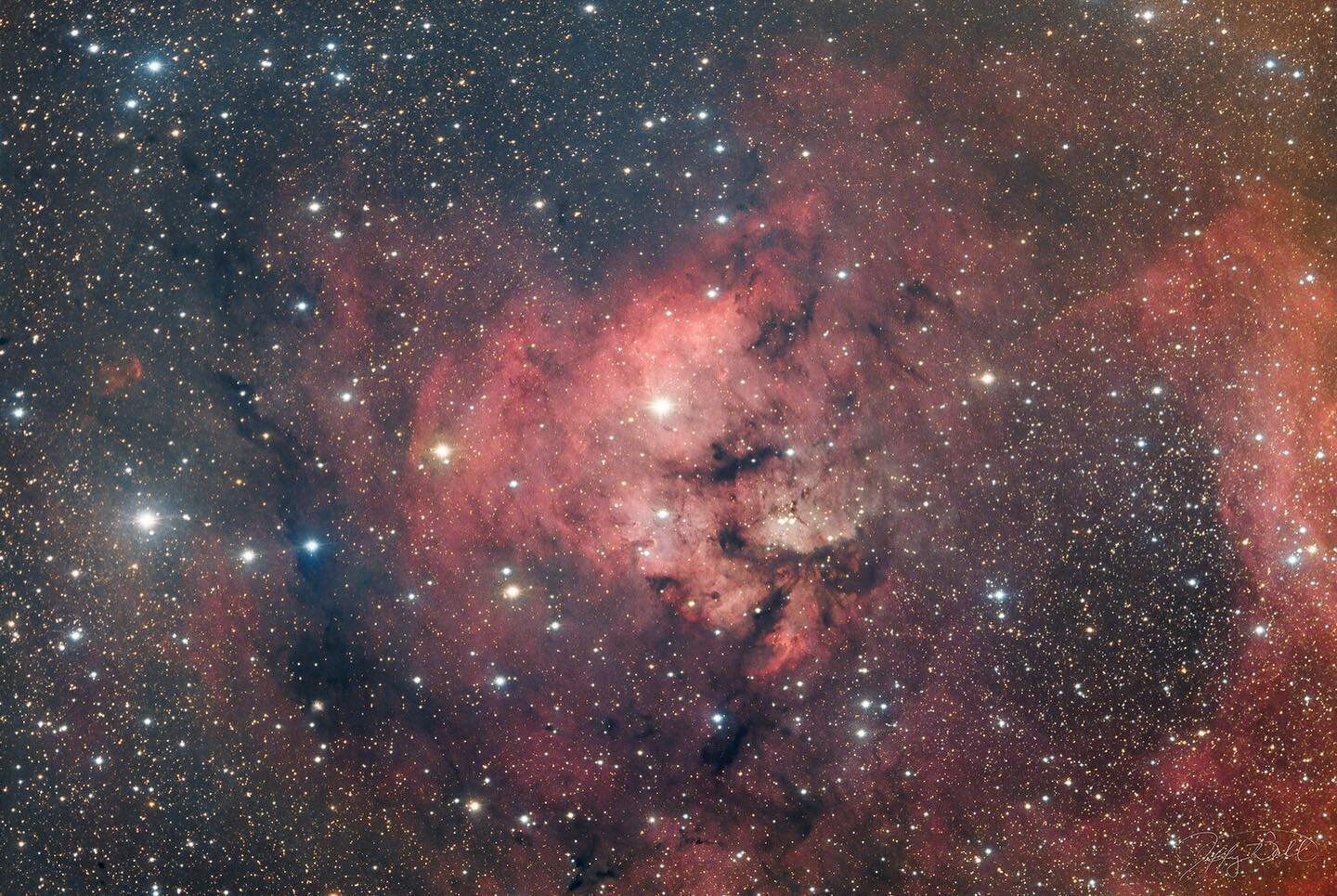
Angels in Monoceros: The Monoceros M2 Complex
The Monoceros R2 molecular complex (often shortened to Mon R2) is a massive giant molecular cloud and one of the nearest active star-forming regions to Earth. It's a dynamic stellar nursery embedded in dense gas and dust, where new stars—particularly massive ones—are actively being born.
Key Facts
Location: Southwestern part of the constellation Monoceros (the Unicorn), near the border with Orion. It's part of the larger Orion-Monoceros cloud complex.
Distance: Approximately 2,400–2,700 light-years (around 830 parsecs).
Size and Structure: The main dense core is relatively compact (a few light-years across), but the overall molecular cloud and associated nebulae span a wide area—reflection nebulae alone stretch up to about 2° in the sky. It's situated well below the galactic plane, which makes it stand out in certain observations.
Age and Activity: Star formation here began roughly 6–10 million years ago. It hosts an OB association (young, hot, massive B- and A-type stars) that illuminates surrounding dust, creating prominent reflection nebulae with bluish hues. There's also significant emission from ionized gas (red glows) and dark nebulae that appear as shadowy silhouettes blocking background light.
Notable Features:
A central hub of massive star formation with embedded clusters, molecular outflows, and HII regions.
Infrared observations (like those from VISTA or 2MASS) penetrate the dust to reveal hidden young stars and protoplanetary disks.
It's a key site for studying early stellar evolution, variability in young stellar objects (YSOs), and the interplay between massive stars and their natal clouds.
The most famous and photogenic part of Mon R2 is the region around NGC 2170 (the Angel Nebula), a striking reflection nebula with wing-like dust structures, glowing blue from scattered starlight, mixed with red emission and dark lanes. Wider views of the complex reveal a richer tapestry of colorful gas, dust filaments, and star clusters.
Credit: GROK 2/28/26
Click on image for larger view.
New Astro Camera: OM-3
Join me for a LIVE conversation about this new astro camera coming to the market. Is this the best option for you? How does it compare to other options? https://www.earthandskyphoto.com Correction: when discussing Bulb mode with Canon, I incorrectly said it had a limit of 30”. I meant to say manual exposure has a max of 30”. In bulb, you need to use a remote control or app for exposure time control. The problem is you can’t set exposure time for stills in the camera menu. I was made aware that Olympus no longer owns the OM system. It is owned by Japanese industrial Partners, a private equity firm. For content on the OM-3 for astrophotography, please see Ben Chapell’s Narrow Band channel. https://youtube.com/@TheNarrowbandChannel?si=GcWY-BM9skG9LPhY
Jeff's Blog
Join me on photography journeys from desert landscapes to deep sky wonders.