First Light on Zion Canyon

My first photograph from the Digital Summit has been released. It was from a very special morning along the switch-back road toward Zion tunnel. I hope you like the image and look for many more images and announcements coming soon with some surprises!
First Light on Zion Canyon
San Juan River book published
The San Juan River Book is now available for purchase. For more information and a preview, please click on the box below.


November Print of the Month: Zabriskie Point (color)

The geologic classroom of Death Valley provides incredible landscape photography opportunities. Zabriskie Point is one of the highlights of the area and this is my color representation of the view looking west from the overlook area prior to sunset. I hope you enjoy the print.
Return from Digital Summit

I have just returned from the 2007 Digital Fine Art Summit. It was a fantastic event with guest instructor Charles Cramer joining Alain Briot and Uwe Steinmueller. I learned a great deal at this conference and have improved my photography and printing as a result. I am very excited about the work coming from Zion, Bryce, and the Grand Staircase. Please stay tuned for images as they become available on the website. I feel that another learning plateau has been achieved and look forward to future learning in the art of photographic printing.
Comet 17P/Holmes visible to the naked eye
In the past week, a relatively obscure comet has undergone a tremendous outburst which is visible from backyards and streets to the naked eye. The comet is 17P/Homes and is currrently in the constellation Perseus. You can simply search for information on the comet through your favorite search engine, but I wanted to encourage you to go outside tonight and treat yourself to a spectacular comet view with the unaided eye or even better with your binoculars. I am currrently imaging the comet and will post images in the next few days. Enjoy the specatcular view and stay in touch.
Please check out this website for more information on the comet.
Spaceweather.com
The Herschel 400 Astronomical League Project is underway
It’s not too late to join. We are about 30 objects into the Herschel 400. Hope to get another session in soon. Please subscribe to the YouTube channel so you get notifications on LIVE STREAMS.
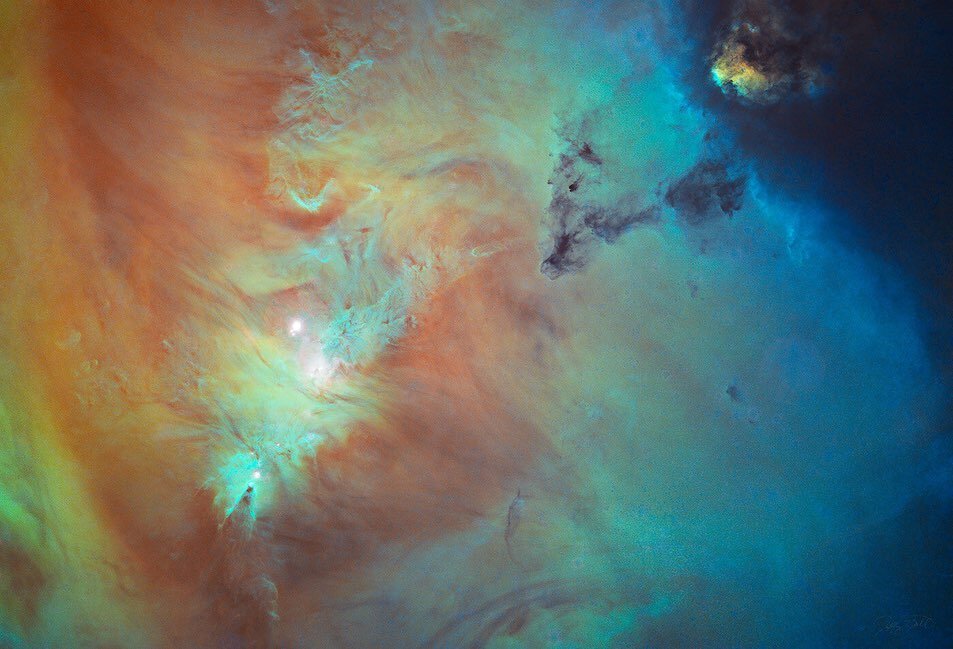
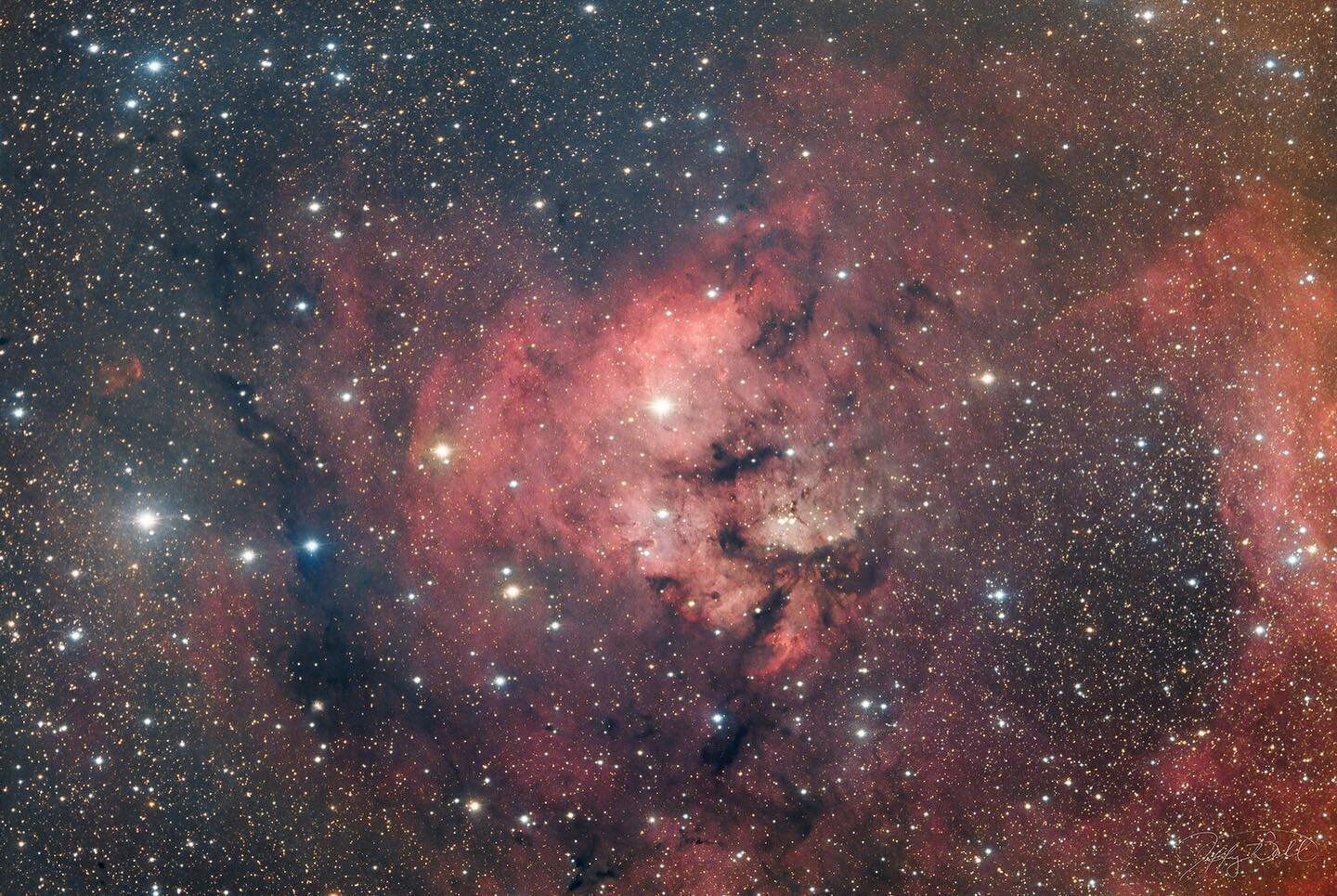
Angels in Monoceros: The Monoceros M2 Complex
The Monoceros R2 molecular complex (often shortened to Mon R2) is a massive giant molecular cloud and one of the nearest active star-forming regions to Earth. It's a dynamic stellar nursery embedded in dense gas and dust, where new stars—particularly massive ones—are actively being born.
Key Facts
Location: Southwestern part of the constellation Monoceros (the Unicorn), near the border with Orion. It's part of the larger Orion-Monoceros cloud complex.
Distance: Approximately 2,400–2,700 light-years (around 830 parsecs).
Size and Structure: The main dense core is relatively compact (a few light-years across), but the overall molecular cloud and associated nebulae span a wide area—reflection nebulae alone stretch up to about 2° in the sky. It's situated well below the galactic plane, which makes it stand out in certain observations.
Age and Activity: Star formation here began roughly 6–10 million years ago. It hosts an OB association (young, hot, massive B- and A-type stars) that illuminates surrounding dust, creating prominent reflection nebulae with bluish hues. There's also significant emission from ionized gas (red glows) and dark nebulae that appear as shadowy silhouettes blocking background light.
Notable Features:
A central hub of massive star formation with embedded clusters, molecular outflows, and HII regions.
Infrared observations (like those from VISTA or 2MASS) penetrate the dust to reveal hidden young stars and protoplanetary disks.
It's a key site for studying early stellar evolution, variability in young stellar objects (YSOs), and the interplay between massive stars and their natal clouds.
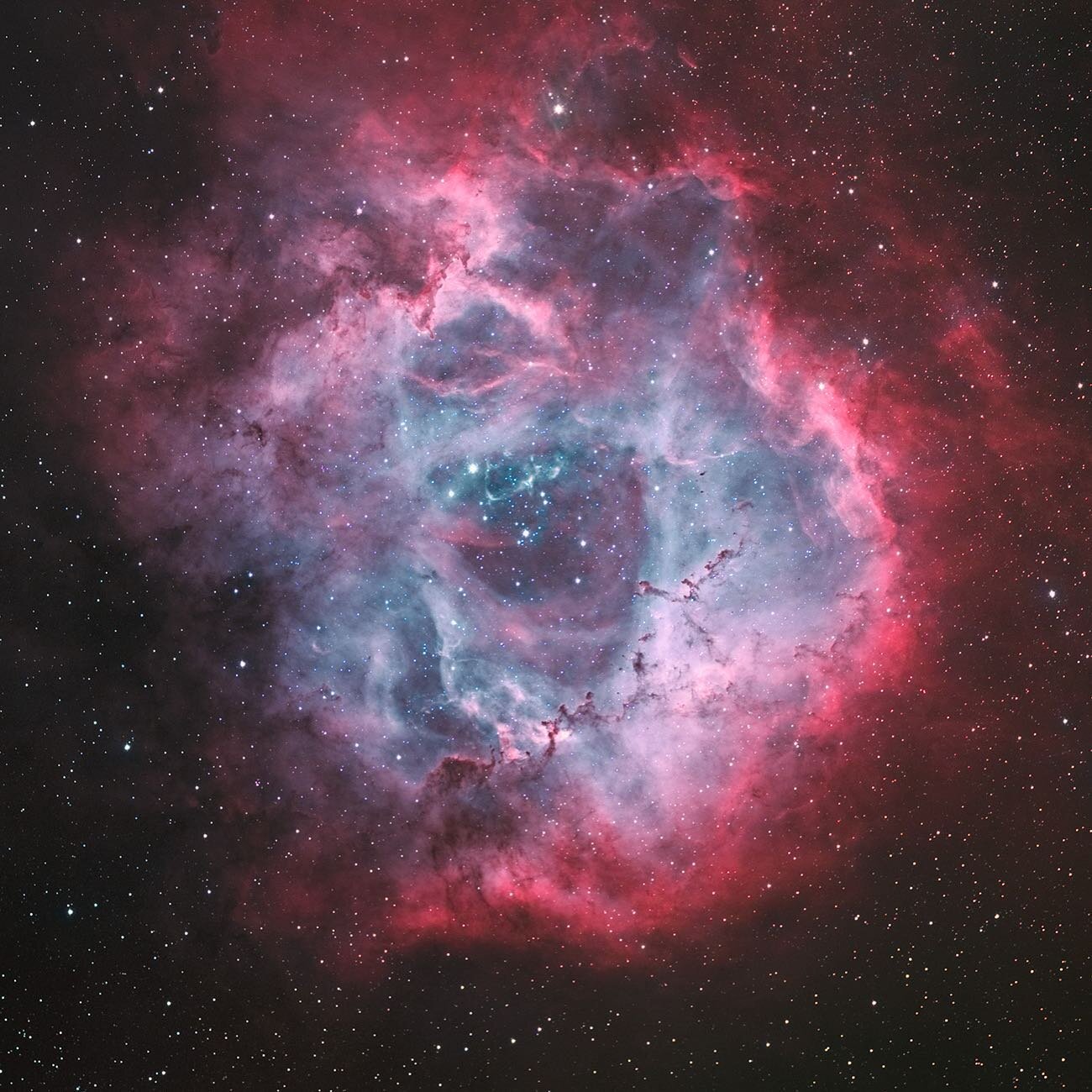
The most famous and photogenic part of Mon R2 is the region around NGC 2170 (the Angel Nebula), a striking reflection nebula with wing-like dust structures, glowing blue from scattered starlight, mixed with red emission and dark lanes. Wider views of the complex reveal a richer tapestry of colorful gas, dust filaments, and star clusters.
Credit: GROK 2/28/26
Click on image for larger view.
New Astro Camera: OM-3
Join me for a LIVE conversation about this new astro camera coming to the market. Is this the best option for you? How does it compare to other options? https://www.earthandskyphoto.com Correction: when discussing Bulb mode with Canon, I incorrectly said it had a limit of 30”. I meant to say manual exposure has a max of 30”. In bulb, you need to use a remote control or app for exposure time control. The problem is you can’t set exposure time for stills in the camera menu. I was made aware that Olympus no longer owns the OM system. It is owned by Japanese industrial Partners, a private equity firm. For content on the OM-3 for astrophotography, please see Ben Chapell’s Narrow Band channel. https://youtube.com/@TheNarrowbandChannel?si=GcWY-BM9skG9LPhY
Jeff's Blog
Join me on photography journeys from desert landscapes to deep sky wonders.