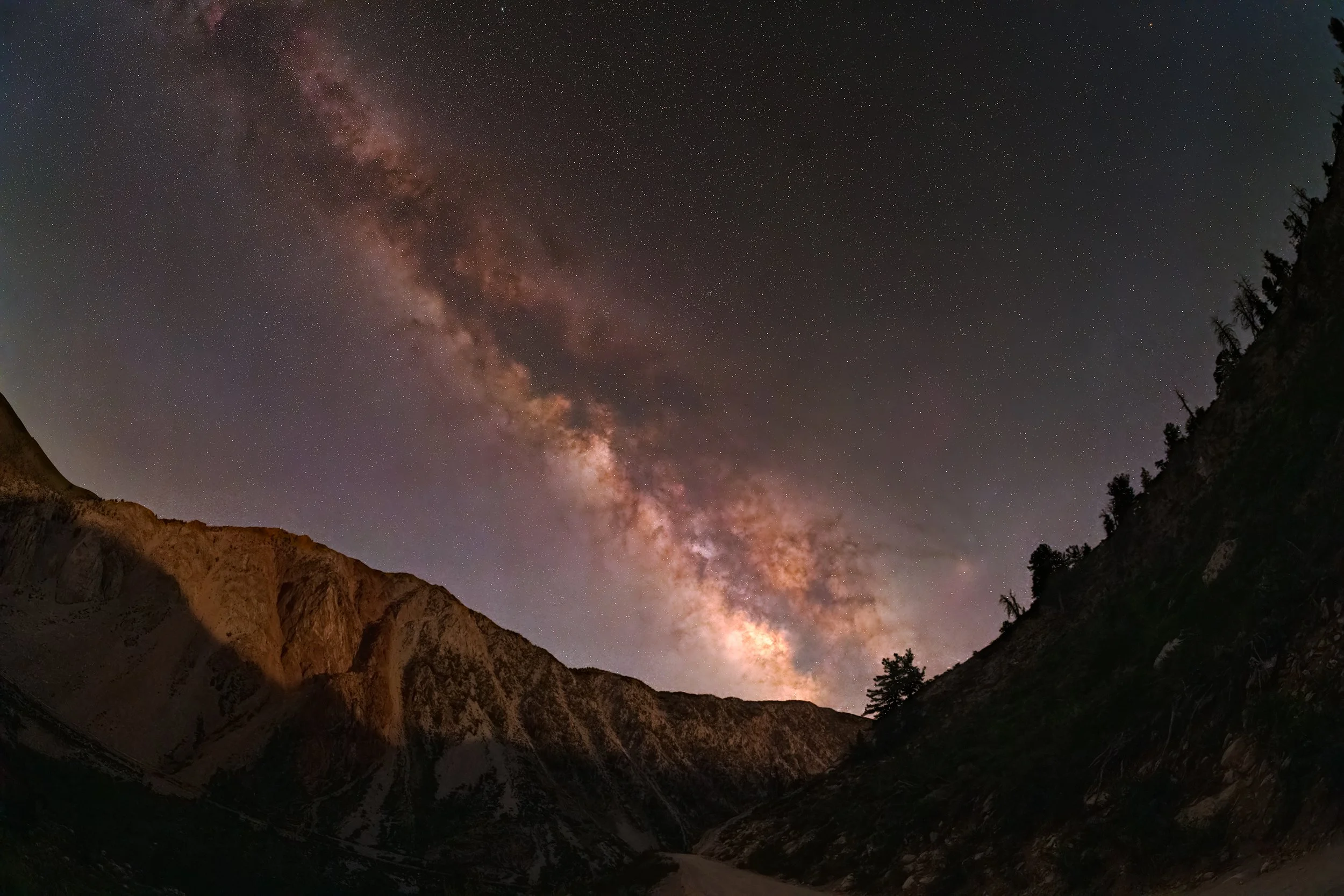
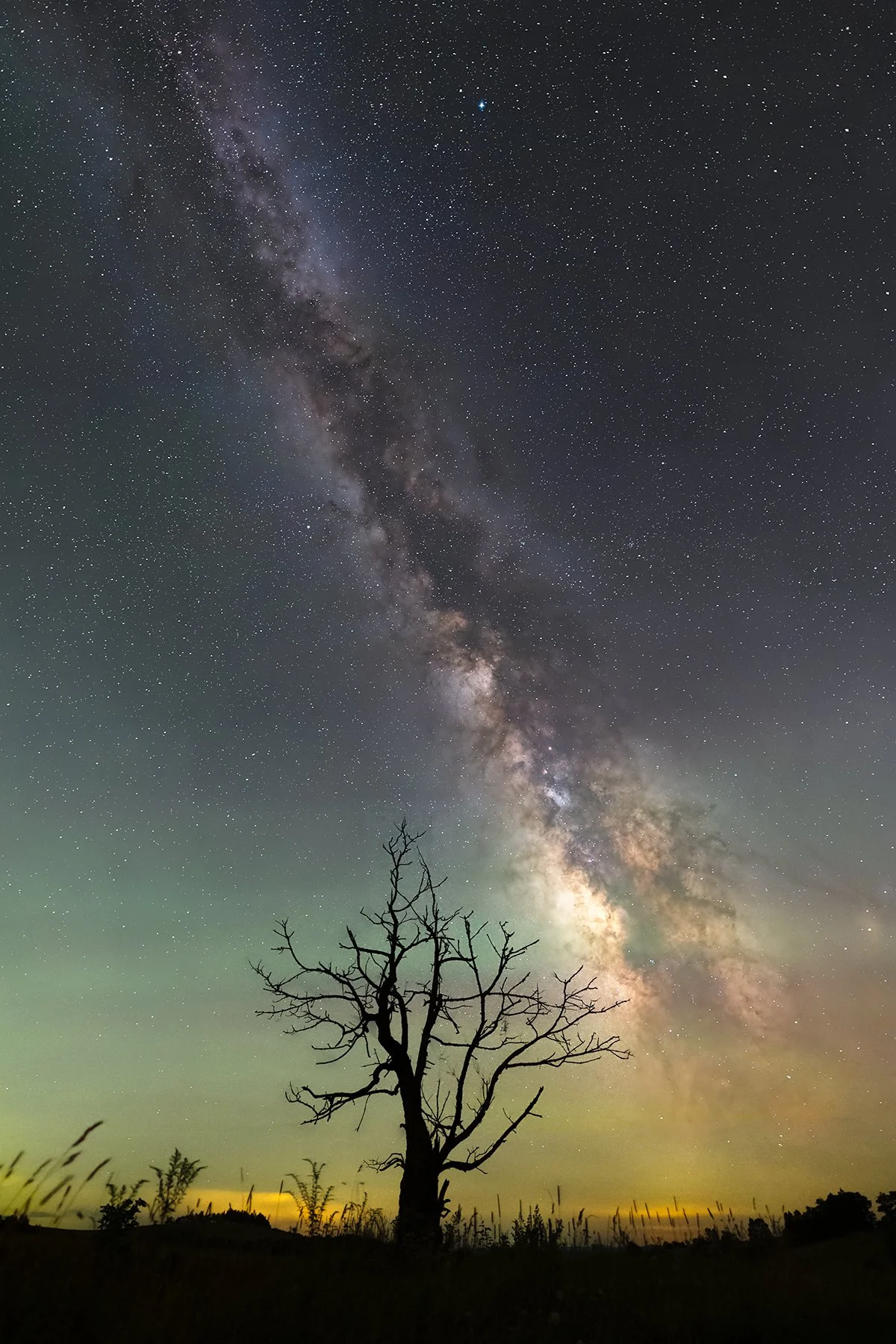
Seneca Rocks Milky Way 2020
A new image and a new YouTube video where I discuss creating the image and photography in the Monongahela National Forest are now on the website.
Image details:
Canon Ra with Rokinon 24mm f1.4 lens at f2. Stacked 8 images of 10 second exposures for the Milky Way sky.
For the complete story, please see the video posted on the YouTube video tab. Thanks and clear skies.
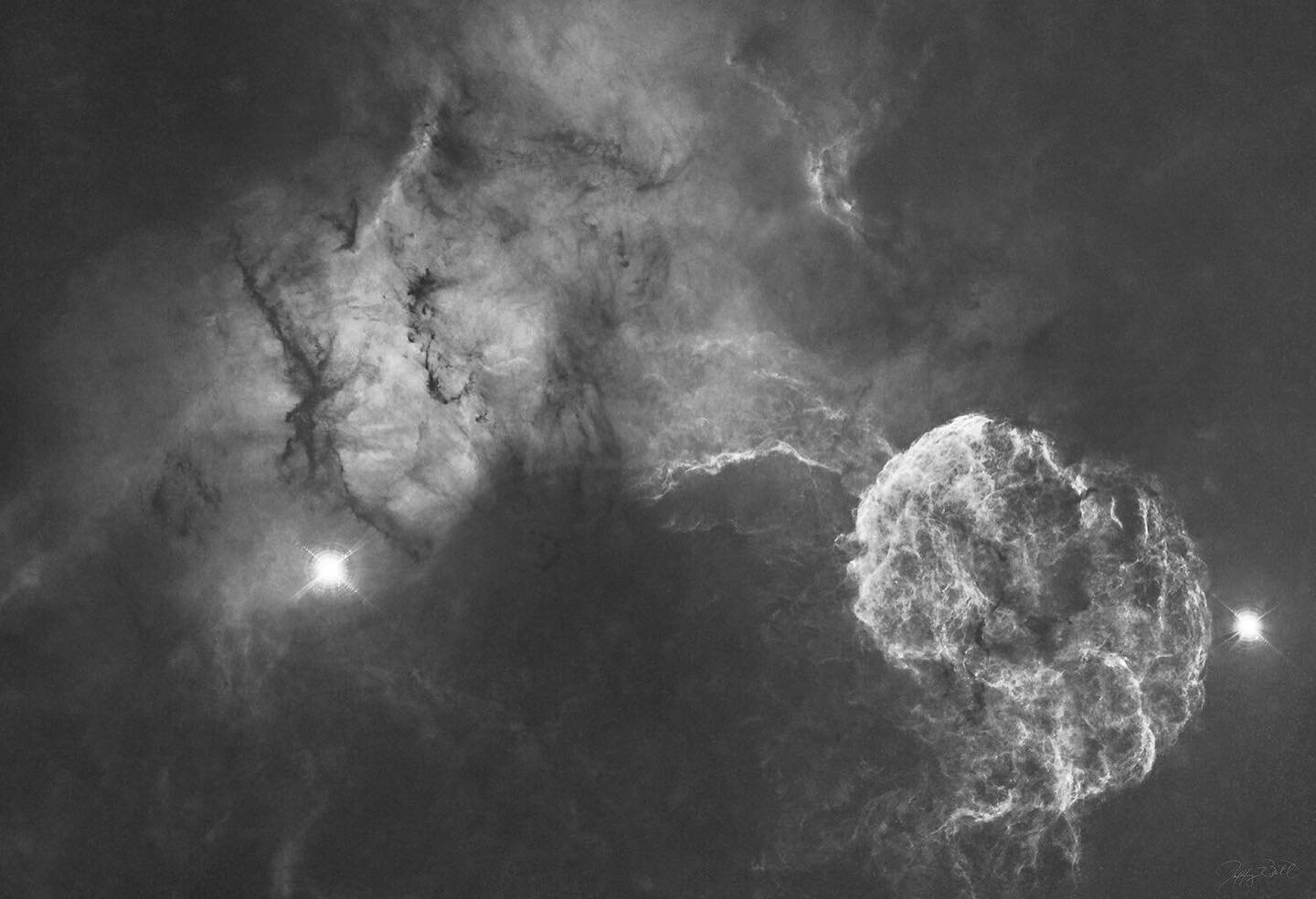
A new gallery: Digital Narrow Band
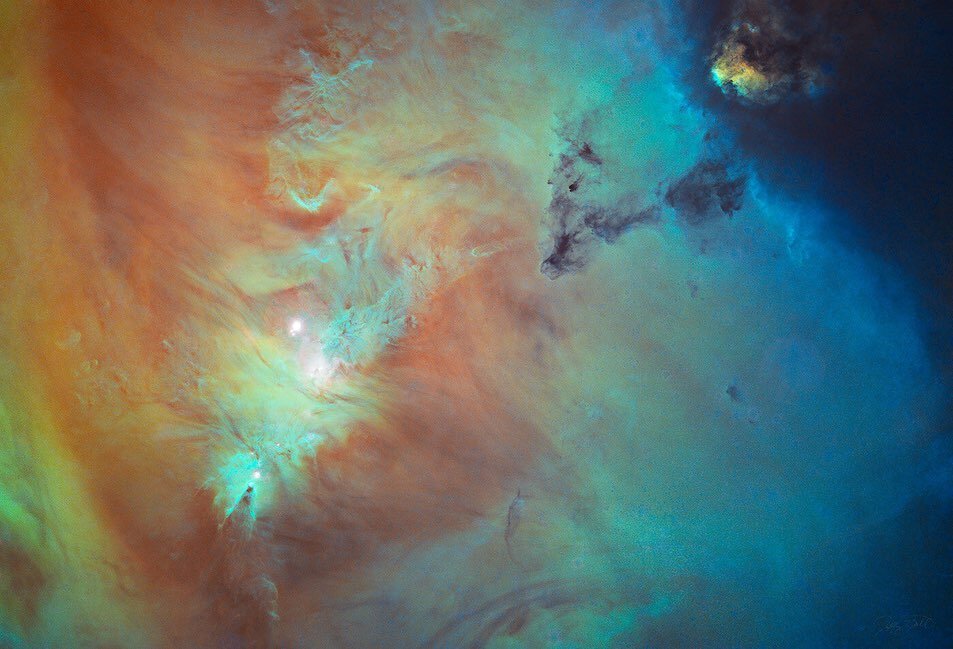
In my opinion, this is the most exciting realm of astrophotography today. It is bringing together multiple advances in gear and processing to bring about new artistic expression of the wonders of the universe. The technique has been around for years, but the advances and affordability to the amateur in fast optics, higher quality sensors, and high quality narrow band filter has taken the process to mainstream. This image is an experimentation with remote data I captured from Australia. I am really just getting my toes wet with this process, but I am already in love with the possibilities. I will have a YouTube video about this topic in the near future. Much more to come, but for now…here is the Great Eta Carinae nebula in a customized color palette taken with hydrogen alpha, OIII, and Sulpher II filters. Thanks for visiting and drop me a line if you have any questions.

Viewer experience: Olson fire tower in Monongahela National Forest
My entire purpose is for the viewer to share and experience the wonder of God’s great creation. I am constantly learning new techniques and visualizations to achieve this goal. One new technique involves a spherical VR presentation utilizing the Mavic Air 2. This is my first try at it, but the scene simply could not be any better. Rising high above the Cheat River watershed is the Olson fire tower. Overlooking the Blackwater canyon and river, one can see for miles and miles. The best way to share this experience is by VR spherical panorama. I invite you to click on the link below and take a tour of this fascinating view of my beautiful home state.
Milky Way Rising!
The latest YouTube video presents an amazing night with the rising Milky Way over Clifty Creek in eastern Kentucky. Please check out the video on the YouTube page. Here are the still images from the night. Don’t miss out on the time lapse of the Milky Way rising on the YouTube video!
24mm Rokinon on the Canon RP captures the rising Milky Way over Clifty Creek.
A 3 row panorama with the 24mm Rokinon present the majesty of the Milky Way.
Jupiter, Saturn, and Mars form an obtuse triangle under the arch of the Milky Way.
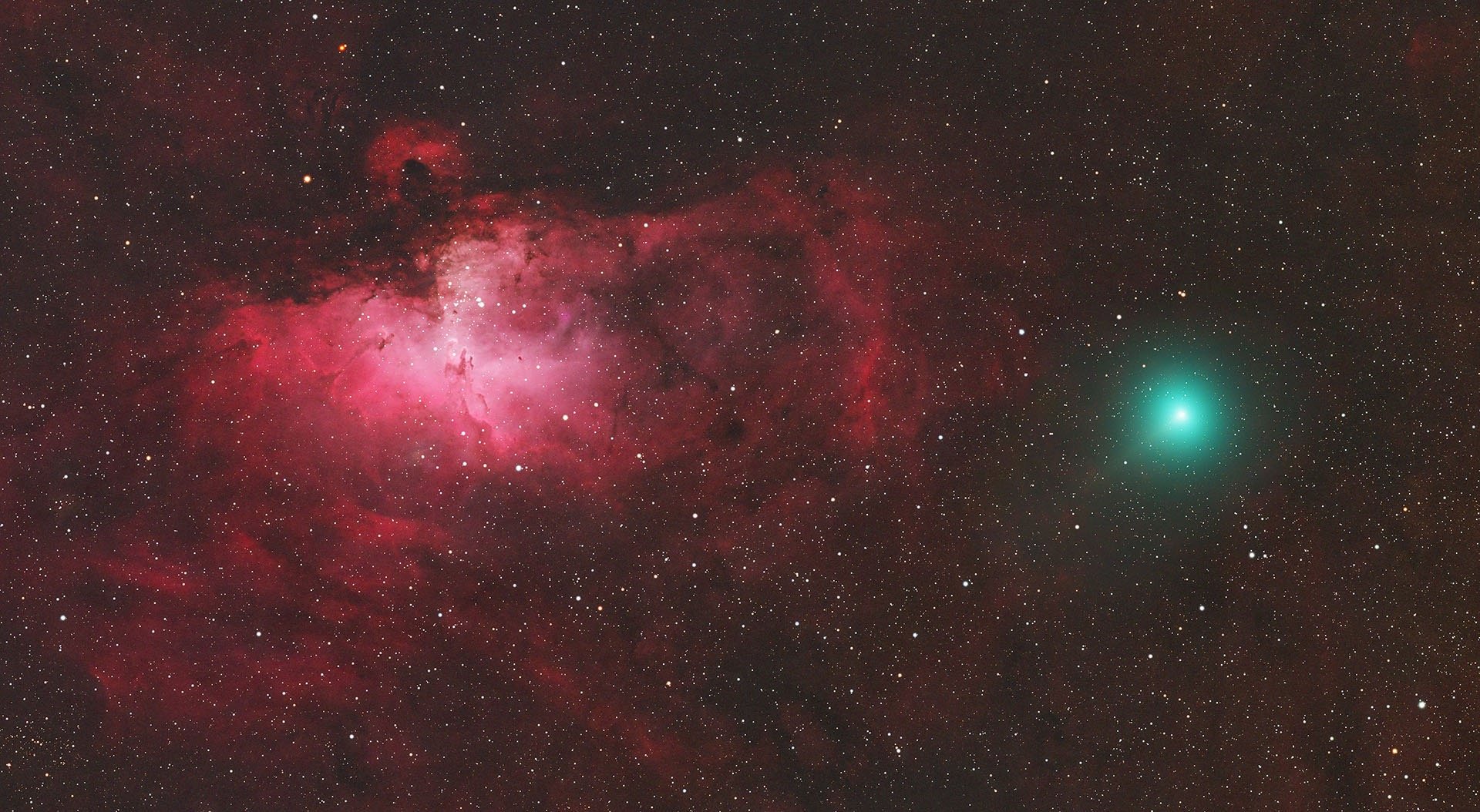
Comet 2019Y4 (ATLAS) and 11 Galaxies: March 24, 2020 10:00 p.m. EDT
Hello and thank you for visiting. I imaged C/2019Y4 on Wednesday March 24, 2020 from 9:30 to 11:30 p.m. As I was gathering data, I could see the comet moving closer for a drive by of what looks to be an irregular galaxy. I can’t find this object in any of the sky references. There is also an edge-on galaxy above my name plate that I can’t identify. If you have the ability to identify these objects or could point me in the direction for more detailed database, I would be most appreciative. Thanks again and clear skies.
Thanks to Dale Ghent for providing the annotated picture that shows the fuzzy galaxy in question is 16.97 magnitude PGC 2717206! Thanks Dale!
Acquisition details:
Astro-Physics 130EDF Gran Turismo with 2x Astro-Physics Advanced Barlow
ZWOASI294MC Pro with 1 minute subs at 183 gain. 10 stacked for stars and 122 for comet stacking.
ASI Air plate solving calculated a 1463mm focal length and the long edge of the FOV at 77 arc minutes.

Minor edge cropping of the field.

Zoom with the irregular galaxy at about the 5 o’clock position off of the comet nucleus.

Edge-on galaxy at bottom right corner.

Annotated image showing 11 galaxies in the field. Thanks Dale!
The Herschel 400 Astronomical League Project is underway
It’s not too late to join. We are about 30 objects into the Herschel 400. Hope to get another session in soon. Please subscribe to the YouTube channel so you get notifications on LIVE STREAMS.
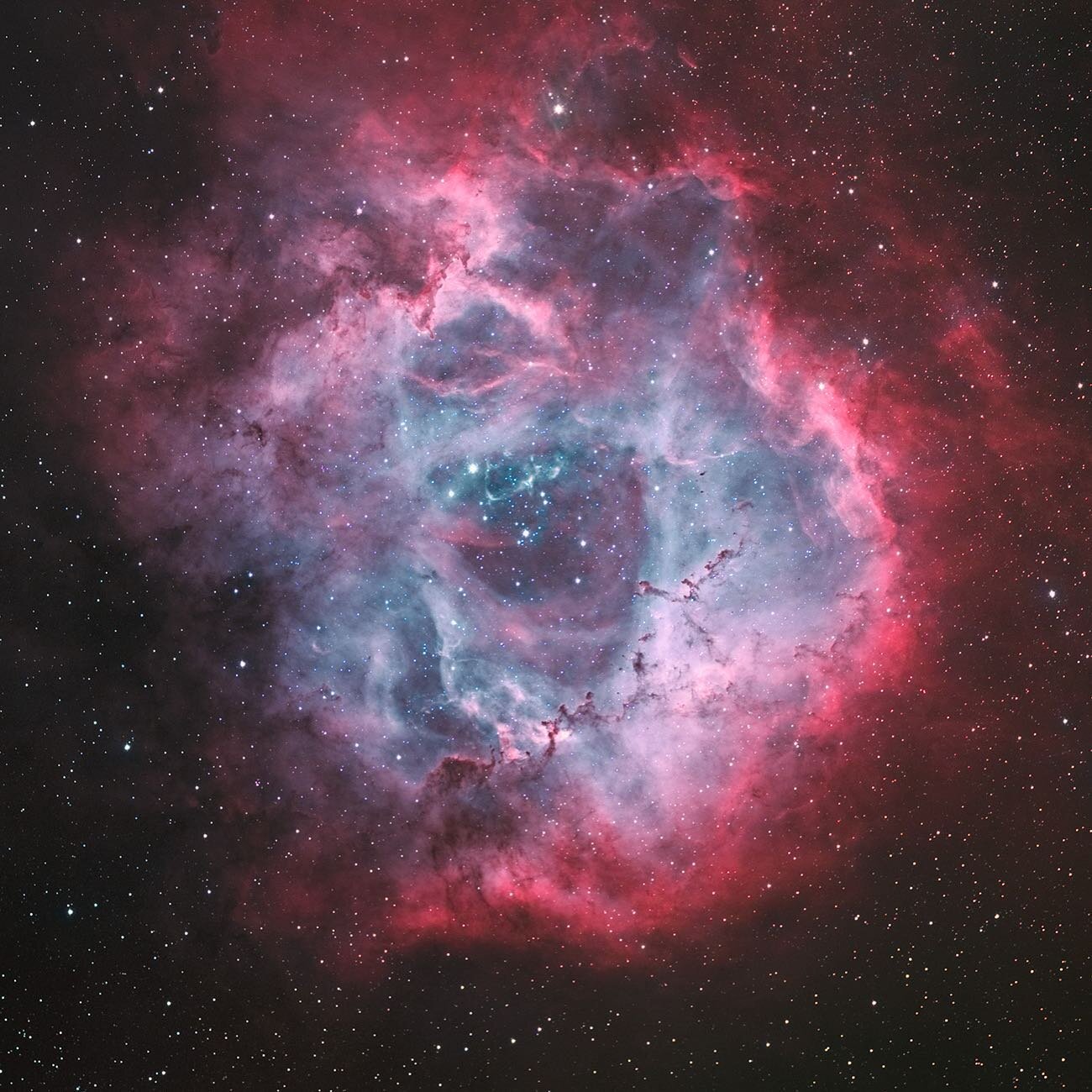
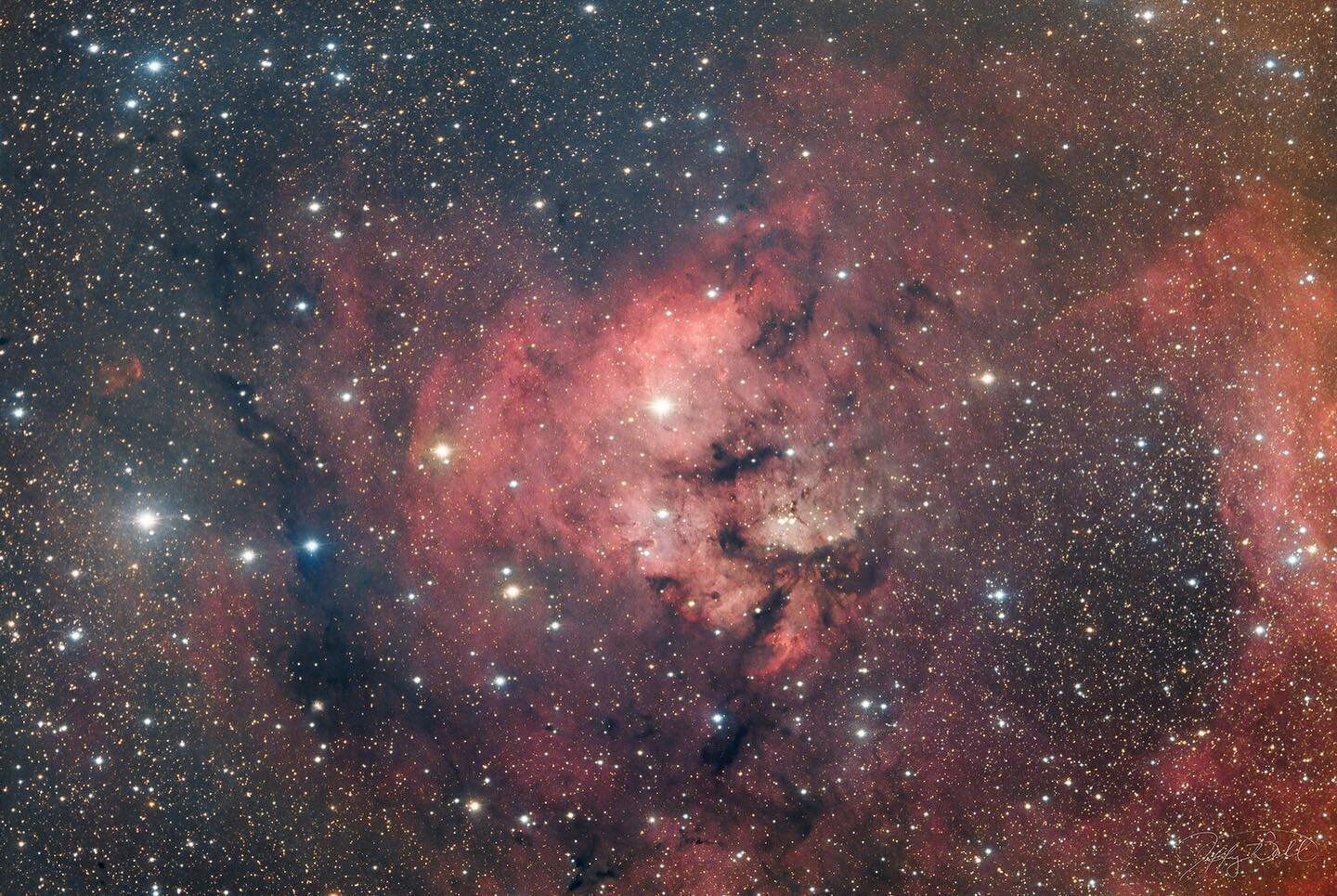
Angels in Monoceros: The Monoceros M2 Complex
The Monoceros R2 molecular complex (often shortened to Mon R2) is a massive giant molecular cloud and one of the nearest active star-forming regions to Earth. It's a dynamic stellar nursery embedded in dense gas and dust, where new stars—particularly massive ones—are actively being born.
Key Facts
Location: Southwestern part of the constellation Monoceros (the Unicorn), near the border with Orion. It's part of the larger Orion-Monoceros cloud complex.
Distance: Approximately 2,400–2,700 light-years (around 830 parsecs).
Size and Structure: The main dense core is relatively compact (a few light-years across), but the overall molecular cloud and associated nebulae span a wide area—reflection nebulae alone stretch up to about 2° in the sky. It's situated well below the galactic plane, which makes it stand out in certain observations.
Age and Activity: Star formation here began roughly 6–10 million years ago. It hosts an OB association (young, hot, massive B- and A-type stars) that illuminates surrounding dust, creating prominent reflection nebulae with bluish hues. There's also significant emission from ionized gas (red glows) and dark nebulae that appear as shadowy silhouettes blocking background light.
Notable Features:
A central hub of massive star formation with embedded clusters, molecular outflows, and HII regions.
Infrared observations (like those from VISTA or 2MASS) penetrate the dust to reveal hidden young stars and protoplanetary disks.
It's a key site for studying early stellar evolution, variability in young stellar objects (YSOs), and the interplay between massive stars and their natal clouds.
The most famous and photogenic part of Mon R2 is the region around NGC 2170 (the Angel Nebula), a striking reflection nebula with wing-like dust structures, glowing blue from scattered starlight, mixed with red emission and dark lanes. Wider views of the complex reveal a richer tapestry of colorful gas, dust filaments, and star clusters.
Credit: GROK 2/28/26
Click on image for larger view.
New Astro Camera: OM-3
Join me for a LIVE conversation about this new astro camera coming to the market. Is this the best option for you? How does it compare to other options? https://www.earthandskyphoto.com Correction: when discussing Bulb mode with Canon, I incorrectly said it had a limit of 30”. I meant to say manual exposure has a max of 30”. In bulb, you need to use a remote control or app for exposure time control. The problem is you can’t set exposure time for stills in the camera menu. I was made aware that Olympus no longer owns the OM system. It is owned by Japanese industrial Partners, a private equity firm. For content on the OM-3 for astrophotography, please see Ben Chapell’s Narrow Band channel. https://youtube.com/@TheNarrowbandChannel?si=GcWY-BM9skG9LPhY
Jeff's Blog
Join me on photography journeys from desert landscapes to deep sky wonders.