Alain Briot Interview Part 1 - Teaching
An interview with Alain Briot first broadcast in 2006. This is part of my relocation of my Podcast to the squarespace domain. Alain discusses why he teaches the art of photography. This is well worth the time to listen to one of America's great landscape photographic art instructors discuss his thoughts on teaching methods. Approximately 8 minutes in length.
TWITS in Vegas...
Leo Laporte and his TWIT crew are broadcasting live and archiving web-based broadcasts from the Consumer Electronics Convention in Las Vegas this week. There is a lot about this that intrigues me.
First is the web-based broadcasting, both live and archived. So far I have only viewed the archived presentations and the quality is pretty amazing. It is only a sign of things to come in customized broadcasting. When you see things like this it is hard to envision how network TV will survive. The fragmentation and specialization of our media only continues to expand. Perhaps there will always be a place for mass-interest broadcasting, but it seems like the trend is certainly going against this. Few events can bring together our country for mass viewing; sports, American Idol, Dancing with the Stars.
The technology at CES is also intriguing. FloTV is a branch of QualComm and they have installed a 700mhz network in the top 100 metro areas in the U.S. The network can broadcast live TV such as ESPN and ABC to there own customized hardware, but there are plans to develop an attachment for the iPhone to receive and display the video feed.
There was also a 3D laptop on display from Lenovo. The future of gaming is surely going to move in this direction. Lenovo also presented a laptop with detachable screen that became a tablet running Linux. The laptop runs Windows 7 when in full laptop mode. Web-based broadcasting, new networks for receiving media, and tablets/laptop hybrids seem to be moving our technology forward. It will be an interesting decade.
Most importantly, exposure to this technology has spurred some new ideas that I have for photographic education. I hope to announce this new venture in the coming months so please stay tuned. Now to work on this new endeavor...
Dog art?
Yes... Conan just hosted a dog who's owner claimed he was an artist. The dog proceeded to bark incesantly and walk and bite a board with a paintable surface. Seriously... sure dogs are cute, but can't we all agree that they are not capable of being an artist. I can't believe i am even writing about this. The dog had just won a $100,000 art prize. Maybe I need to rethink my entire approach to creating art.
Btw there are new images in the smoky mountain gallery.
Influence of media presentation devices...
When I first began to study photography intensely over 8 years ago, my preferred image presentation was portrait orientation. I can't really explain why my eye preferred that orientation, I simply knew I had a bias toward the portrait orientation. Then I began to quickly learn about the powerful "near/far" composition where one can present a deep 3D image by presenting a very large depth of field spanning from a nearby rock or bush to the distant vista. Of course the Ansel Adams f64 group made this approach one of their cornerstones of image presentation. At that time, many images I was viewing were also in magazines where the preferred orientation is portrait.
During my first workshop with Alain Briot, one of the photographic exercises he emphasized was to capture an image with both a portrait as well as landscape orientation. Since that workshop I have made it a practice to do just that. At first I still preferred the portrait orientation, but recently I have noticed a significant change in my preference for landscape presentations. A significant majority, if not 100%, of the Smoky Mountain portfolio is going to be presented in landscape orientation. So i began to reflect on what might have led to the change in my bias.
The leading candidate is that the change in viewing devices has influenced my eye dramatically. The move from relatively square TVs and CRT monitors to the more elongated 16:9 HD TVs and LCD computer monitors has certainly influenced my eye's preference for landscape oriented images. Even the portrait oriented images I have now bother me just a touch when they are presented via my light box image viewer on the web pages. The only time I really like the presentation of the portrait images is when I flip my iPhone so that the image is presented in its full display.
Another factor is the relative newness of the "panoramic" presentation. I love this presentation and only web-based presentations on wide screen monitors or fine art prints can present the image as it is intended to be seen.
I don't know if this influence has made a major impact on all of photography, but it would certainly be interesting to study. My guess is that as we move away from magazine oriented photography to web-based photography, landscape presentations may become the preferred orientation for images. See if you can find any correlation to this hypothesis.
What to do?
You may or may not know that my professional career has been in pharmaceutical sales. For 23 years I have worked for sanofi-aventis and legacy companies Aventis, Hoechst Marion Roussel, Marion-Merrell-Dow, and Marion Laboratories. On Monday I was notified that my services were no longer needed as part of the most recent downsize of the company. Over 750 reps received that information that day and I pray for their futures.
The pharmaceutical industry in the U.S. is largely in decline with only small glimmers of hope in the biotech arena. Fewer product approvals every year and big revenue products coming off of patent only foretell more downsizing of the industry in the future.
So now...what to do? That is what I spend my every waking moment discerning. I am not discounting much of anything at the present time. Everything from teaching to financial services to day-trading to healthcare to law school are all in play. I ask for your prayers as I and my family go through the process. In the meantime, this website will largely serve as a place of comfort. Working and posting new images are the most safisying activies I engage in and I hope to be able to continue to do so here with some consistency. This refuge will serve as a break from the pressures of career search and job hunting. Thanks so much for your involvement with this website and your prayers. Who knows, maybe I will become a full-time photographer! Take care and until next time.
The Herschel 400 Astronomical League Project is underway
It’s not too late to join. We are about 30 objects into the Herschel 400. Hope to get another session in soon. Please subscribe to the YouTube channel so you get notifications on LIVE STREAMS.
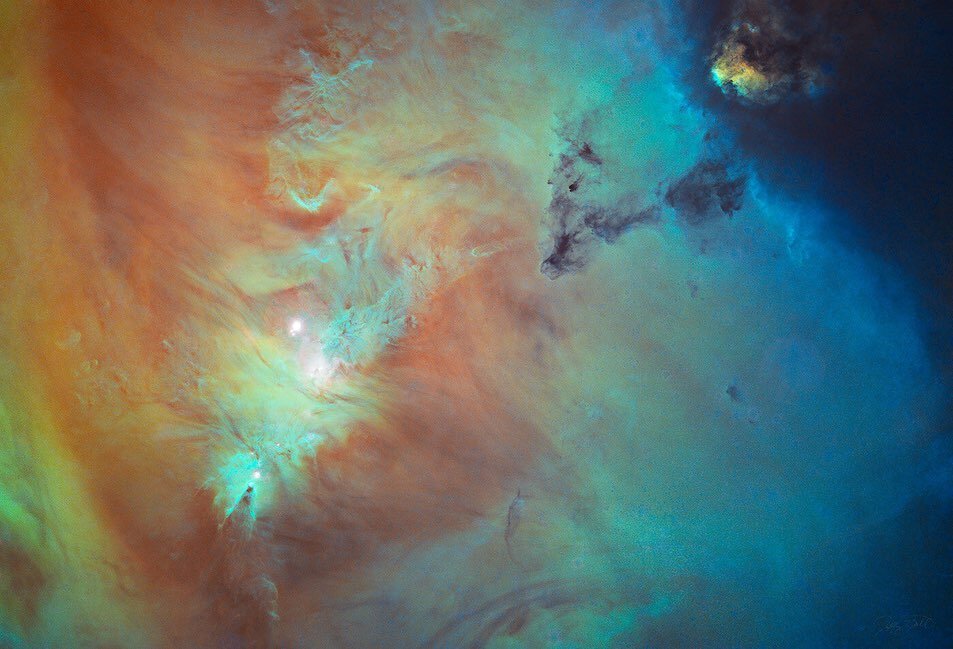
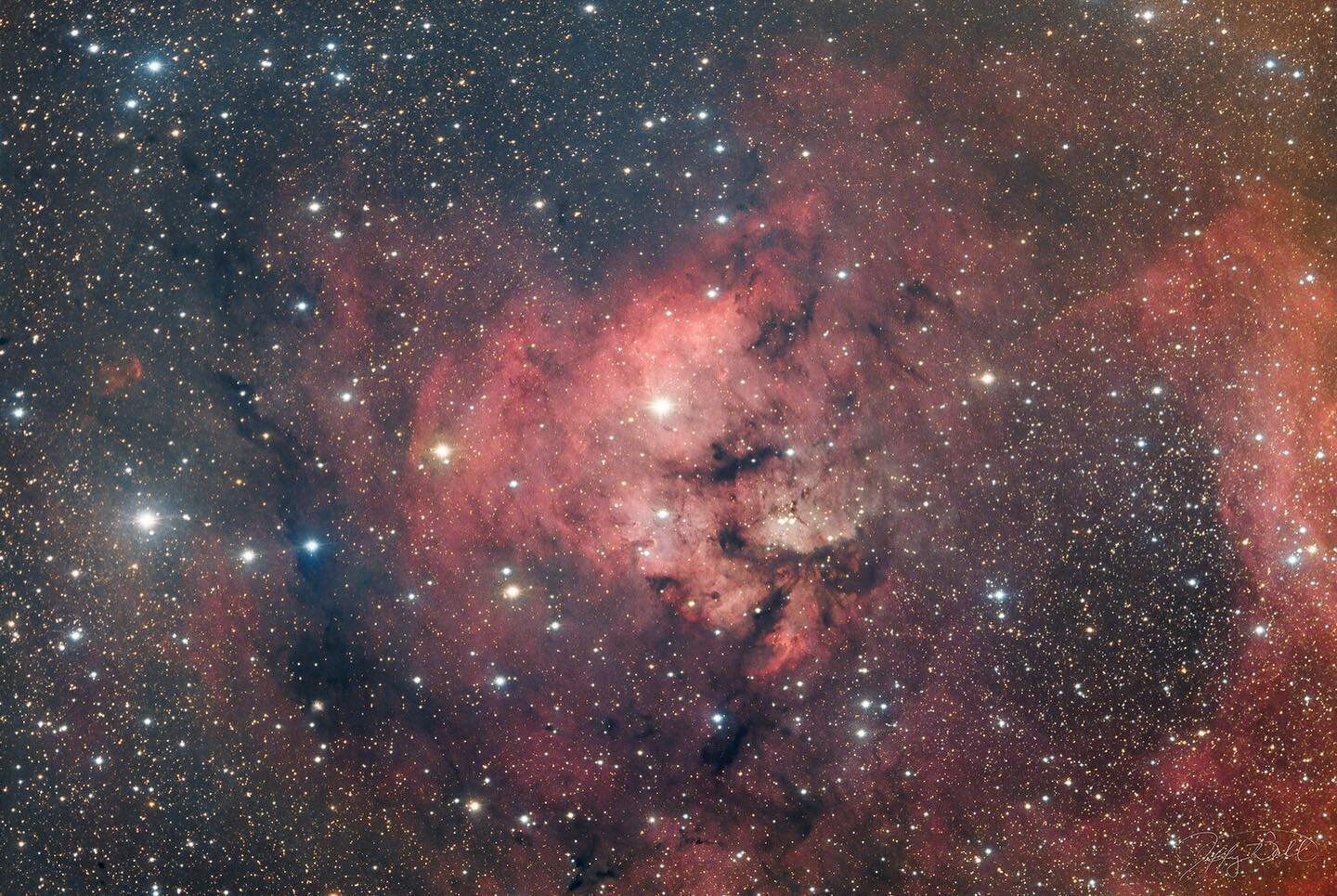
Angels in Monoceros: The Monoceros M2 Complex
The Monoceros R2 molecular complex (often shortened to Mon R2) is a massive giant molecular cloud and one of the nearest active star-forming regions to Earth. It's a dynamic stellar nursery embedded in dense gas and dust, where new stars—particularly massive ones—are actively being born.
Key Facts
Location: Southwestern part of the constellation Monoceros (the Unicorn), near the border with Orion. It's part of the larger Orion-Monoceros cloud complex.
Distance: Approximately 2,400–2,700 light-years (around 830 parsecs).
Size and Structure: The main dense core is relatively compact (a few light-years across), but the overall molecular cloud and associated nebulae span a wide area—reflection nebulae alone stretch up to about 2° in the sky. It's situated well below the galactic plane, which makes it stand out in certain observations.
Age and Activity: Star formation here began roughly 6–10 million years ago. It hosts an OB association (young, hot, massive B- and A-type stars) that illuminates surrounding dust, creating prominent reflection nebulae with bluish hues. There's also significant emission from ionized gas (red glows) and dark nebulae that appear as shadowy silhouettes blocking background light.
Notable Features:
A central hub of massive star formation with embedded clusters, molecular outflows, and HII regions.
Infrared observations (like those from VISTA or 2MASS) penetrate the dust to reveal hidden young stars and protoplanetary disks.
It's a key site for studying early stellar evolution, variability in young stellar objects (YSOs), and the interplay between massive stars and their natal clouds.
The most famous and photogenic part of Mon R2 is the region around NGC 2170 (the Angel Nebula), a striking reflection nebula with wing-like dust structures, glowing blue from scattered starlight, mixed with red emission and dark lanes. Wider views of the complex reveal a richer tapestry of colorful gas, dust filaments, and star clusters.
Credit: GROK 2/28/26
Click on image for larger view.
New Astro Camera: OM-3
Join me for a LIVE conversation about this new astro camera coming to the market. Is this the best option for you? How does it compare to other options? https://www.earthandskyphoto.com Correction: when discussing Bulb mode with Canon, I incorrectly said it had a limit of 30”. I meant to say manual exposure has a max of 30”. In bulb, you need to use a remote control or app for exposure time control. The problem is you can’t set exposure time for stills in the camera menu. I was made aware that Olympus no longer owns the OM system. It is owned by Japanese industrial Partners, a private equity firm. For content on the OM-3 for astrophotography, please see Ben Chapell’s Narrow Band channel. https://youtube.com/@TheNarrowbandChannel?si=GcWY-BM9skG9LPhY
Jeff's Blog
Join me on photography journeys from desert landscapes to deep sky wonders.