Video Tour of Galleries
Today a very brief video tour of my galleries at Pendleton Art Center was published on the podcasts. To view the video, simply go here or cut and paste this url "http:/feeds.feedburner.com/earthandskyphoto" into your iTunes after you click "Subscribe to Podcast." Enjoy the video and I hope to see you at the Pendleton Art Center.
Alain Briot Interview Part 4: Film vs Digital capture
In part 4, Alain discusses technical considerations when selecting film or digital as your image capturing sensor. The podcast is available through your iTunes or by following this link.
Alain Briot Interview Part 3
Part 3 of the Alain Briot interview was posted today. In this segment, Alain discusses color photography as an art form relative to black and white. I find Alain's comments very insightful and accurate in his description of the status of color photography in the photographic arts today.
You may access the podcast through your iTunes player or other podcast readers or by clicking here...
Happy New Year...a look ahead.
Happy New Year to you and your family. My best wishes on a healthy and blessed New Year for you.
As I reflect on 2006 and what was accomplished photographically, I am pleased in that I accomplished much of what I set out to do on this day one year ago. My first priority was an in-depth study of black and white photography in the digital age. My goal was to achieve high quality fine art black and white prints. I now believe I have achieved this goal as I am quite happy with the latest prints I am producing with the latest technologies.
I guess I will always consider myself a "student of photography." There is so much to learn, but through my study efforts and experimentation in 2006, I am much more focused on what I need to do in 2007. This year I will refine my personal vision and it will be focused exclusively on color photography as fine art. I have begun to study the works of recognized color photography artists and will also be contributing some of my own writing on the subject as the year progresses. This year will see less experimentation with still-life and architecture and really focus on our natural world. This is the environment in which I need to be creative...out in the forest...high on a ledge...paddling on a river...experiencing the quiet and power of nature and communing with God. This is where I should be concentrating my photographic vision.
I will be experimenting with some new image capture techniques that promises to bring the highest quality artwork possible today. I will share my experiences with you as I work through the learning curve on this process. It is a technique that world famous color photographer Joseph Holmes is currently engaged in. I have seen Joseph's prints utilizing these image capturing techniques and it is stunning. I am very excited about this endeavor and hope to have more information for you soon.
Photographic locations for 2007 are still undecided with the exception of the southern Florida trip in February. Possible locations for the year include Big Sur, CA, Zion N.P., Smokey Mountains N.P., Shenandoah N.P., Hocking Hills S.P. (Ohio), and as always the Monongehala National Forest in WV. I also hope to visit two locations at some point in the future to further my photographic education. One is the Center for Creative Photography in Tucson, AZ and the other is the Art Museum on the Mall in Washington, D.C.
This year will also see a concentrated effort on building on-line content that enhances your enjoyment of fine art photography. I will continue to refine the content as well as the scope of the Podcasts and improve on the production quality as well. In addition, video productions will join the broadcast menu. The videoblogs will present a behind the scenes look at fine art production, on-location travelogs, interviews, portfolio presentations, and much more. I am very excited about this component and will also launch a new website dedicated to the broadcasts coming this year. I don't know exactly where the broadcasting venture will lead, but it looks to be very exciting.
As you can see, there is a lot coming in 2007. Whether you are a fine art photography student or a collector of fine art photography, my wish for you in 2007 is that you realize your creative goals. Please contact me if you have any questions or comments on these topics as I always welcome an engaging discussion on such matters. Thanks for your interest in Jeff Ball Photography and have a wonderful day!
Adobe Lightroom Podcast
For those who want to know what is happening with the development of Adobe Lightroom, please check out the latest Podcast from members of the development team. This is a look under the hood of Lightroom as it is approaching its official launch. Development team members discuss the various controls available in Lightroom and what can be expected in the final release. 50 min. in length.
Click here for a link to the podcast:
The Herschel 400 Astronomical League Project is underway
It’s not too late to join. We are about 30 objects into the Herschel 400. Hope to get another session in soon. Please subscribe to the YouTube channel so you get notifications on LIVE STREAMS.
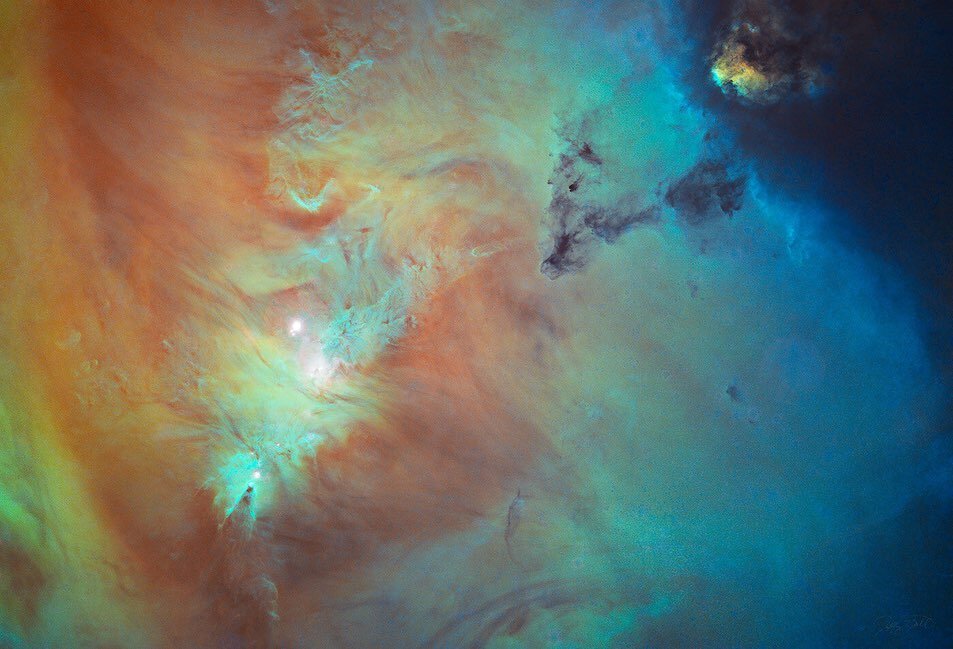
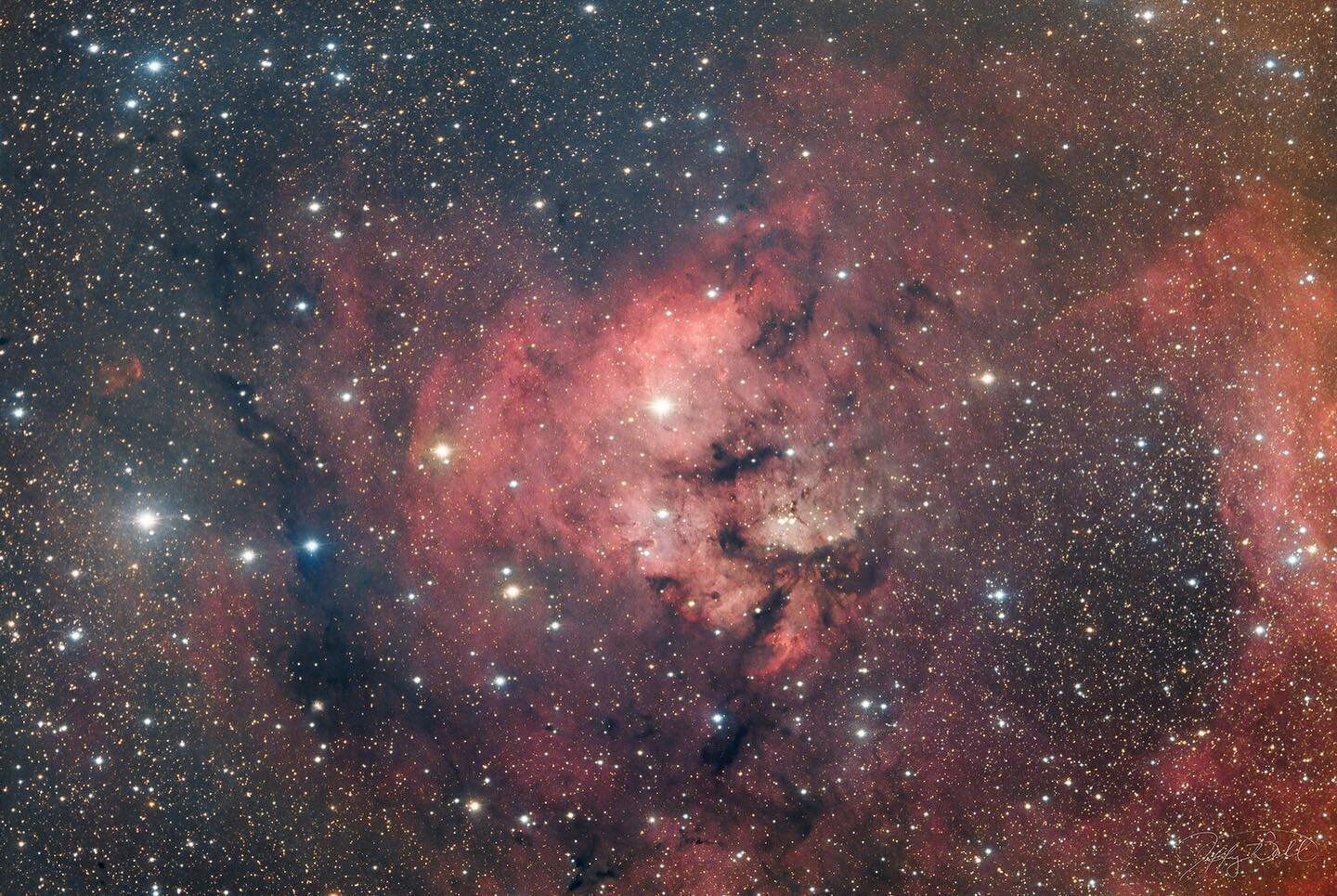
Angels in Monoceros: The Monoceros M2 Complex
The Monoceros R2 molecular complex (often shortened to Mon R2) is a massive giant molecular cloud and one of the nearest active star-forming regions to Earth. It's a dynamic stellar nursery embedded in dense gas and dust, where new stars—particularly massive ones—are actively being born.
Key Facts
Location: Southwestern part of the constellation Monoceros (the Unicorn), near the border with Orion. It's part of the larger Orion-Monoceros cloud complex.
Distance: Approximately 2,400–2,700 light-years (around 830 parsecs).
Size and Structure: The main dense core is relatively compact (a few light-years across), but the overall molecular cloud and associated nebulae span a wide area—reflection nebulae alone stretch up to about 2° in the sky. It's situated well below the galactic plane, which makes it stand out in certain observations.
Age and Activity: Star formation here began roughly 6–10 million years ago. It hosts an OB association (young, hot, massive B- and A-type stars) that illuminates surrounding dust, creating prominent reflection nebulae with bluish hues. There's also significant emission from ionized gas (red glows) and dark nebulae that appear as shadowy silhouettes blocking background light.
Notable Features:
A central hub of massive star formation with embedded clusters, molecular outflows, and HII regions.
Infrared observations (like those from VISTA or 2MASS) penetrate the dust to reveal hidden young stars and protoplanetary disks.
It's a key site for studying early stellar evolution, variability in young stellar objects (YSOs), and the interplay between massive stars and their natal clouds.
The most famous and photogenic part of Mon R2 is the region around NGC 2170 (the Angel Nebula), a striking reflection nebula with wing-like dust structures, glowing blue from scattered starlight, mixed with red emission and dark lanes. Wider views of the complex reveal a richer tapestry of colorful gas, dust filaments, and star clusters.
Credit: GROK 2/28/26
Click on image for larger view.
New Astro Camera: OM-3
Join me for a LIVE conversation about this new astro camera coming to the market. Is this the best option for you? How does it compare to other options? https://www.earthandskyphoto.com Correction: when discussing Bulb mode with Canon, I incorrectly said it had a limit of 30”. I meant to say manual exposure has a max of 30”. In bulb, you need to use a remote control or app for exposure time control. The problem is you can’t set exposure time for stills in the camera menu. I was made aware that Olympus no longer owns the OM system. It is owned by Japanese industrial Partners, a private equity firm. For content on the OM-3 for astrophotography, please see Ben Chapell’s Narrow Band channel. https://youtube.com/@TheNarrowbandChannel?si=GcWY-BM9skG9LPhY
Jeff's Blog
Join me on photography journeys from desert landscapes to deep sky wonders.