Canon 1D Mark III
I don't dwell on new camera technology, but I do watch with interest what is happening at Canon. Today, Canon introduced its replacement for the 1D Mark II, a camera geared at sports and photo journalists. I don't completely evaluate the camera based on the size of the megapixels as I have seen dramatic improvements in images simply through Canon's improved in-camera processing and other chip improvements around noise reduction. This camera has a 10.1 megapixel chip and is capable of 10 frames per second. It is a APS-H sized chip translating to a field of view magnification over standard 35mm size of 1.3. I am anxious to now see the replacement for the 1Ds Mark III which will hopefuly deliver some new technology for the landscape photographer.
Busy as a bee!
Hello,
Just a quick update as things are quite busy at the moment. The Florida trip was amazing and I will have some Podcasts and writings on the experience. I am hopeful of at least one portfolio quality image from the trip. At the present time, all of my spare moments are spent preparing the San Juan River presentation in my gallery which opens March 2. So my online interactions will be sparse. Thanks for your interest in Jeff Ball Photography and talk with you soon.
John Sexton Interview at Digital Outback
I just found and listened to a wonderful interview with John Sexton conducted by Uwe Steinmueller. I really enjoyed the comments made by Mr. Sexton with regards to finding creativity and projects by getting out in the field and making mistakes. He also comments on where digital processes come into play into his work flow and what Ansel Adams may have thought about digital photography. I highly encourage you to check out the interview with one of our masters of photography today.
San Juan Portfolio Webpage Updated
Today the San Juan Limited Edition Portfolio webpage was updated to include more information about the portfolio with a sneak peek at the images. Please check out the latest at the link here. Stay tuned as much more information will be coming in the next few days.
San Juan Portfolio nearing release
I am very excited to announce that the creative energy has reached a boiling point and that the long-awaited San Juan River portfolio is nearing its release. To receive the latest information on the portfolio and to reserve your spot for a very limited edition portfolio, simply sign up for the newsletter on the website or send me an email to jeffball@earthandskyphoto.com . Thanks and have a great day.
The Herschel 400 Astronomical League Project is underway
It’s not too late to join. We are about 30 objects into the Herschel 400. Hope to get another session in soon. Please subscribe to the YouTube channel so you get notifications on LIVE STREAMS.
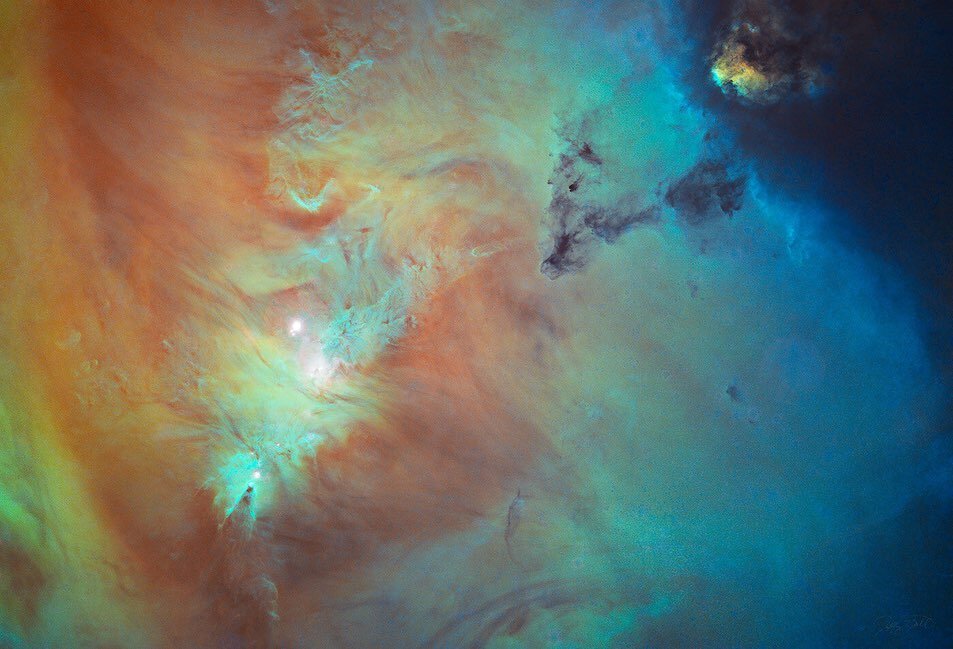
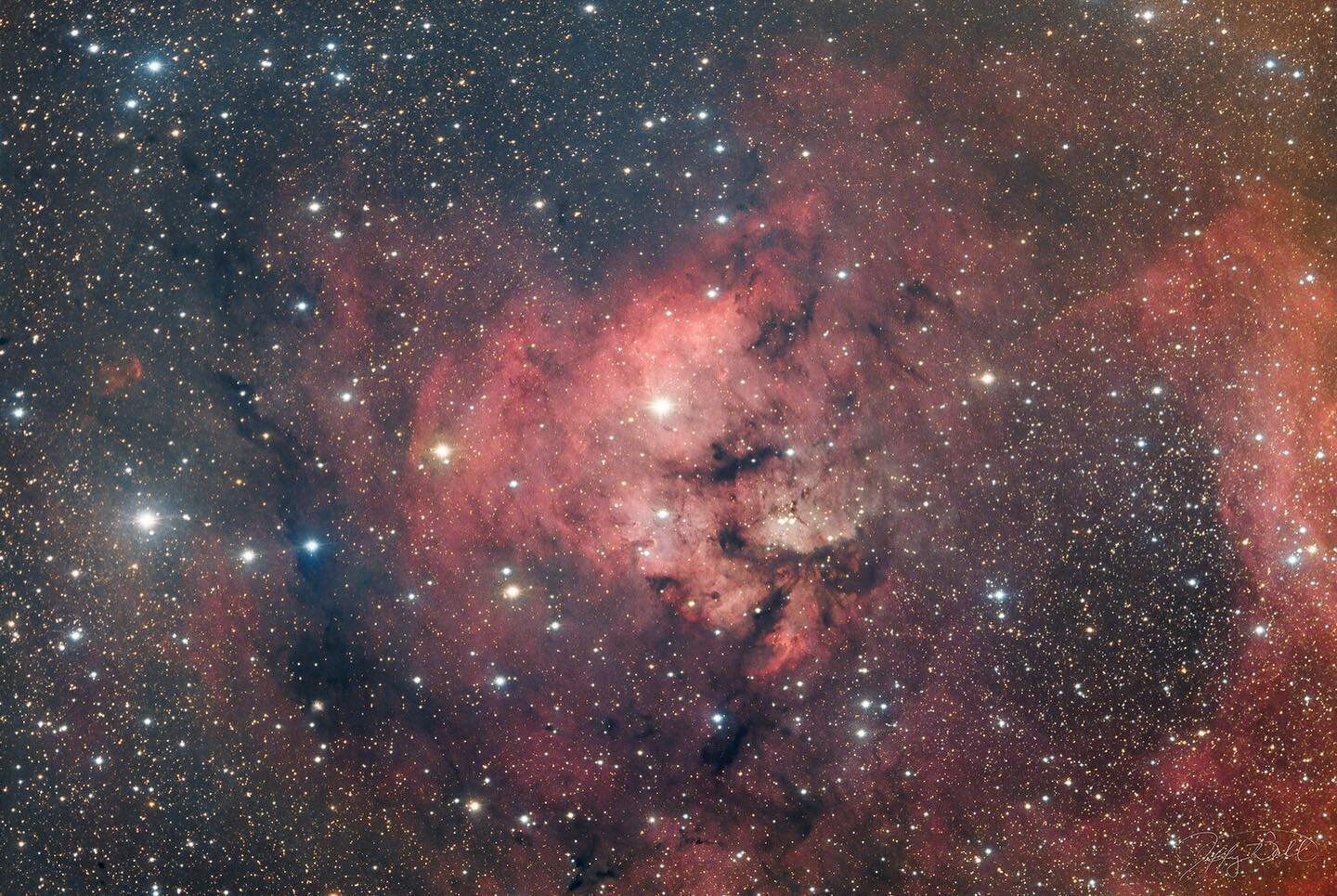
Angels in Monoceros: The Monoceros M2 Complex
The Monoceros R2 molecular complex (often shortened to Mon R2) is a massive giant molecular cloud and one of the nearest active star-forming regions to Earth. It's a dynamic stellar nursery embedded in dense gas and dust, where new stars—particularly massive ones—are actively being born.
Key Facts
Location: Southwestern part of the constellation Monoceros (the Unicorn), near the border with Orion. It's part of the larger Orion-Monoceros cloud complex.
Distance: Approximately 2,400–2,700 light-years (around 830 parsecs).
Size and Structure: The main dense core is relatively compact (a few light-years across), but the overall molecular cloud and associated nebulae span a wide area—reflection nebulae alone stretch up to about 2° in the sky. It's situated well below the galactic plane, which makes it stand out in certain observations.
Age and Activity: Star formation here began roughly 6–10 million years ago. It hosts an OB association (young, hot, massive B- and A-type stars) that illuminates surrounding dust, creating prominent reflection nebulae with bluish hues. There's also significant emission from ionized gas (red glows) and dark nebulae that appear as shadowy silhouettes blocking background light.
Notable Features:
A central hub of massive star formation with embedded clusters, molecular outflows, and HII regions.
Infrared observations (like those from VISTA or 2MASS) penetrate the dust to reveal hidden young stars and protoplanetary disks.
It's a key site for studying early stellar evolution, variability in young stellar objects (YSOs), and the interplay between massive stars and their natal clouds.
The most famous and photogenic part of Mon R2 is the region around NGC 2170 (the Angel Nebula), a striking reflection nebula with wing-like dust structures, glowing blue from scattered starlight, mixed with red emission and dark lanes. Wider views of the complex reveal a richer tapestry of colorful gas, dust filaments, and star clusters.
Credit: GROK 2/28/26
Click on image for larger view.
New Astro Camera: OM-3
Join me for a LIVE conversation about this new astro camera coming to the market. Is this the best option for you? How does it compare to other options? https://www.earthandskyphoto.com Correction: when discussing Bulb mode with Canon, I incorrectly said it had a limit of 30”. I meant to say manual exposure has a max of 30”. In bulb, you need to use a remote control or app for exposure time control. The problem is you can’t set exposure time for stills in the camera menu. I was made aware that Olympus no longer owns the OM system. It is owned by Japanese industrial Partners, a private equity firm. For content on the OM-3 for astrophotography, please see Ben Chapell’s Narrow Band channel. https://youtube.com/@TheNarrowbandChannel?si=GcWY-BM9skG9LPhY
Jeff's Blog
Join me on photography journeys from desert landscapes to deep sky wonders.