The Herschel 400 Astronomical League Project is underway
It’s not too late to join. We are about 30 objects into the Herschel 400. Hope to get another session in soon. Please subscribe to the YouTube channel so you get notifications on LIVE STREAMS.
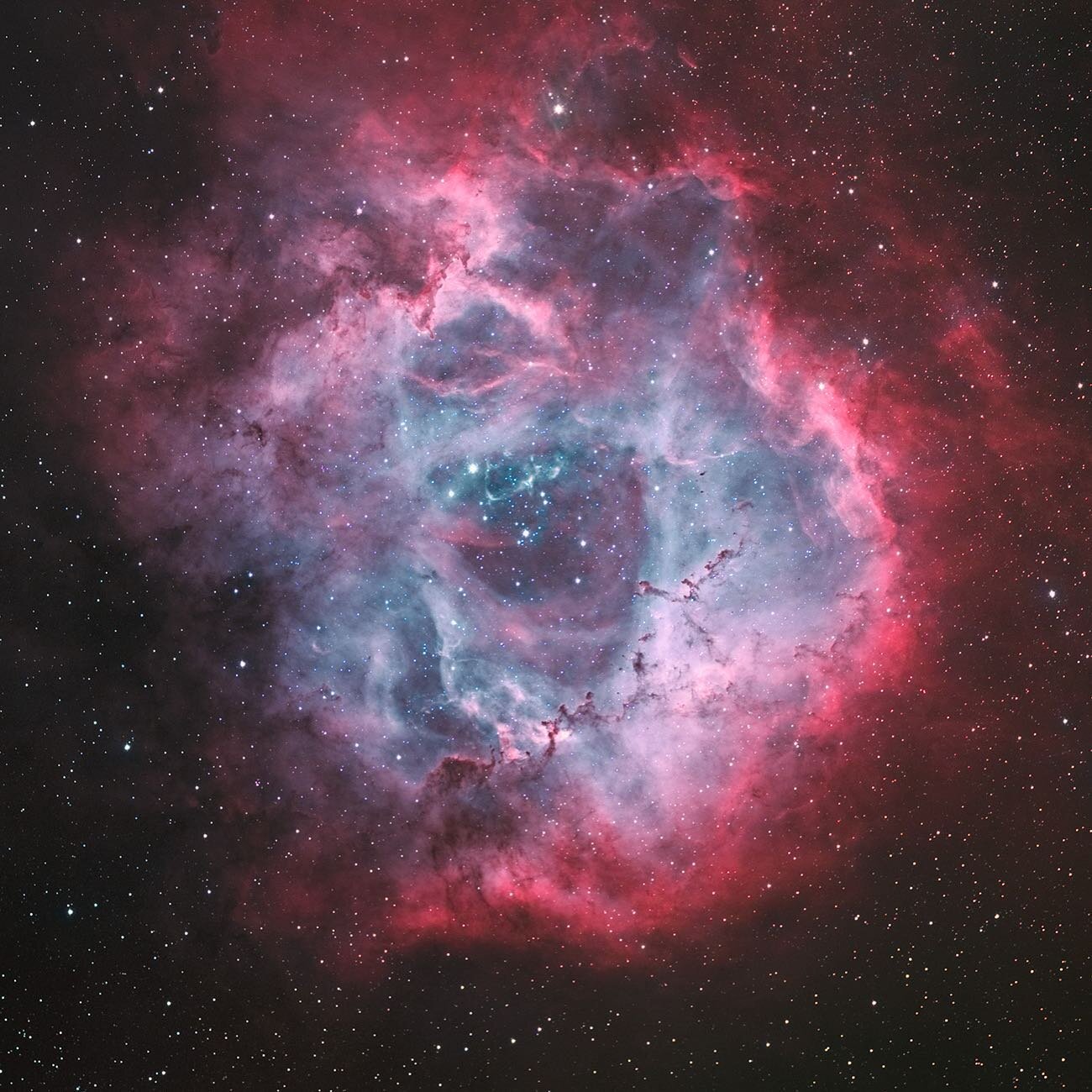
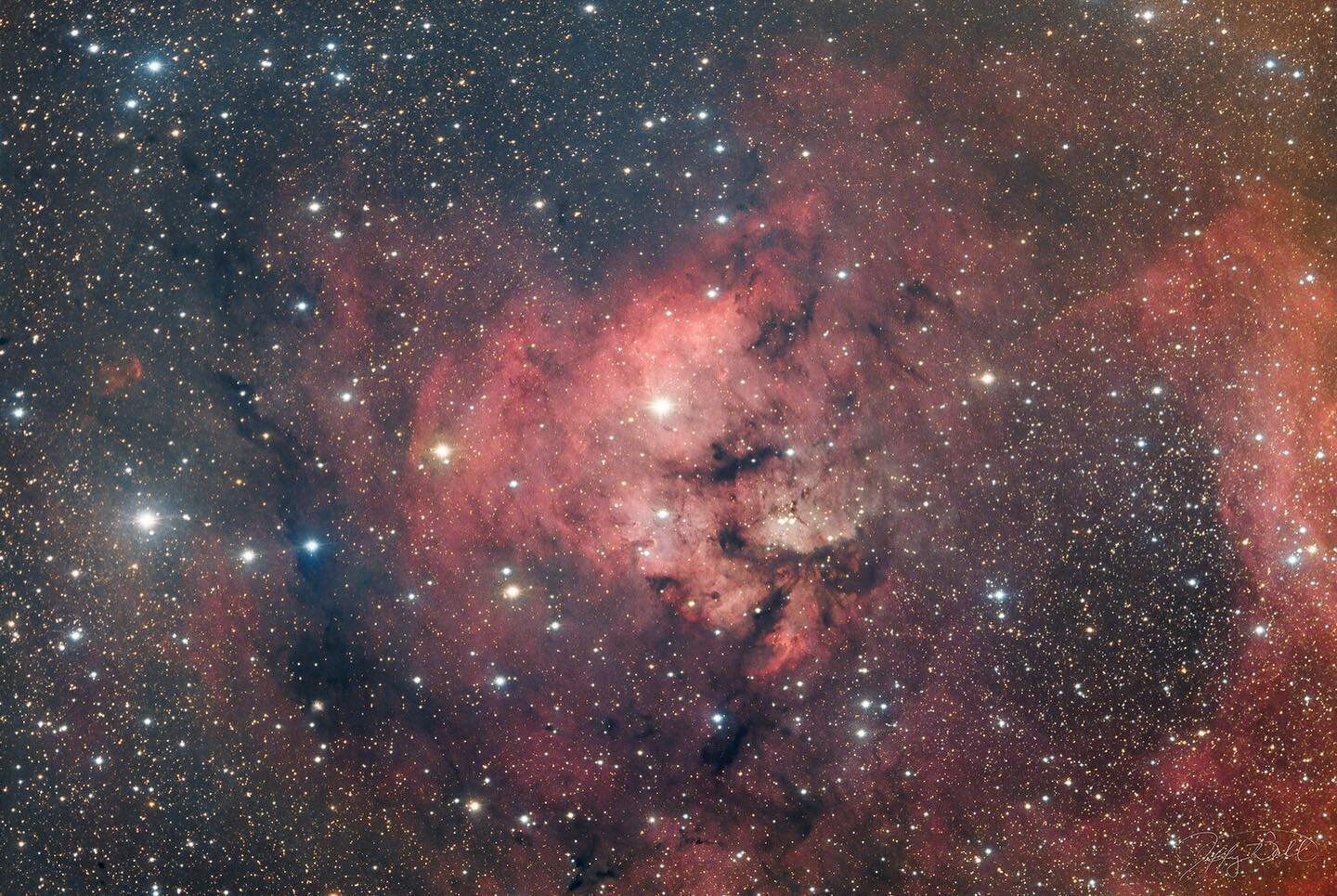
Angels in Monoceros: The Monoceros M2 Complex
The Monoceros R2 molecular complex (often shortened to Mon R2) is a massive giant molecular cloud and one of the nearest active star-forming regions to Earth. It's a dynamic stellar nursery embedded in dense gas and dust, where new stars—particularly massive ones—are actively being born.
Key Facts
Location: Southwestern part of the constellation Monoceros (the Unicorn), near the border with Orion. It's part of the larger Orion-Monoceros cloud complex.
Distance: Approximately 2,400–2,700 light-years (around 830 parsecs).
Size and Structure: The main dense core is relatively compact (a few light-years across), but the overall molecular cloud and associated nebulae span a wide area—reflection nebulae alone stretch up to about 2° in the sky. It's situated well below the galactic plane, which makes it stand out in certain observations.
Age and Activity: Star formation here began roughly 6–10 million years ago. It hosts an OB association (young, hot, massive B- and A-type stars) that illuminates surrounding dust, creating prominent reflection nebulae with bluish hues. There's also significant emission from ionized gas (red glows) and dark nebulae that appear as shadowy silhouettes blocking background light.
Notable Features:
A central hub of massive star formation with embedded clusters, molecular outflows, and HII regions.
Infrared observations (like those from VISTA or 2MASS) penetrate the dust to reveal hidden young stars and protoplanetary disks.
It's a key site for studying early stellar evolution, variability in young stellar objects (YSOs), and the interplay between massive stars and their natal clouds.
The most famous and photogenic part of Mon R2 is the region around NGC 2170 (the Angel Nebula), a striking reflection nebula with wing-like dust structures, glowing blue from scattered starlight, mixed with red emission and dark lanes. Wider views of the complex reveal a richer tapestry of colorful gas, dust filaments, and star clusters.
Credit: GROK 2/28/26
Click on image for larger view.
New Astro Camera: OM-3
Join me for a LIVE conversation about this new astro camera coming to the market. Is this the best option for you? How does it compare to other options? https://www.earthandskyphoto.com Correction: when discussing Bulb mode with Canon, I incorrectly said it had a limit of 30”. I meant to say manual exposure has a max of 30”. In bulb, you need to use a remote control or app for exposure time control. The problem is you can’t set exposure time for stills in the camera menu. I was made aware that Olympus no longer owns the OM system. It is owned by Japanese industrial Partners, a private equity firm. For content on the OM-3 for astrophotography, please see Ben Chapell’s Narrow Band channel. https://youtube.com/@TheNarrowbandChannel?si=GcWY-BM9skG9LPhY
On-Line Education Webinar is now posted...
Recently, two fellow astro-imagers joined me for a webinar where we discussed utilizing Adobe Light Room for processing RGB astronomical images. What a wonderful way to share information and provide education in today's world. This archived webinar serves as an example of the new on-line educational services I am providing. You can now access this highly customized one-on-one training from the comfort of your digital darkroom. You and I will share applications and discuss ways to optimize your landscape or astronomical images in real-time. It is a wonderful way to achieve your vision of the final image you captured in the field or under the stars.
For more information on the services and to see the webinar, please go to Purchase, Digital Photography Education from the main menu.
I hope you enjoy the presentation and simply email me if you would like to schedule a one-hour on-line session today.
4 weeks and counting...
 As most of you in the U.S. know, this winter has already been brutal. So today begins my 4 week countdown to the Winter Star Party near Marathon, FL. I plan on blogging daily from WSP and hope to incorporate video for those of you just finishing your snow shoveling:-) The star party is really a wonderful break from the winter climate of the mid-Atlantic area. I spent some time today working on compositions for the week and hope to bring back some wonderful data. I also have plans for documentary work that I hope to share on the site sometime down the road. So I post an image today taken from the 2009 WSP as I longingly look forward to the 2010 event. Stay tuned for much more to come...
TWITS in Vegas...
Leo Laporte and his TWIT crew are broadcasting live and archiving web-based broadcasts from the Consumer Electronics Convention in Las Vegas this week. There is a lot about this that intrigues me.
First is the web-based broadcasting, both live and archived. So far I have only viewed the archived presentations and the quality is pretty amazing. It is only a sign of things to come in customized broadcasting. When you see things like this it is hard to envision how network TV will survive. The fragmentation and specialization of our media only continues to expand. Perhaps there will always be a place for mass-interest broadcasting, but it seems like the trend is certainly going against this. Few events can bring together our country for mass viewing; sports, American Idol, Dancing with the Stars.
The technology at CES is also intriguing. FloTV is a branch of QualComm and they have installed a 700mhz network in the top 100 metro areas in the U.S. The network can broadcast live TV such as ESPN and ABC to there own customized hardware, but there are plans to develop an attachment for the iPhone to receive and display the video feed.
There was also a 3D laptop on display from Lenovo. The future of gaming is surely going to move in this direction. Lenovo also presented a laptop with detachable screen that became a tablet running Linux. The laptop runs Windows 7 when in full laptop mode. Web-based broadcasting, new networks for receiving media, and tablets/laptop hybrids seem to be moving our technology forward. It will be an interesting decade.
Most importantly, exposure to this technology has spurred some new ideas that I have for photographic education. I hope to announce this new venture in the coming months so please stay tuned. Now to work on this new endeavor...
Flaming Star Nebula
One of my favorite compositions in the Milky Way, the Flaming Star region is a beautiful display of vibrant color. Stars and nebula combine to make this one of the premier compositions in the night sky. The image was added to the astrophotography color gallery just today. Please check out the gallery for the image as well as more details on the object and how it was acquired.
Direct link to image. Please click on it for larger presentation.
An Interesting Night Scene...
 Here is an example of an interesting night sky scene, but one that doesn't quite make the final astronomy portfolio. It is a patch of sky just off of the bright star Rigel of the constellation Orion. The nebula is referred to commonly as the Witch Head Nebula for obvious reasons and can be found by searching for IC 2118 in astronomical data banks. The nebula is remnance of dust and gas from a prior supernova in the area. The object itself is in the constellation Eridanus. The image is fine to look at, but does not make the final cut for portfolio print quality. The data simply isn't strong enough for print and the composition isn't quite strong enough. This will be one of my targets for the upcoming Winter Star Party in the Florida Keys in February. The Takahashi FSQ 85 with reducer should provide just the right composition, although I may have to go to a 200mm lens as well. Just another example of the many hours that go into images that you may or may not see in final print and on the portfoio pages. Thank goodness that blogs at least give some of these images a home. Take care.
Technical details: The image was captured during the Winter Star Party 2009 in the Florida Keys. Telescope was a TMB 92SS with Televue focal reducer/flattener in place. The camera was a modified Canon 450D. 30 images of 4 minutes duration were stacked in Images Plus after RAW conversion in Adobe Light Room 2.5. All enhancements were made within Adobe Photoshop CS4.
Jeff's Blog
Join me on photography journeys from desert landscapes to deep sky wonders.