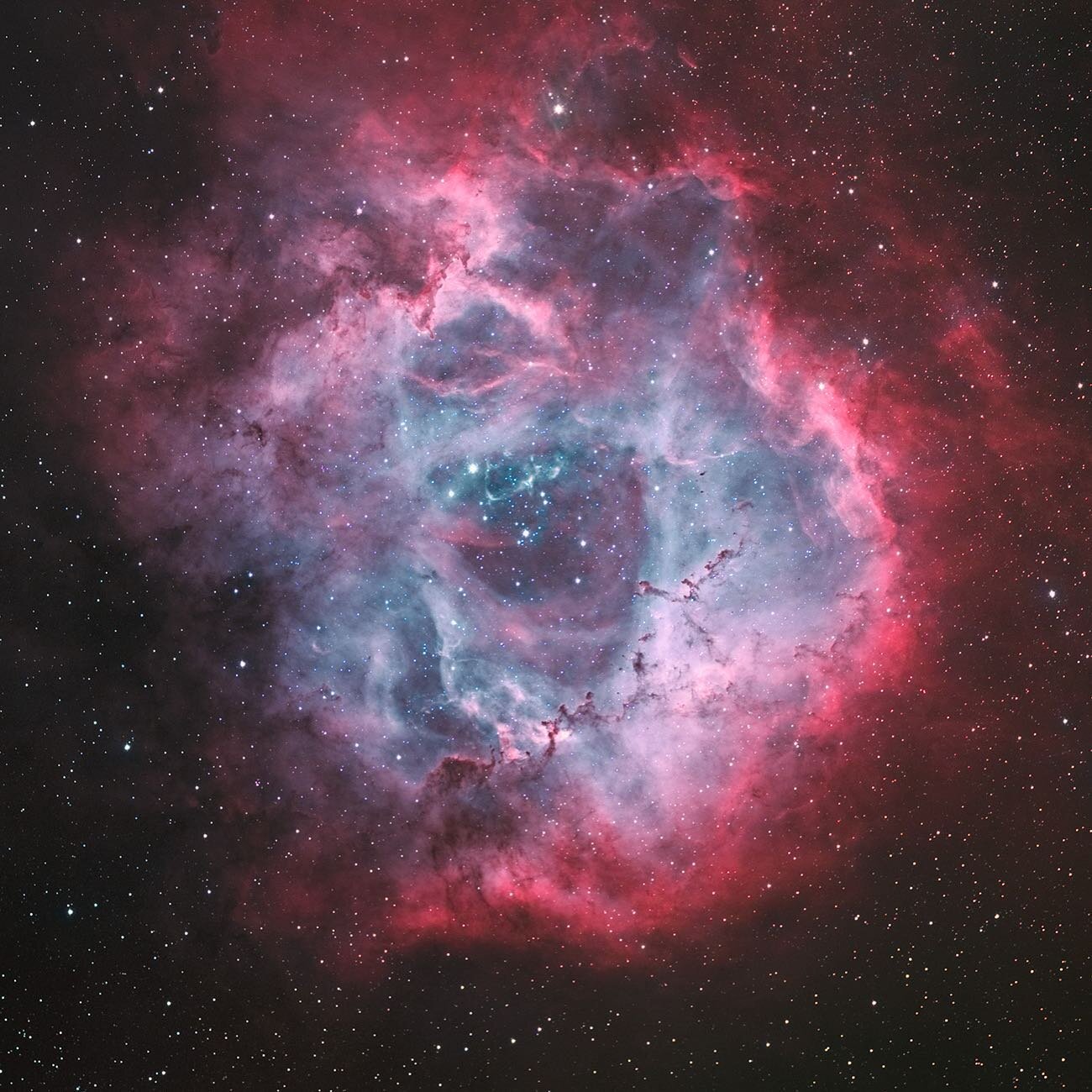
The Herschel 400 Astronomical League Project is underway
It’s not too late to join. We are about 30 objects into the Herschel 400. Hope to get another session in soon. Please subscribe to the YouTube channel so you get notifications on LIVE STREAMS.
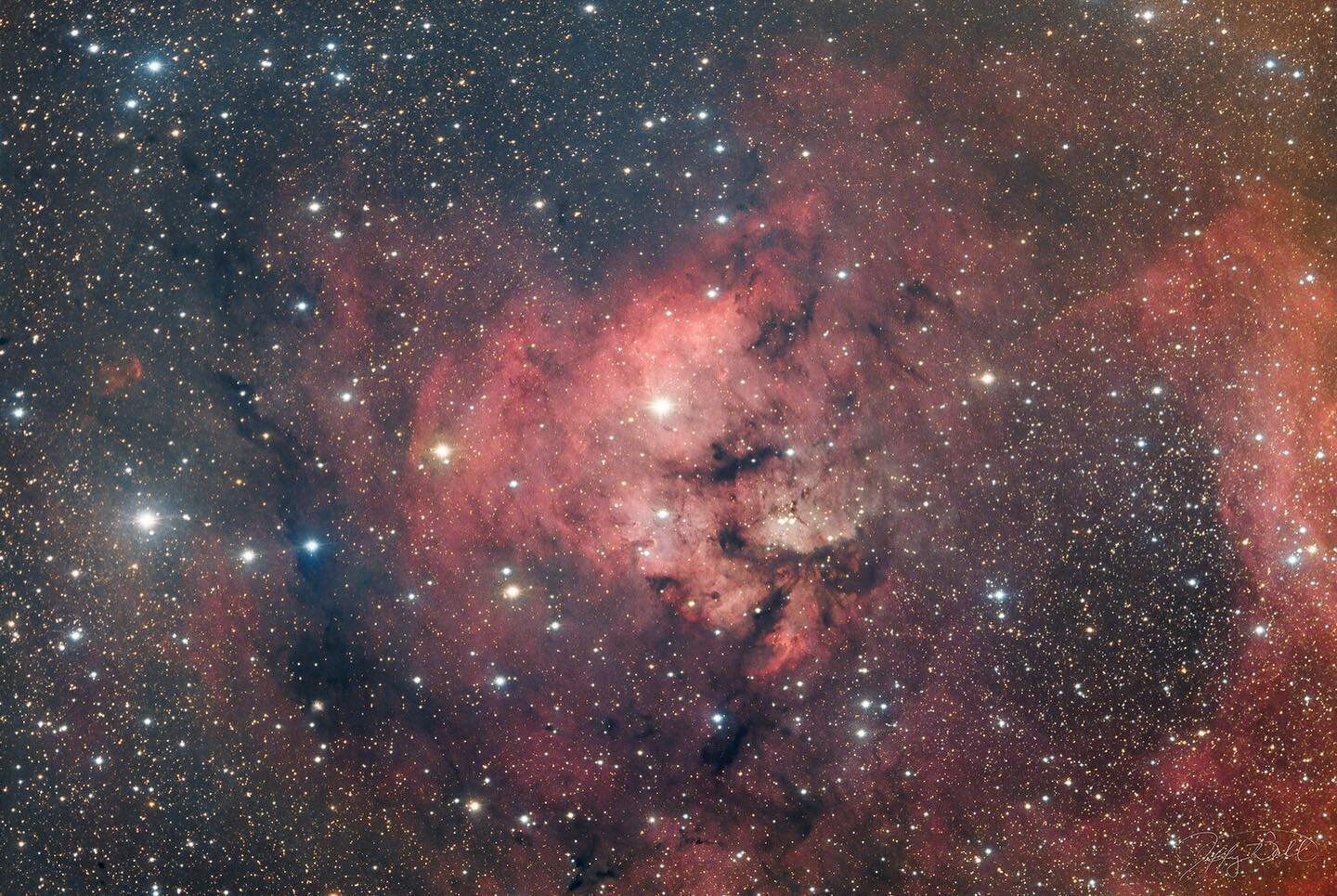
Angels in Monoceros: The Monoceros M2 Complex
The Monoceros R2 molecular complex (often shortened to Mon R2) is a massive giant molecular cloud and one of the nearest active star-forming regions to Earth. It's a dynamic stellar nursery embedded in dense gas and dust, where new stars—particularly massive ones—are actively being born.
Key Facts
Location: Southwestern part of the constellation Monoceros (the Unicorn), near the border with Orion. It's part of the larger Orion-Monoceros cloud complex.
Distance: Approximately 2,400–2,700 light-years (around 830 parsecs).
Size and Structure: The main dense core is relatively compact (a few light-years across), but the overall molecular cloud and associated nebulae span a wide area—reflection nebulae alone stretch up to about 2° in the sky. It's situated well below the galactic plane, which makes it stand out in certain observations.
Age and Activity: Star formation here began roughly 6–10 million years ago. It hosts an OB association (young, hot, massive B- and A-type stars) that illuminates surrounding dust, creating prominent reflection nebulae with bluish hues. There's also significant emission from ionized gas (red glows) and dark nebulae that appear as shadowy silhouettes blocking background light.
Notable Features:
A central hub of massive star formation with embedded clusters, molecular outflows, and HII regions.
Infrared observations (like those from VISTA or 2MASS) penetrate the dust to reveal hidden young stars and protoplanetary disks.
It's a key site for studying early stellar evolution, variability in young stellar objects (YSOs), and the interplay between massive stars and their natal clouds.
The most famous and photogenic part of Mon R2 is the region around NGC 2170 (the Angel Nebula), a striking reflection nebula with wing-like dust structures, glowing blue from scattered starlight, mixed with red emission and dark lanes. Wider views of the complex reveal a richer tapestry of colorful gas, dust filaments, and star clusters.
Credit: GROK 2/28/26
Click on image for larger view.
New Astro Camera: OM-3
Join me for a LIVE conversation about this new astro camera coming to the market. Is this the best option for you? How does it compare to other options? https://www.earthandskyphoto.com Correction: when discussing Bulb mode with Canon, I incorrectly said it had a limit of 30”. I meant to say manual exposure has a max of 30”. In bulb, you need to use a remote control or app for exposure time control. The problem is you can’t set exposure time for stills in the camera menu. I was made aware that Olympus no longer owns the OM system. It is owned by Japanese industrial Partners, a private equity firm. For content on the OM-3 for astrophotography, please see Ben Chapell’s Narrow Band channel. https://youtube.com/@TheNarrowbandChannel?si=GcWY-BM9skG9LPhY
Adobe CS5 Coming April 12
Just received a notice about the new Adobe Creative Suite launching on April 12. If you are like me and was just about to purchase the entire Creative Suite, then this is good timing as now I will wait to get the CS5 version. I will update with anything I find interesting in the updates, especially pertaining to Photoshop CS5.
New iPhone App for Photographers
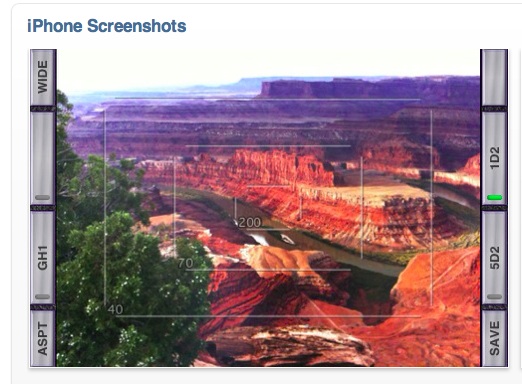 Viewfinder Standard iPhone AppIt may not always be convenient to have your camera and lens ready for judging a composition that presents itself in the field. For those of us who utilized 4x5 or larger format cameras, we worked a bit slower in the field and utilized compositional aids to be more efficient. I utilized a card board cut out in a 4x5 format and would hold the visualizer at varying distances from my eye to simulate various focal length lenses. I also utilized a Linhoff visualizer tool with varying focal distances represented. These tools saved me from having to take out and setup the camera gear every time I thought I had a composition.
Well now iPhone users have a very nice new tool to aid in visualization while in the field. I normally have my iPhone on me so it is pretty convenient for me to access the camera, certainly more convenient than taking the camera out of the backpack every time I want to evaluate a composition. And perhaps I am at a location without my camera gear? Now I can use the iPhone app to capture the image and the desired focal length lens for a potential return visit with the gear.
The app is called Viewfinder and comes in two formats, Standard or Pro. The main difference is that the Pro version has pre-configured formats for medium format cameras and digital backs. If you use a 35mm DSLR then the Standard is probably all you need. The Standard version is $7.99 and the Pro is $14.99.
As you can see in the image above, the app shows an overlay grid for varying focal lengths while you are viewing the live image on the screen. You can click on one of the focal lengths to isolate that focal length exclusively in the view while the others are grayed out. Setup is quite simple where you select the camera body you will be using and the focal lengths of lenses you want to have represented in the overlay. You can also set the app to display a 16:9 format to aid in compositions for video capture.
I see two primary limitations of the app:
- The first being that the widest angle the iPhone can represent is 35mm equivalent of a 35mm DSLR camera. Evidently there are some adapters you can attach to the iPhone camera to give a wider angle lens, but few utilize this and it seems to take away from the convenience of the device. So knowing that you really can't visualize via the Viewfinder app any lens below 35mm is necessary in evaluating its effectiveness for you. I don't find this a limitation at all since most wide angle compositions are pretty obvious and I need more assistance with longer telephoto compositions that isolate landscape rather than encompass landscape.
- The iPhone screen can be challenging to view in very bright daylight. Now most of the time this isn't the best light to be photographing in any way, but you may be photographing in sunset light with the sun at your back and that may be challenging to view the screen. Most of the time the viewing conditions will be fine for viewing the iPhone screen.
The Viewfinder visualizer looks like a wonderful new tool for photographers. I expect to utilize it quite a bit in the field and hope to give it a hard workout on the upcoming field visit to the Great Smoky Mountains. So far this is an early recommendation for the app. Please let me know if you have any thoughts or ideas on the app.
Jeff Ball Photography at new art show in Louisville, KY
 Jeff Ball Photography has been invited to the Norton Commons Art Show in Louisville, KY. The dates are May 8-9 from noon to 6 p.m. each day. This is a great way to see Jeff's prints in person. The show will feature 9 portfolio images in various print sizes from 24"x18" to 14"x11". Framed and matted prints will be available. You can also tour the entire portfolio via iPad. If you live or are in the Louisville area on Mother's Day weekend, stop by the Norton Commons Art Show and visit the Jeff Ball Photography booth.
Al Nagler Interview Podcast
The audio portion of the Al Nagler interview for Podcast subscribers. Mr. Al Nagler, founder of TeleVue Optics, discusses his astrophotography endeavors. A wonderful insight from one of the industry icons.
Alain Briot Interview Part 4 - Digital vs. Film
At the time this interview was recorded, just over 3 years ago, the film vs. digital debate was near the end of its time. But some of the discussion in this segment is still relevant today when it comes to optimizing our digital data.
Jeff's Blog
Join me on photography journeys from desert landscapes to deep sky wonders.