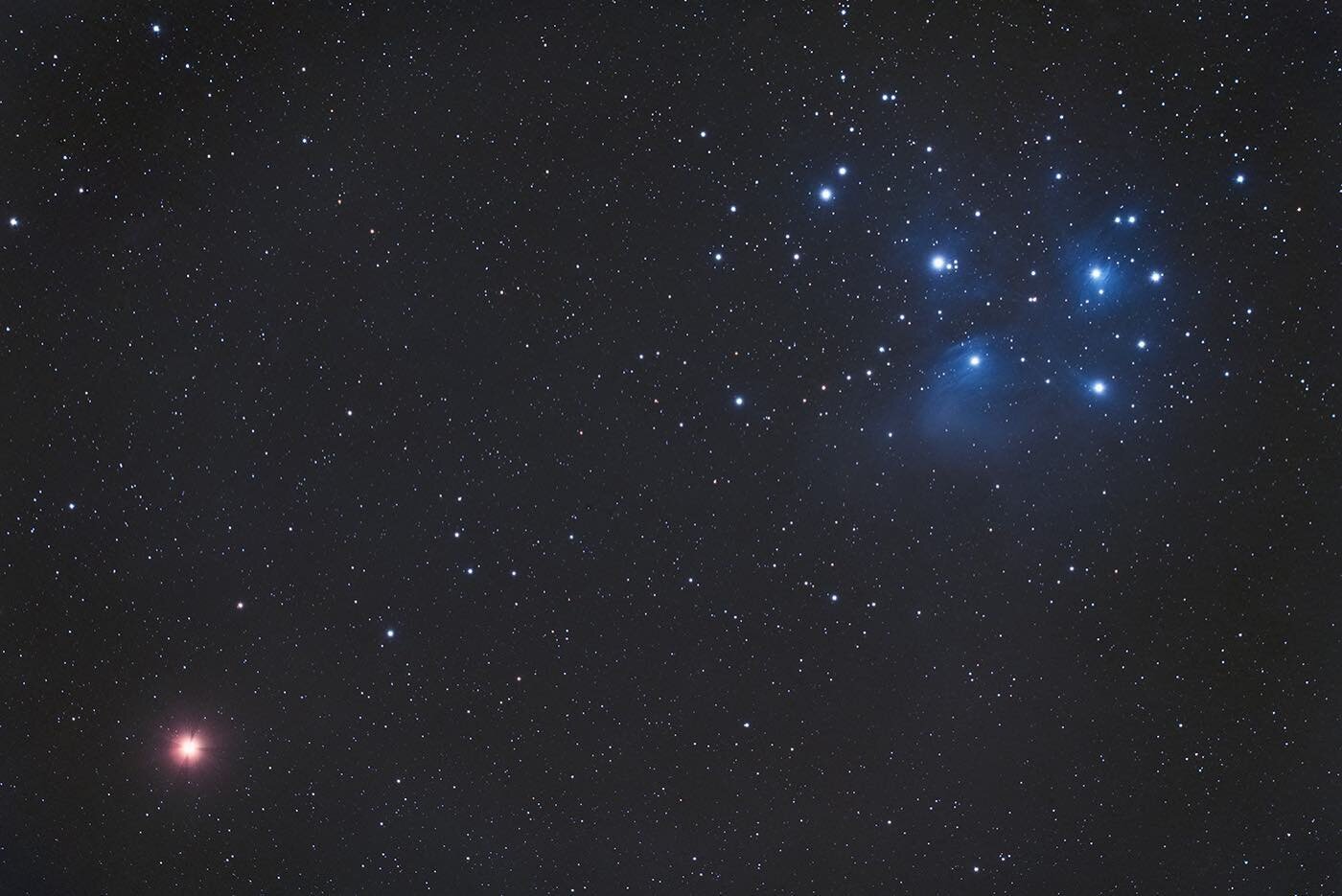
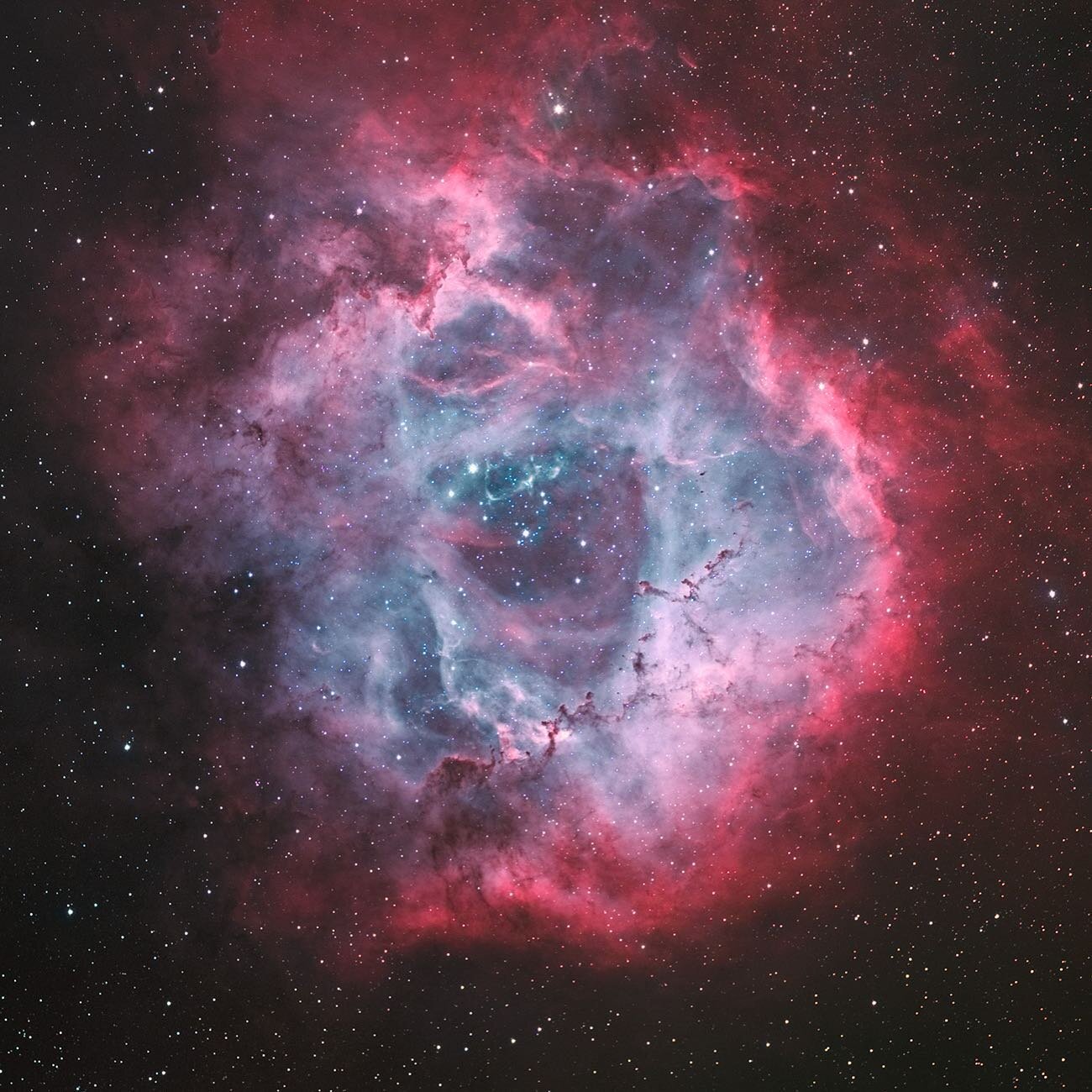
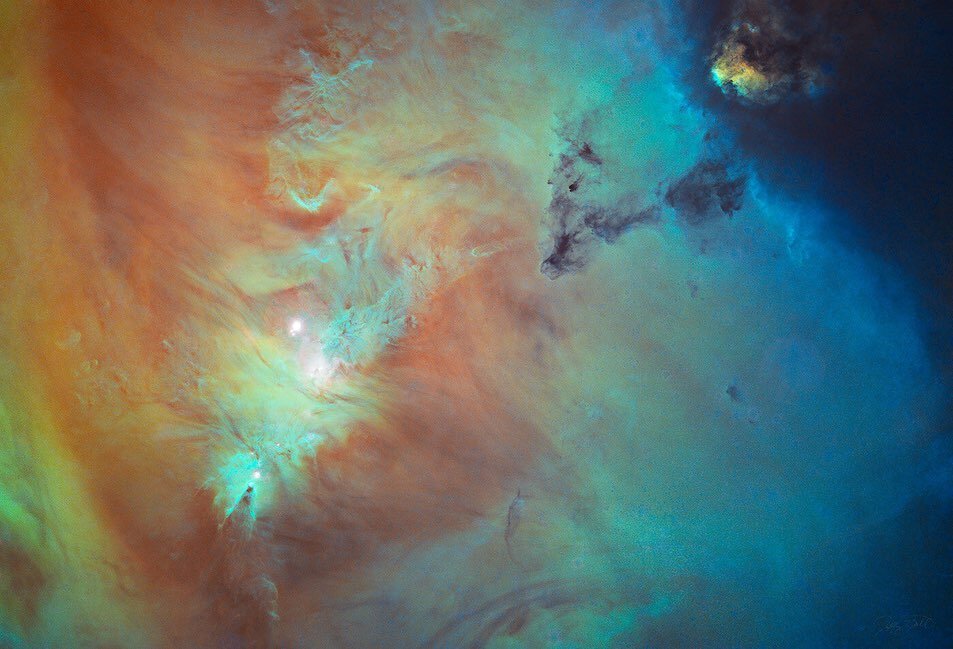
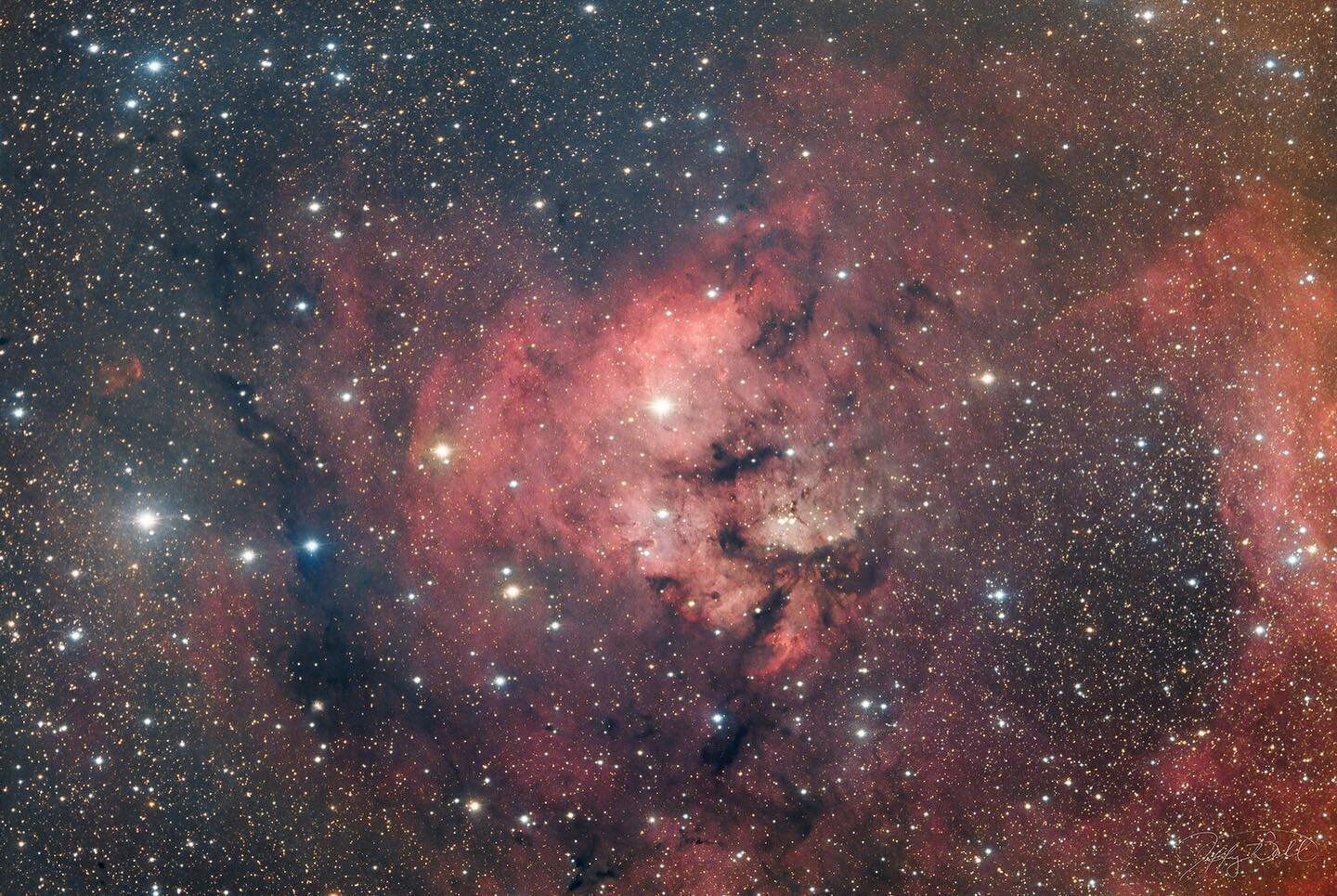
Winter Experimentation-Cone Nebula and Christmas Tree cluster (NGC 2264)
This winter I made the decision to increase imaging time from my house by the most efficient utilization of astronomical filters possible. I live in a rural/suburban Bortle 4 transition zone. My zenith to the south and east are pretty decent. due north has a light dome from Huntington, WV.
I am a One Shot Color (OSC) guy. I know…but I just am. My imaging setup this winter was with the Astro-Physics 130GT and AP .8x focal reducer and the modified Canon T5i. The T5i performs very well on cold winter nights.
Oh…I will be giving a presentation on my experience with filters and OSC imaging at Green Bank Star Quest 2019 on Friday June 28. Click the link for registration and more information on GBSQ 2019.
I utilized 4 filters over the winter;
Astronomik 12nm Halpha EOS clip in
Astronomik CLS EOS clip in
Astronomik CLS CCD 2”
STC Duo Narrow Band EOS clip in
I will post my presentation to the blog after Green Bank which details observations and findings with each of these filters.
My hands-down favorite filter from my house is the STC Duo Narrow Band clip in. This filter has very nice color balance for a narrow band filter right out of the modified camera. It has beautiful contrast and does send some signal to the entire Bayer matrix.
Memorial weekend afforded me some time to work on the data I collected from November to February on the Cone Nebula and Christmas Tree cluster. Basically, I took the red channel from the STC data and the green and blue channel from a combined version of the Astronomik CLS CCD and CLS filters.
A total of over 12 hours of data was gathered for this image. I did not calibrate with flats, darks, or bias frames.
If you would like more information on the area, please Google NCG 2264 or Christmas Tree cluster or Cone nebula. It is a fascinating part of our winter Milky Way rising just a bit after the Orion constellation.
Please click on the image below for a larger light box presentation.
Have a great week!
The Camera is a Liar
I have often stated that the camera is a liar. Why? Well I must first establish that the real "truth" teller in all of this is the human eye and brain. This can be debated, but for now please just accept this notion. Now that we have established what is truth, it is quite simple to prove that the camera is a liar. Many "purists" insist on no "manipulation" of an image; simply let the camera record the "truth." Nothing could be further from reality. There are many scientific differences between the human eye/brain interpretation of light and the digital sensor. The purpose of this post is not to regurgitate what others have written, so I simply forward you to the fantastic webpage by Roger Clark where he addresses the differences between the human eye and camera sensors/lenses.
I simply wanted to present an image that I recorded in the spring and demonstrate how the camera recorded the image and how my eye interpreted the scene. The image is from Douglas Falls in West Virginia where we had our first "Flowing Water Workshop" in May. The scene is a beautiful flowing stream in late morning. The light is bright sun on the left side of the image and blue sky illuminated shadows in the lower parts of the canyon. As you can see from the 3 images posted below, the camera simply cannot record the entire range of light with one capture.
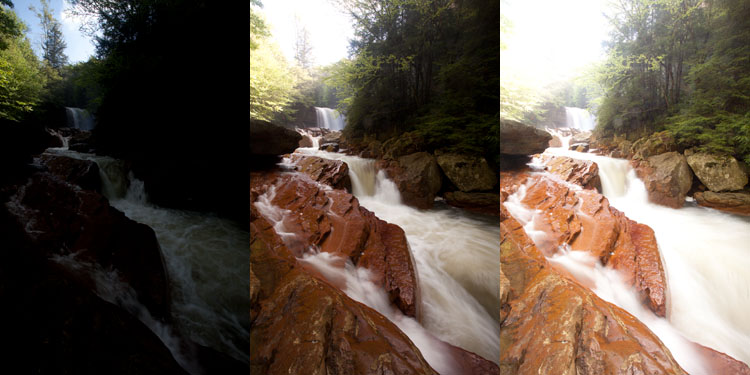
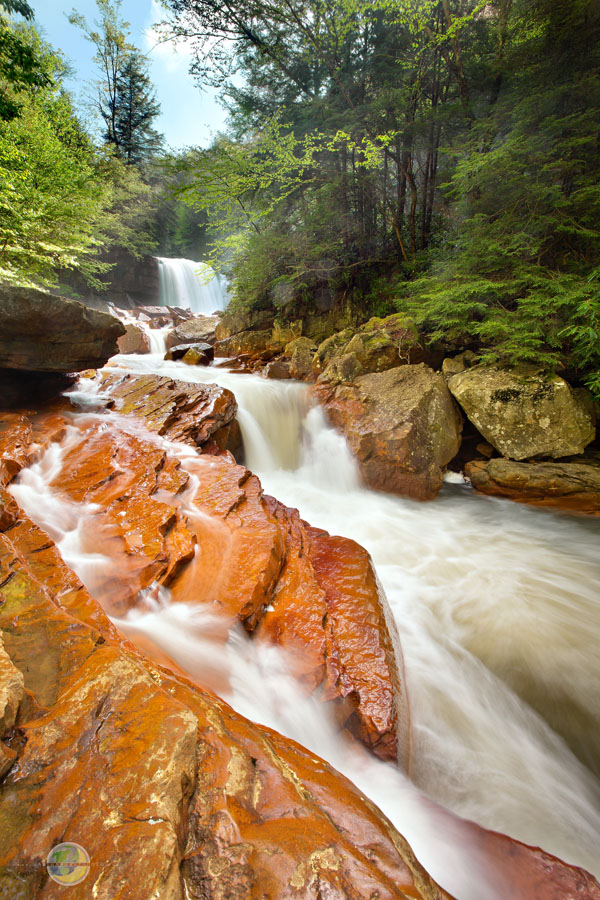 Douglas Falls OptimizedThere are two things that are important for the photographer to understand; how the camera is going to record a particularly beautiful but challenging scene and how to process the data afterwards so that the final image meets the interpretation of the photographer. This is what we focus on in our workshops and post-workshop teaching. The final image of Douglas Falls is posted on the left. This is how I interpreted the scene that day and is much closer to "reality" than any of the 3 images pictured above taken by the camera.
Please click on the image or here for a higher resolution image.
Mesa Arch Morning
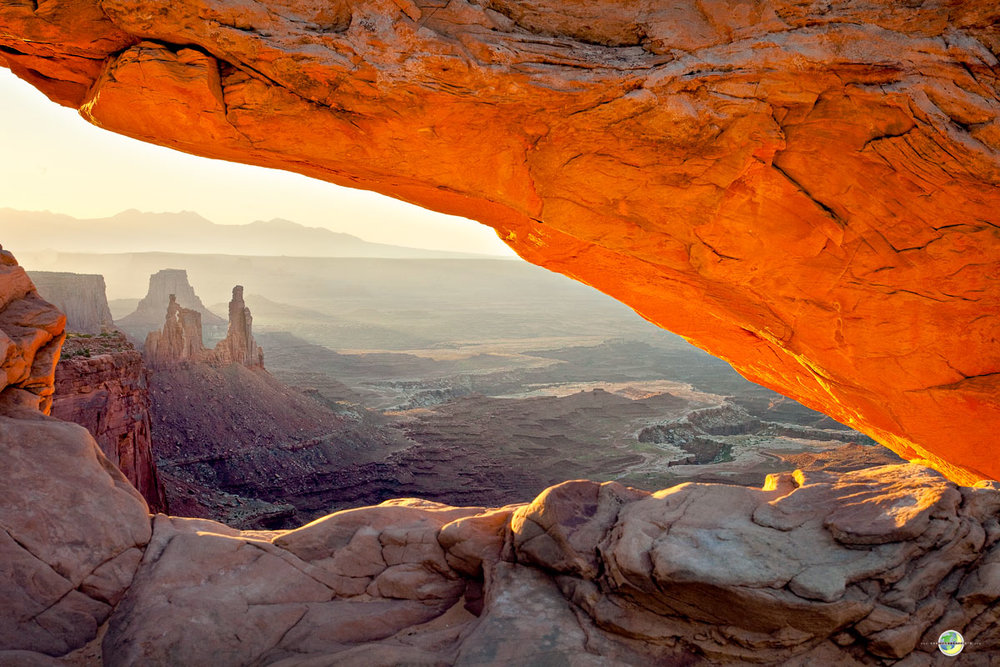 Mesa Arch in Canyonlands National ParkMesa Arch in Canyonlands National Park is an icon of the southwestern landscape. The early morning sun light reflects off of the deep canyon walls and provides intense illumination of the arch. The arch with the window to the desert floor below is a site not to be missed if you are in the Moab, UT area.
For a hgher resolution image please click on the image and then click on the thumbnail for best views. Enjoy and take care.
Kolob Canyon Sunset
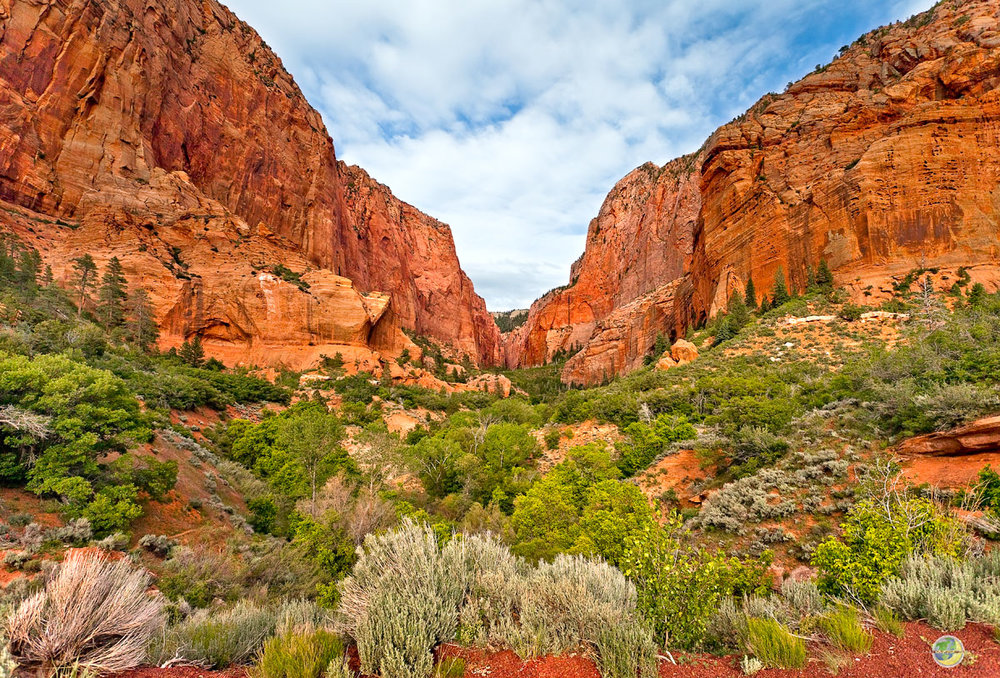 Kolob CanyonOn the western edge of Zion National Park lies the intense red rock canyon of Kolob. The area is a must-see for those visiting Zion. In this image the last rays of sun illuminate the rocks creating an intense display of reds with the green foliage highlighted in the valley. Please click on the image for a higher resolution view.
Douglas Falls May 2011
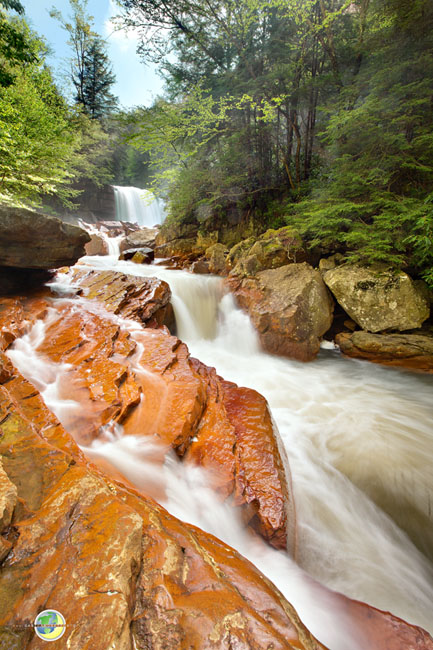 Douglas Falls May 2011Revisiting familiar locations and employing new visualization techniques as well as new optimizing techniques is critical to improving your photography. Douglas Falls is one of my favorite locations in northern West Virginia. This interpretation is an attempt to capture the scene as it looks to the human eye, but the camera sensor is limited in capturing the scene in this manner. The techniques used in this capture and processing are what we teach in our workshops and one on one consulting. If you would like to learn more about this please see our list of workshops or contact me about scheduling your free one on one consulting session. Please click on the image or this link for a higher resolution image.
The Herschel 400 Astronomical League Project is underway
It’s not too late to join. We are about 30 objects into the Herschel 400. Hope to get another session in soon. Please subscribe to the YouTube channel so you get notifications on LIVE STREAMS.
Angels in Monoceros: The Monoceros M2 Complex
The Monoceros R2 molecular complex (often shortened to Mon R2) is a massive giant molecular cloud and one of the nearest active star-forming regions to Earth. It's a dynamic stellar nursery embedded in dense gas and dust, where new stars—particularly massive ones—are actively being born.
Key Facts
Location: Southwestern part of the constellation Monoceros (the Unicorn), near the border with Orion. It's part of the larger Orion-Monoceros cloud complex.
Distance: Approximately 2,400–2,700 light-years (around 830 parsecs).
Size and Structure: The main dense core is relatively compact (a few light-years across), but the overall molecular cloud and associated nebulae span a wide area—reflection nebulae alone stretch up to about 2° in the sky. It's situated well below the galactic plane, which makes it stand out in certain observations.
Age and Activity: Star formation here began roughly 6–10 million years ago. It hosts an OB association (young, hot, massive B- and A-type stars) that illuminates surrounding dust, creating prominent reflection nebulae with bluish hues. There's also significant emission from ionized gas (red glows) and dark nebulae that appear as shadowy silhouettes blocking background light.
Notable Features:
A central hub of massive star formation with embedded clusters, molecular outflows, and HII regions.
Infrared observations (like those from VISTA or 2MASS) penetrate the dust to reveal hidden young stars and protoplanetary disks.
It's a key site for studying early stellar evolution, variability in young stellar objects (YSOs), and the interplay between massive stars and their natal clouds.
The most famous and photogenic part of Mon R2 is the region around NGC 2170 (the Angel Nebula), a striking reflection nebula with wing-like dust structures, glowing blue from scattered starlight, mixed with red emission and dark lanes. Wider views of the complex reveal a richer tapestry of colorful gas, dust filaments, and star clusters.
Credit: GROK 2/28/26
Click on image for larger view.
New Astro Camera: OM-3
Join me for a LIVE conversation about this new astro camera coming to the market. Is this the best option for you? How does it compare to other options? https://www.earthandskyphoto.com Correction: when discussing Bulb mode with Canon, I incorrectly said it had a limit of 30”. I meant to say manual exposure has a max of 30”. In bulb, you need to use a remote control or app for exposure time control. The problem is you can’t set exposure time for stills in the camera menu. I was made aware that Olympus no longer owns the OM system. It is owned by Japanese industrial Partners, a private equity firm. For content on the OM-3 for astrophotography, please see Ben Chapell’s Narrow Band channel. https://youtube.com/@TheNarrowbandChannel?si=GcWY-BM9skG9LPhY
Jeff's Blog
Join me on photography journeys from desert landscapes to deep sky wonders.