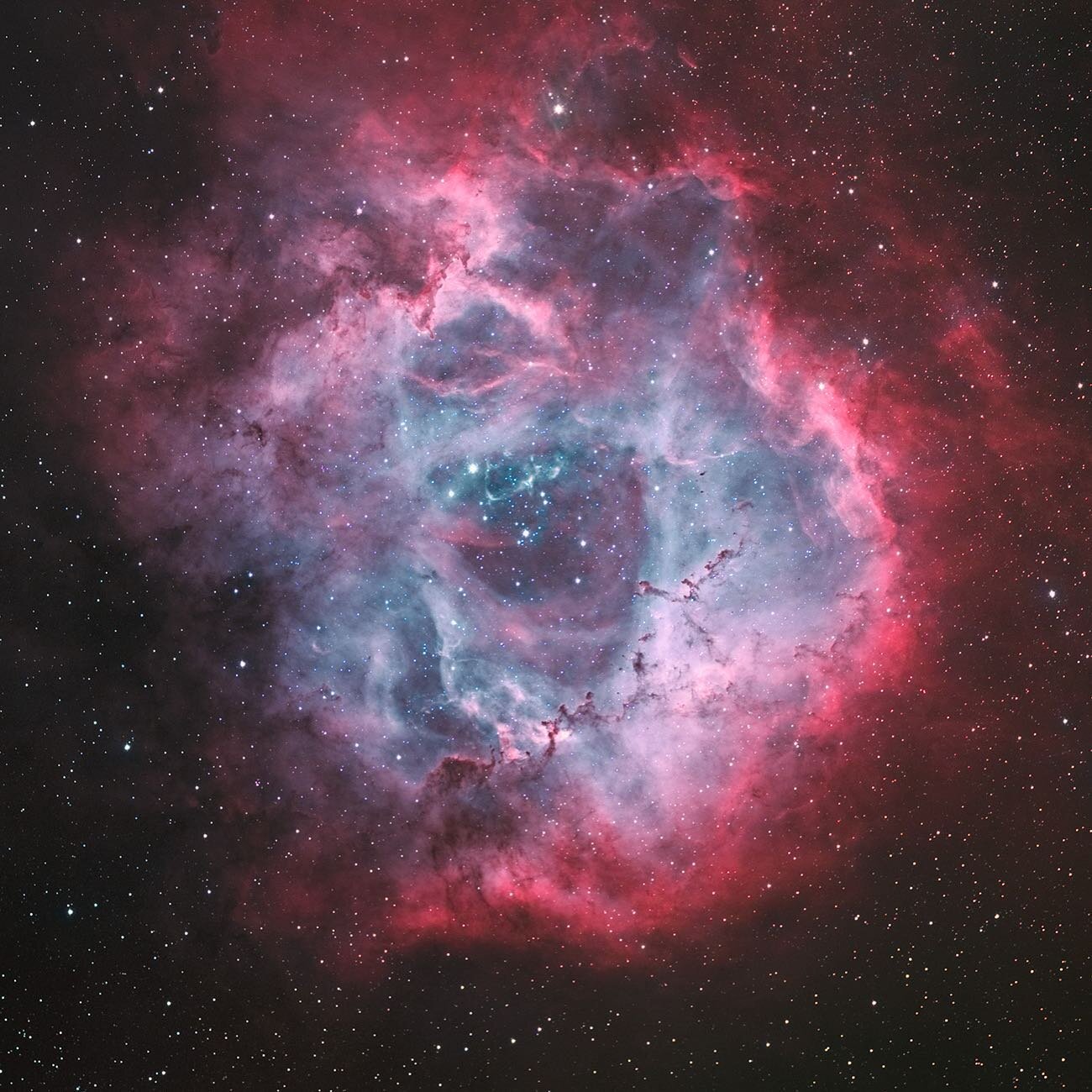
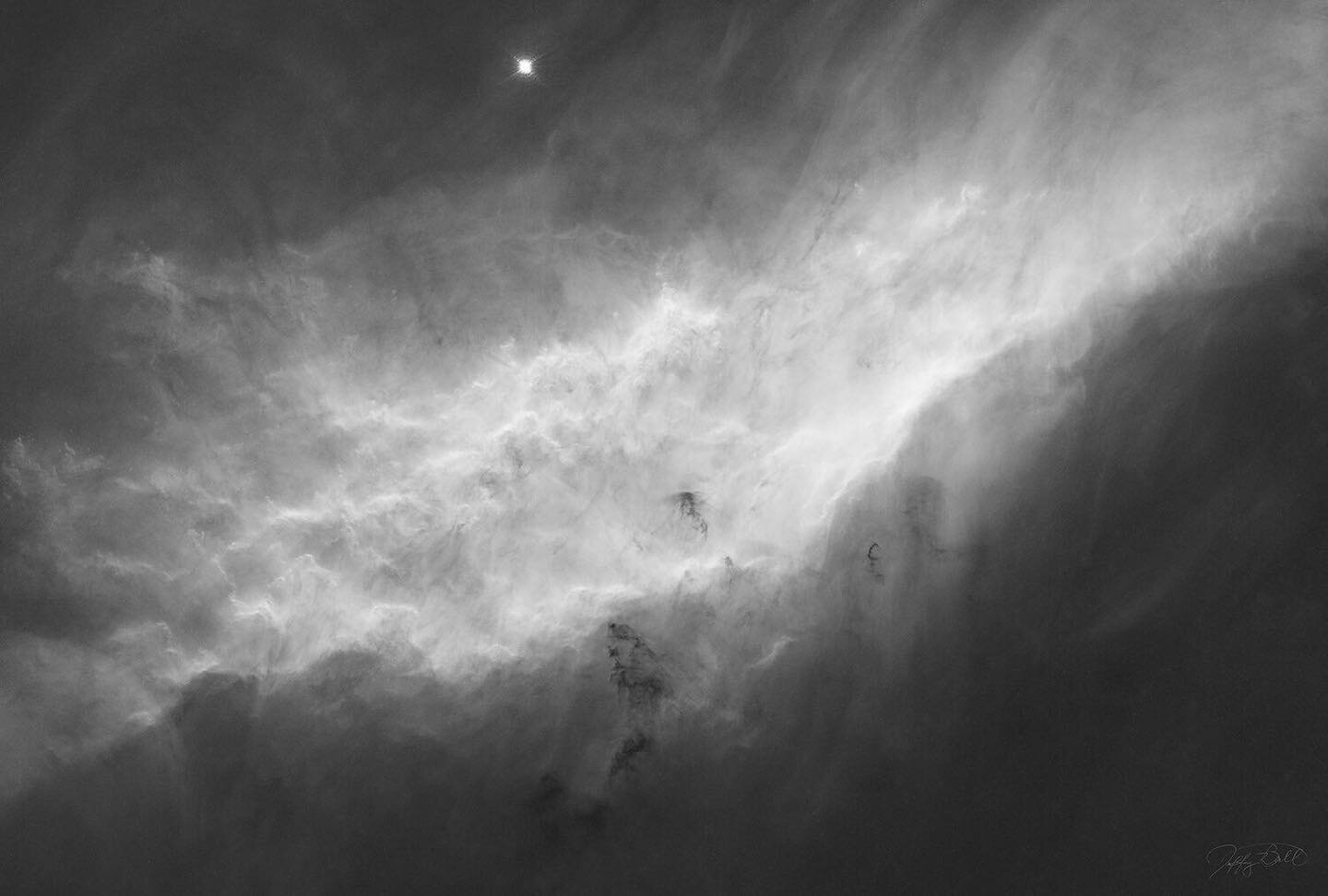
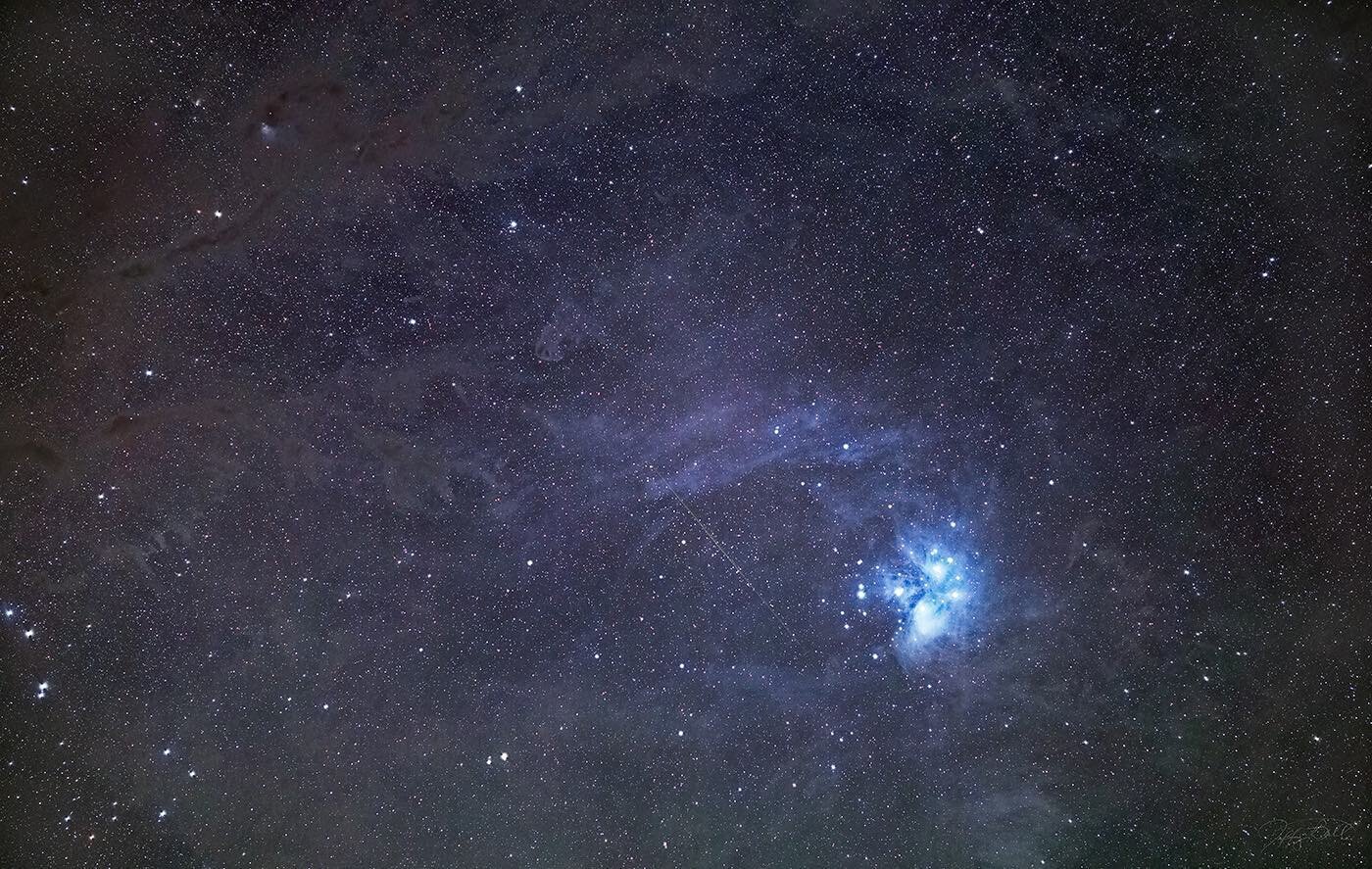
The Herschel 400 Astronomical League Project is underway
It’s not too late to join. We are about 30 objects into the Herschel 400. Hope to get another session in soon. Please subscribe to the YouTube channel so you get notifications on LIVE STREAMS.
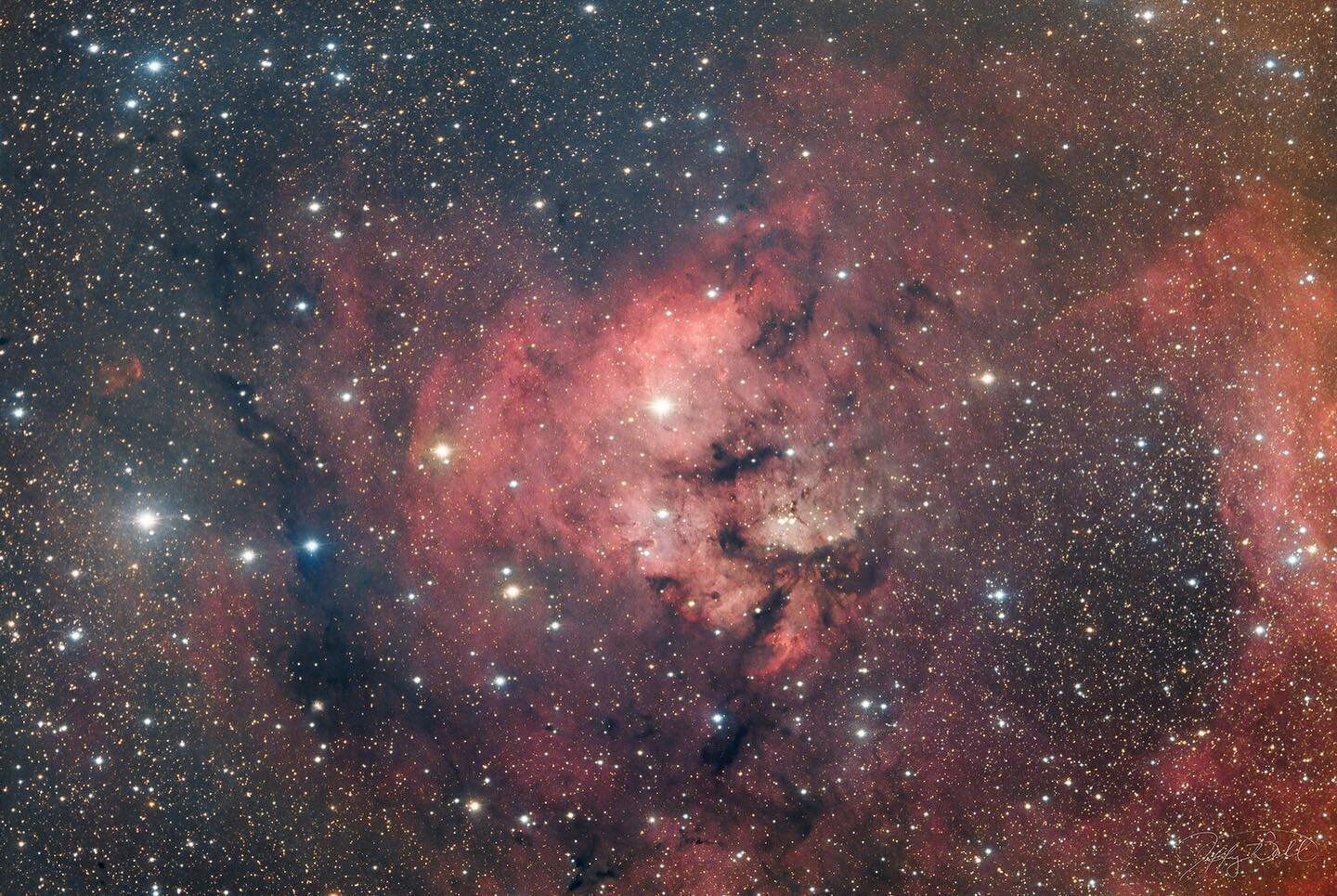
Angels in Monoceros: The Monoceros M2 Complex
The Monoceros R2 molecular complex (often shortened to Mon R2) is a massive giant molecular cloud and one of the nearest active star-forming regions to Earth. It's a dynamic stellar nursery embedded in dense gas and dust, where new stars—particularly massive ones—are actively being born.
Key Facts
Location: Southwestern part of the constellation Monoceros (the Unicorn), near the border with Orion. It's part of the larger Orion-Monoceros cloud complex.
Distance: Approximately 2,400–2,700 light-years (around 830 parsecs).
Size and Structure: The main dense core is relatively compact (a few light-years across), but the overall molecular cloud and associated nebulae span a wide area—reflection nebulae alone stretch up to about 2° in the sky. It's situated well below the galactic plane, which makes it stand out in certain observations.
Age and Activity: Star formation here began roughly 6–10 million years ago. It hosts an OB association (young, hot, massive B- and A-type stars) that illuminates surrounding dust, creating prominent reflection nebulae with bluish hues. There's also significant emission from ionized gas (red glows) and dark nebulae that appear as shadowy silhouettes blocking background light.
Notable Features:
A central hub of massive star formation with embedded clusters, molecular outflows, and HII regions.
Infrared observations (like those from VISTA or 2MASS) penetrate the dust to reveal hidden young stars and protoplanetary disks.
It's a key site for studying early stellar evolution, variability in young stellar objects (YSOs), and the interplay between massive stars and their natal clouds.
The most famous and photogenic part of Mon R2 is the region around NGC 2170 (the Angel Nebula), a striking reflection nebula with wing-like dust structures, glowing blue from scattered starlight, mixed with red emission and dark lanes. Wider views of the complex reveal a richer tapestry of colorful gas, dust filaments, and star clusters.
Credit: GROK 2/28/26
Click on image for larger view.
New Astro Camera: OM-3
Join me for a LIVE conversation about this new astro camera coming to the market. Is this the best option for you? How does it compare to other options? https://www.earthandskyphoto.com Correction: when discussing Bulb mode with Canon, I incorrectly said it had a limit of 30”. I meant to say manual exposure has a max of 30”. In bulb, you need to use a remote control or app for exposure time control. The problem is you can’t set exposure time for stills in the camera menu. I was made aware that Olympus no longer owns the OM system. It is owned by Japanese industrial Partners, a private equity firm. For content on the OM-3 for astrophotography, please see Ben Chapell’s Narrow Band channel. https://youtube.com/@TheNarrowbandChannel?si=GcWY-BM9skG9LPhY
A New Sound to the Podcast
Jeff discusses some of the new audio gear used in the podcast production.
Kool Tac and Perma Lon-no orange peel here
Dry mounting photographic prints has been, at times, a necessary evil. I always tried to avoid a dry mount, but for large prints on glossy papers it was necessary. One of the biggest problems of dry mounting was the "orange peel" look of the surface of the print once it was dry-mounted. The term is extremely accurate in describing the look, the print surface would look like that of an orange, especially when viewed at oblique angles.
I am very fortunate to live in Huntington, WV which is home to a regional wholesale framer and distributor, Mayne Framing and Supply. The experts there recently educated me on a new mounting option free from the orange peel effect. There are actually two products involved, one is the mounting board and the other is the adhesive for the print. The dry mount board is Kool Tack and the adhesive is Perma Lon. The two together produce outstanding results.
I have now mounted both glossy and matte papers with the Kool Tac/Perma Lon combination and simply love the results. The surface of the print is really just as smooth as the surface of the actual paper. Little to no mounting/dry board texture can be seen on the prints. They are simply beautiful.
Now the photographer has a mounting option that gets out of the way of the print and lets the viewer become more engaged in the print. I highly recommend Kool Tac/Perma Lon for your photographic mounting needs.
Here are two links for you.
And if you are looking for a distributor, I highly recommend Mayne Framing.
Art Show Calendar now online
The art show calendar is beginning to take shape and is now online. The calendar is now available online. The calendar lists art shows in three categories:
- Confirmed. The jury process has been completed and I have accepted an invitation to the show. If you are in the area, please come out to view and purchase the fine art prints.
- Pending. I have applied to the show and the jury process has yet to begin or is in process. If invited to participate, it is highly likely that I will accept. I will update this status as soon as I can.
- Tentative. These are shows that I have on my calendar to apply for when the jury process opens to applications. My calendar may change to not allow me to apply or accept an invitation, but it is my intention to apply and attend these shows.
I will update this page as soon as the status of a show changes. I hope to see you at a show in the near future. I am currently in final preparation for my first show in Louisville in two weeks. I will post images soon of the brand new setup and artwork on display. I am very excited about how things are coming together. Take care.
Autumn in Smoky Mountains National Park
Autumn in the Great Smoky Mountains National Park from Jeff Ball on Vimeo.
This is a first video experiment with the Canon 5DMKII while on a landscape photography visit to the Great Smoky Mountains National Park in October 2009. Capturing and constructing this video has served as a wonderful educational endeavor. I mistakenly recorded the first two video clips in SD and are not quite the quality they should be, but the other clips look wonderful on the large screen. I am also learning video editing through Adobe Premiere Elements 8.0. It crashes frequently on my PC so I am either in need of equipment upgrades or I need to get the Adobe Creative Suite with Premiere or both. I hope you enjoy the video and please contact me with any comments or questions.
NEAF 2010
An overview of the world's largest astronomical trade show. The North East Astronomy Forum was held April 17-18, 2010 in Suffern, NY. Jeff highlights the gear that caught his eye during the exhibit. You can view a larger presentation of the video at YouTube.
Trouble with YouTube, try the Vimeo file.
NEAF 2010 by Jeff Ball from Jeff Ball on Vimeo.
Jeff's Blog
Join me on photography journeys from desert landscapes to deep sky wonders.