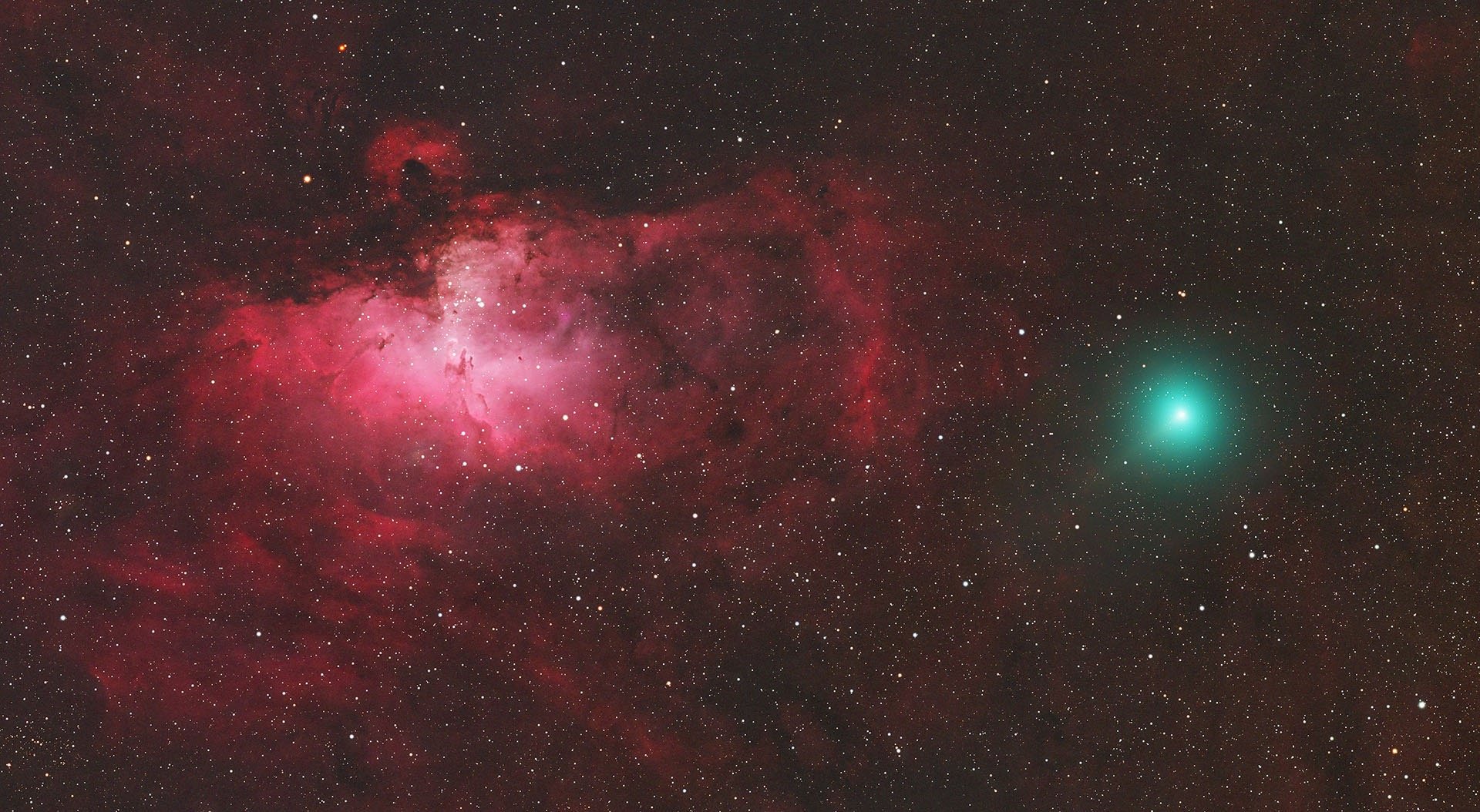
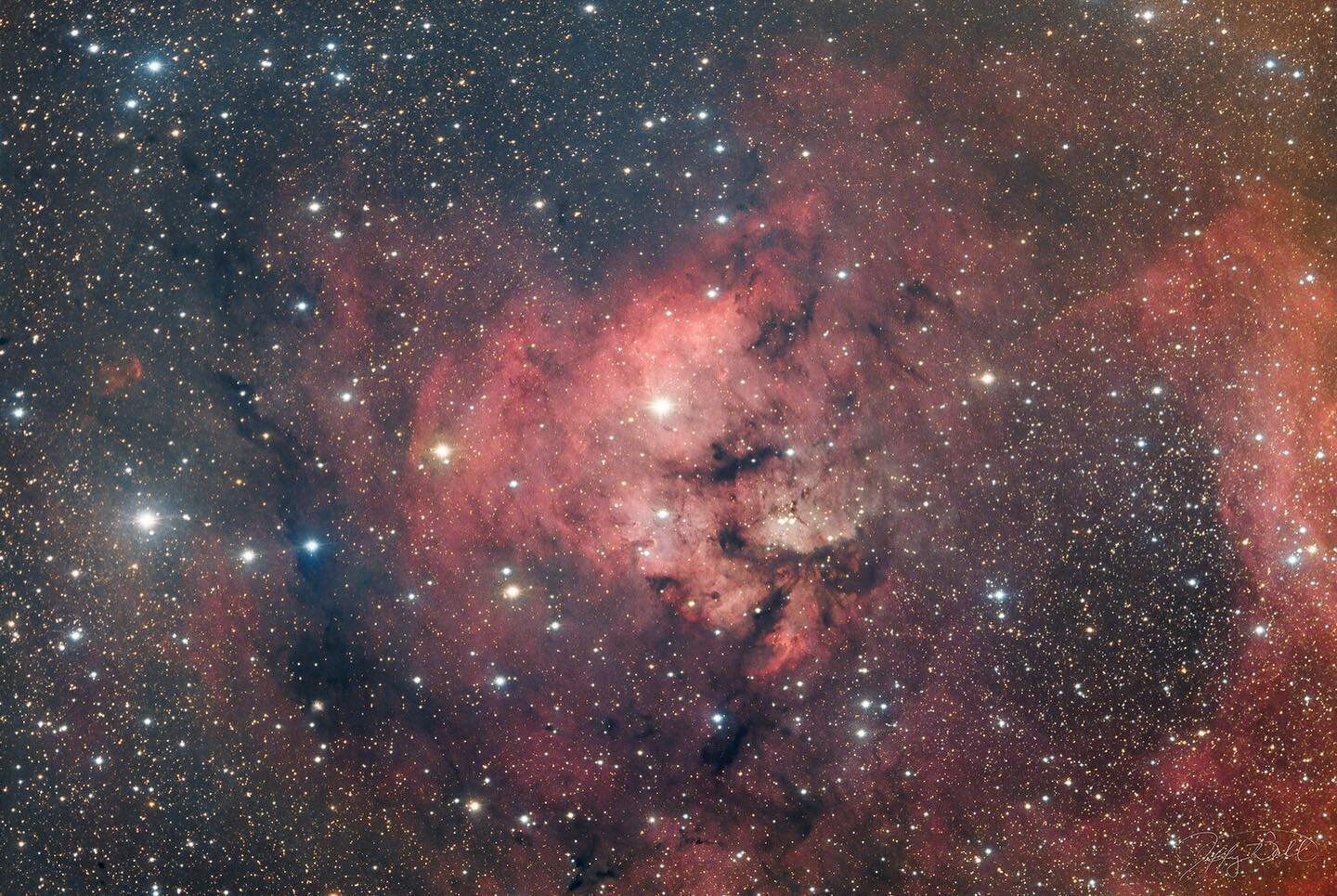
Eagle Nebula from Spruce Knob, WV (Almost Heaven Star Party 2019)
My access to the sky below 0 degrees declination is very limited. That means I must travel to image an object like M16-The Eagle Nebula. On the first night we had very nice conditions early in the evening that afforded me the opportunity to take a late summer run at The Eagle Nebula. In 1995, the Hubble telescope captured one of the most iconic images of our universe to date-the Pillars of Creation. Those pillars are in the central part of the brightest section of the nebulosity in this image. I will never forget when that image was published. It captured the imagination of the entire world at the time. For details on the image, please see this link to the Astrobin page. I hope you enjoy the image and that it spurs in you a moment to contemplate the miracle of the creation of our universe.
New Gallery: Astro Scapes
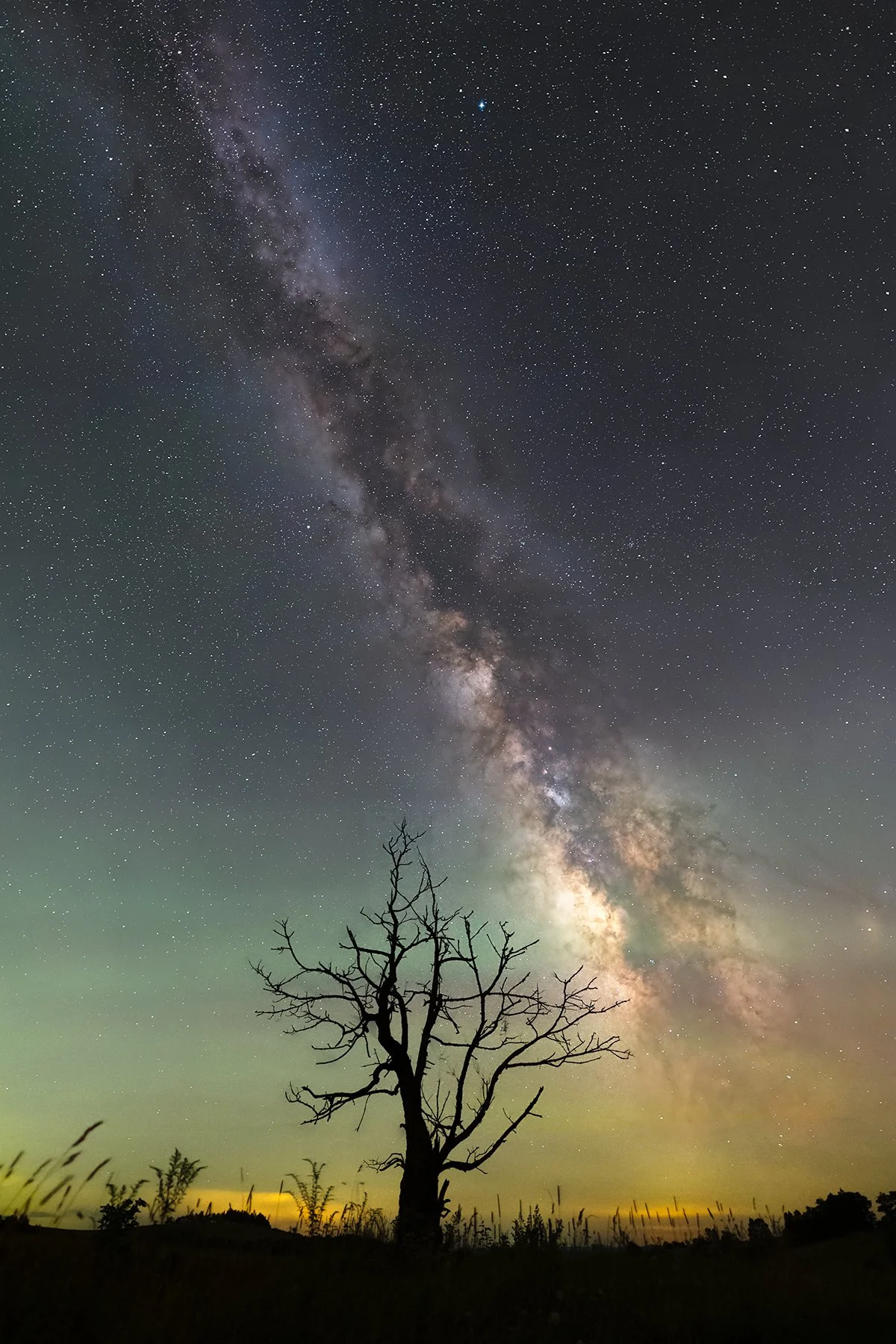
Inspired by Richard Tatti of Australia through his amazing YouTube channel, I have opened up a new gallery of images called Astro Scapes. Richard is a master of night sky images in the landscape. He inspired me to scout and execute my first light painting technique shot at the remarkable location of Spruce Knob Tower at the summit of West Virginia’s highest peak.
This gallery will include any astronomical event or skyscape that features a landscape foreground. Please take a moment to peruse the new gallery and here is the new image. of which I am quite happy with. Have a great weekend!
Don’t forget, you can click on the image for a larger preview.
First Light with iOptron Skyguider Pro from Spruce Knob, WV
My initial testing of the iOptron Skyguider Pro was very positive. On my first visit to the highest peak in West Virginia, I had 3 imaging systems going simultaneously. The first was my traditional long telescopic deep sky imaging system, and the second was my tripod based system working on my new category of images- Astro Scapes, and then the third was my modded Canon T5i on the iOptron Skyguider.
The beauty of the Skyguider is that it takes a simple polar scope alignment and then point the camera at your object and fire away. On this night, I decided to use the fast Rokinon 85mm f1.4 lens at f2. Exposures were 30 seconds and I set out to capture about an hour of data. No darks or flats were utilized. It was truly an experiment. And I am very happy with the result. This system is a great grab and go or supplement to my main imaging setup. I am looking forward to many more nights with a fast lens and the iOptron Skyguider Pro.
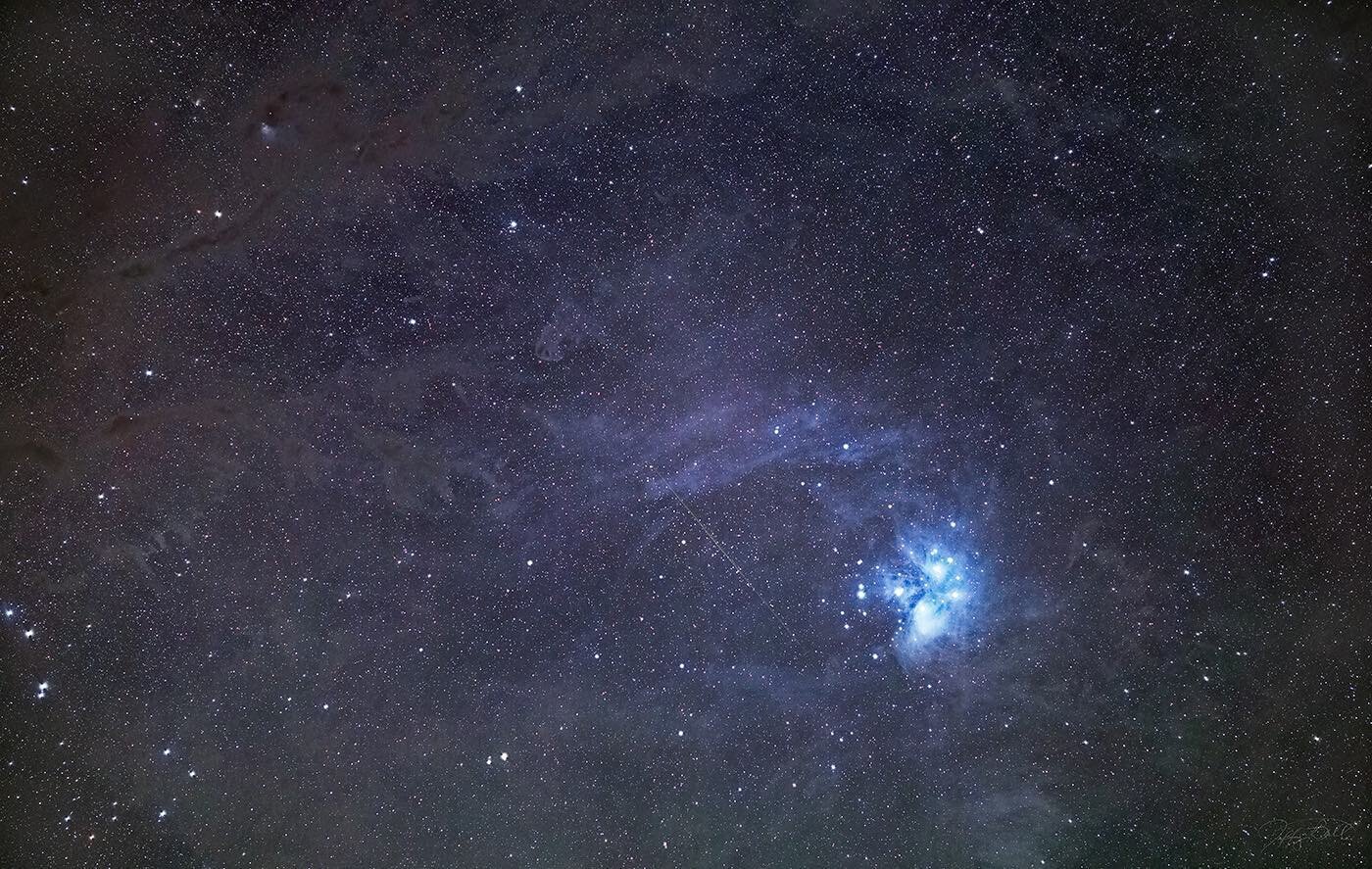
The image is near the core of the Milky Way featuring Messier objects M16, M17, and M24.
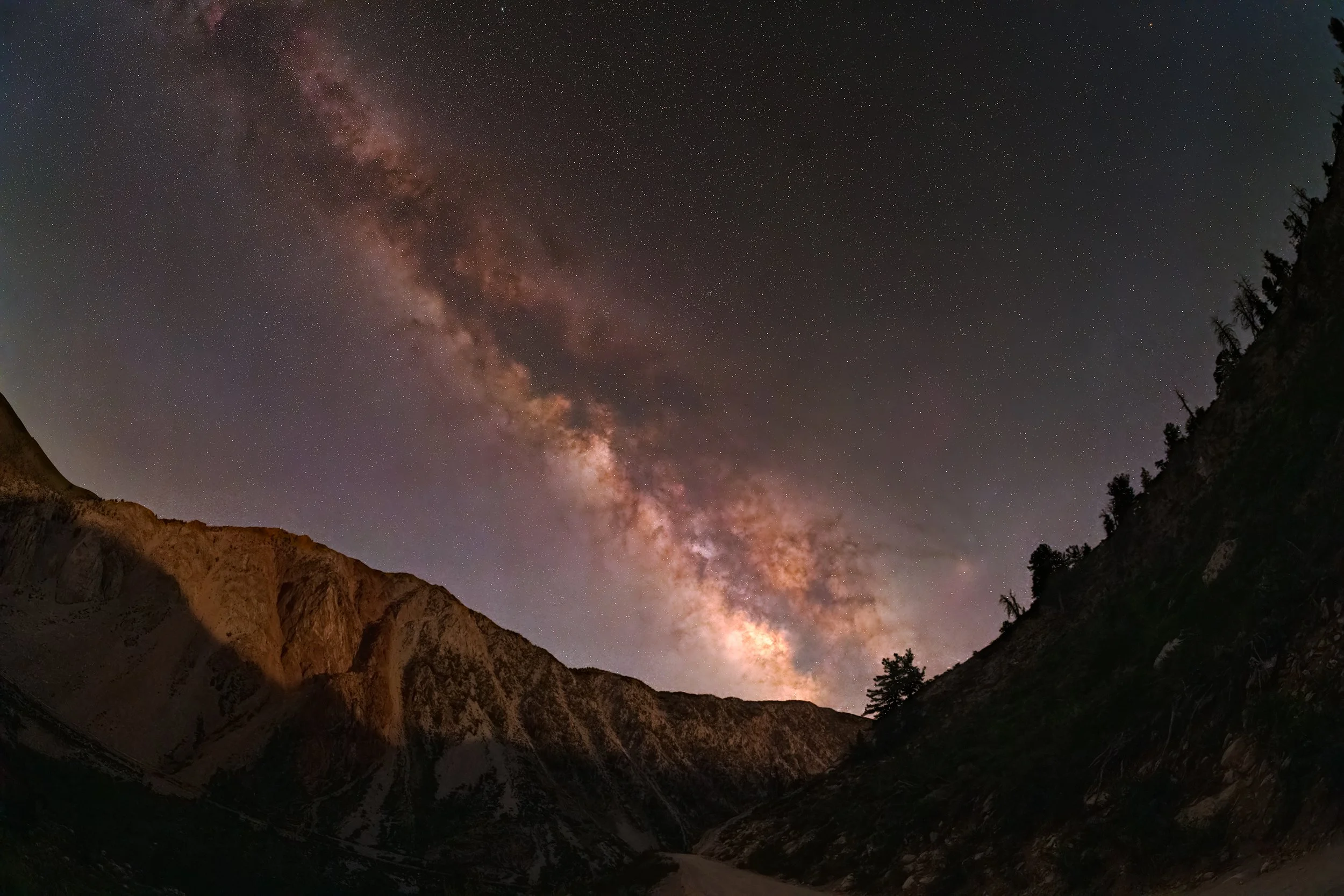
AHSP Milky Way (Almost Heaven Star Party) 2019
Every August new Moon, the Northern Virginia Astronomy Club (NOVAC) hosts the Almost Heaven Star Party at the Experience Learning Center on Spruce Knob near Circleville, WV. The event is extremely well organized with many extracurricular activities for the entire family. Of course, the location for astronomy is ideal with some of the darkest skies east of the Mississippi.
I have been to the event multiple times, but I believe this was my first time back in over 8 years. The familiarity helps in pre-visualizing potential nightscape compositions. I had a couple of compositions in mind, when all of a sudden right in front of my own campsite was the best composition of the night.
Earlier in the evening, around dusk, a young family arrived a little late and began to set up their tent. It was obvious from the discussions that this was their first outing with this tent, and may have even been the family’s first ever camping expedition. How fun! The children were very excited and helpful in setting up the tent. The tent color is actually green, but with the red lights inside illuminating the walls it appears yellow-orange. This is the tent on the right.
The tent on the left was red with red lights complementing the color while illuminated. The owner of this tent was very tired after setting up his tent. He remarked he was simply going to turn in for the night. I implored him to set up his scope and observe for a while. Friday night looked like one of the better nights of the star party and he really shouldn’t miss out on Spruce Knob skies. He heeded my advice and setup his scope and had a few hours of observing under these outstanding skies.
That is the behind the scenes of this image….people from all walks of life in various conditions all gathering at a very special location to observe the wonders of God’s creation. More of him and less of me. I hope you enjoy the image.
Technical details at my astrobin account.
Spruce Knob, West Virginia
Spruce Knob for a spectacular 3 nights. Well…2.5 nights. Some cloud cover on the third night. Spruce Knob is the highest point in West Virginia at over 4,800’. It is one of the darkest skies in the east. I had never imaged from the summit, which is known for steady winds. But, the forecast was great and I decided to head up 2 nights before the Almost Heaven Star Party began at the Experience Learning Center about 800’ below the summit. I was so fortunate to meet another astronomer on these two nights. Alone at the summit could be quite eerie. So, Ivan from Buffalo brought his beautiful 20” scope to observe from Spruce. That’s right, serious astronomers drive all day to observe from the highest point in WV. There are challenging visual objects that require the best dark conditions possible. Here are two images of my setup. The first at the summit and the second from Experience Learning. I am so happy with the images to come. Stay tuned. It will take me a while to process.
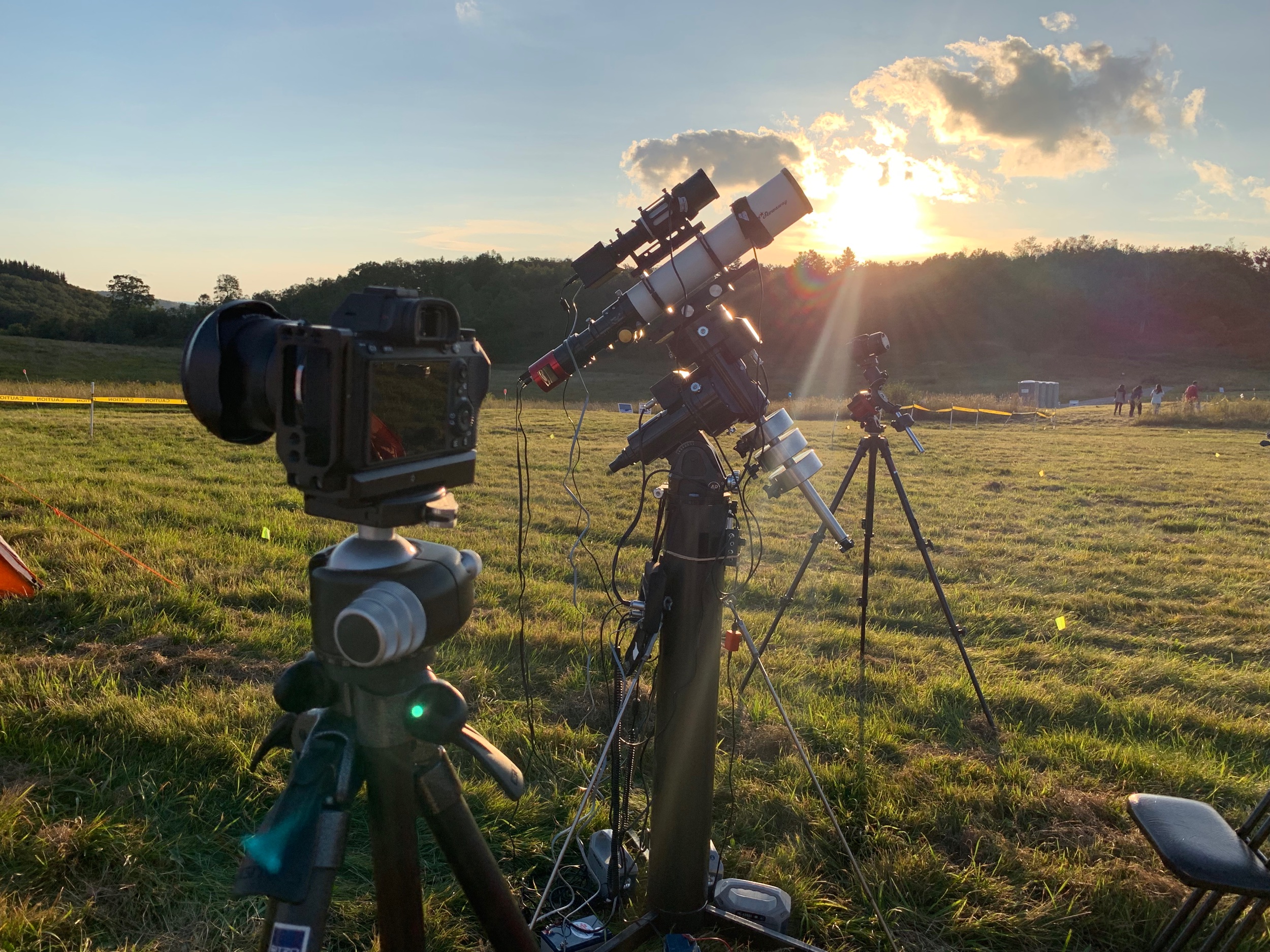
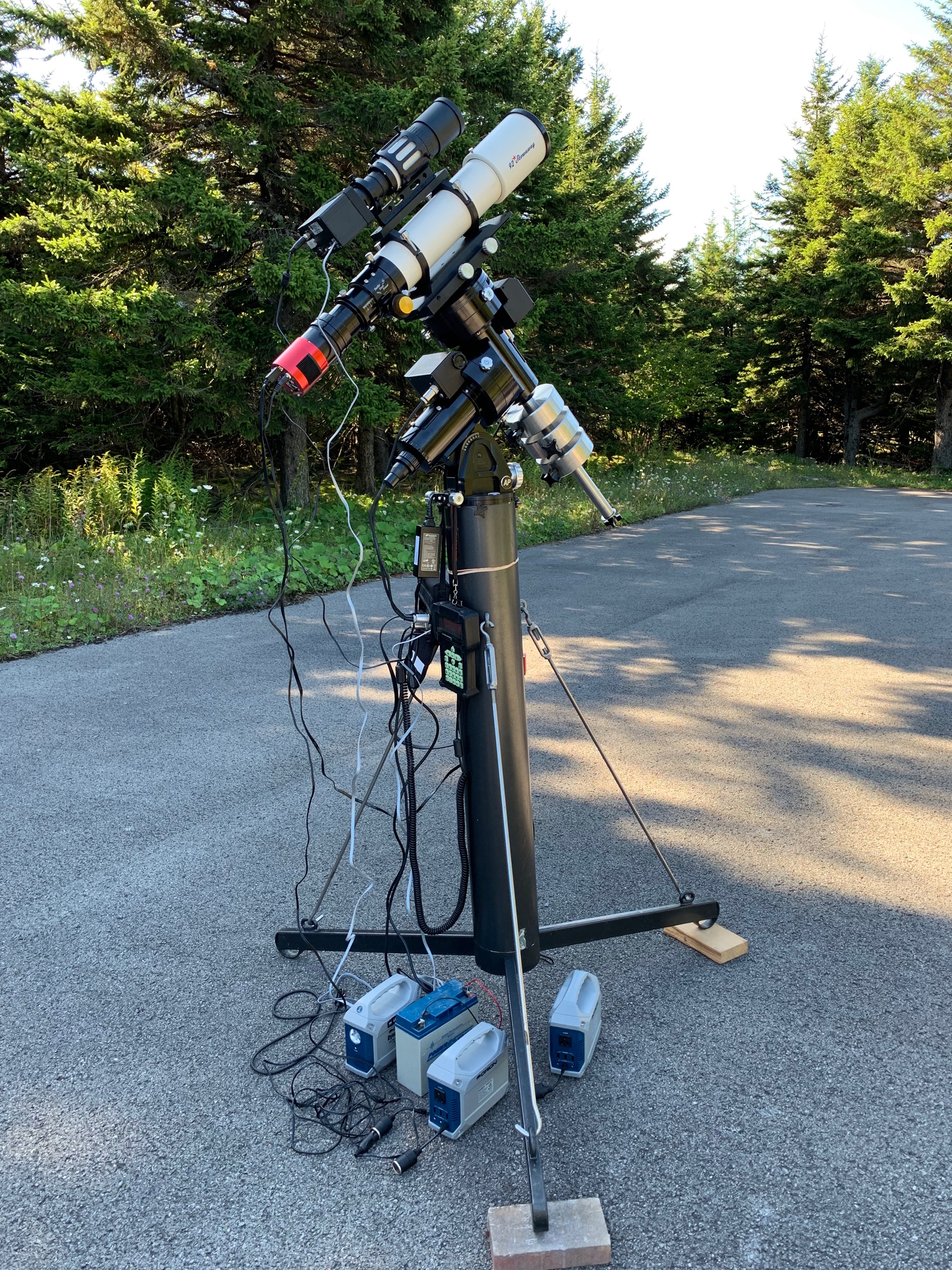
First light on Spruce Knob.
The Herschel 400 Astronomical League Project is underway
It’s not too late to join. We are about 30 objects into the Herschel 400. Hope to get another session in soon. Please subscribe to the YouTube channel so you get notifications on LIVE STREAMS.
Angels in Monoceros: The Monoceros M2 Complex
The Monoceros R2 molecular complex (often shortened to Mon R2) is a massive giant molecular cloud and one of the nearest active star-forming regions to Earth. It's a dynamic stellar nursery embedded in dense gas and dust, where new stars—particularly massive ones—are actively being born.
Key Facts
Location: Southwestern part of the constellation Monoceros (the Unicorn), near the border with Orion. It's part of the larger Orion-Monoceros cloud complex.
Distance: Approximately 2,400–2,700 light-years (around 830 parsecs).
Size and Structure: The main dense core is relatively compact (a few light-years across), but the overall molecular cloud and associated nebulae span a wide area—reflection nebulae alone stretch up to about 2° in the sky. It's situated well below the galactic plane, which makes it stand out in certain observations.
Age and Activity: Star formation here began roughly 6–10 million years ago. It hosts an OB association (young, hot, massive B- and A-type stars) that illuminates surrounding dust, creating prominent reflection nebulae with bluish hues. There's also significant emission from ionized gas (red glows) and dark nebulae that appear as shadowy silhouettes blocking background light.
Notable Features:
A central hub of massive star formation with embedded clusters, molecular outflows, and HII regions.
Infrared observations (like those from VISTA or 2MASS) penetrate the dust to reveal hidden young stars and protoplanetary disks.
It's a key site for studying early stellar evolution, variability in young stellar objects (YSOs), and the interplay between massive stars and their natal clouds.
The most famous and photogenic part of Mon R2 is the region around NGC 2170 (the Angel Nebula), a striking reflection nebula with wing-like dust structures, glowing blue from scattered starlight, mixed with red emission and dark lanes. Wider views of the complex reveal a richer tapestry of colorful gas, dust filaments, and star clusters.
Credit: GROK 2/28/26
Click on image for larger view.
New Astro Camera: OM-3
Join me for a LIVE conversation about this new astro camera coming to the market. Is this the best option for you? How does it compare to other options? https://www.earthandskyphoto.com Correction: when discussing Bulb mode with Canon, I incorrectly said it had a limit of 30”. I meant to say manual exposure has a max of 30”. In bulb, you need to use a remote control or app for exposure time control. The problem is you can’t set exposure time for stills in the camera menu. I was made aware that Olympus no longer owns the OM system. It is owned by Japanese industrial Partners, a private equity firm. For content on the OM-3 for astrophotography, please see Ben Chapell’s Narrow Band channel. https://youtube.com/@TheNarrowbandChannel?si=GcWY-BM9skG9LPhY
Jeff's Blog
Join me on photography journeys from desert landscapes to deep sky wonders.