The Herschel 400 Astronomical League Project is underway
It’s not too late to join. We are about 30 objects into the Herschel 400. Hope to get another session in soon. Please subscribe to the YouTube channel so you get notifications on LIVE STREAMS.
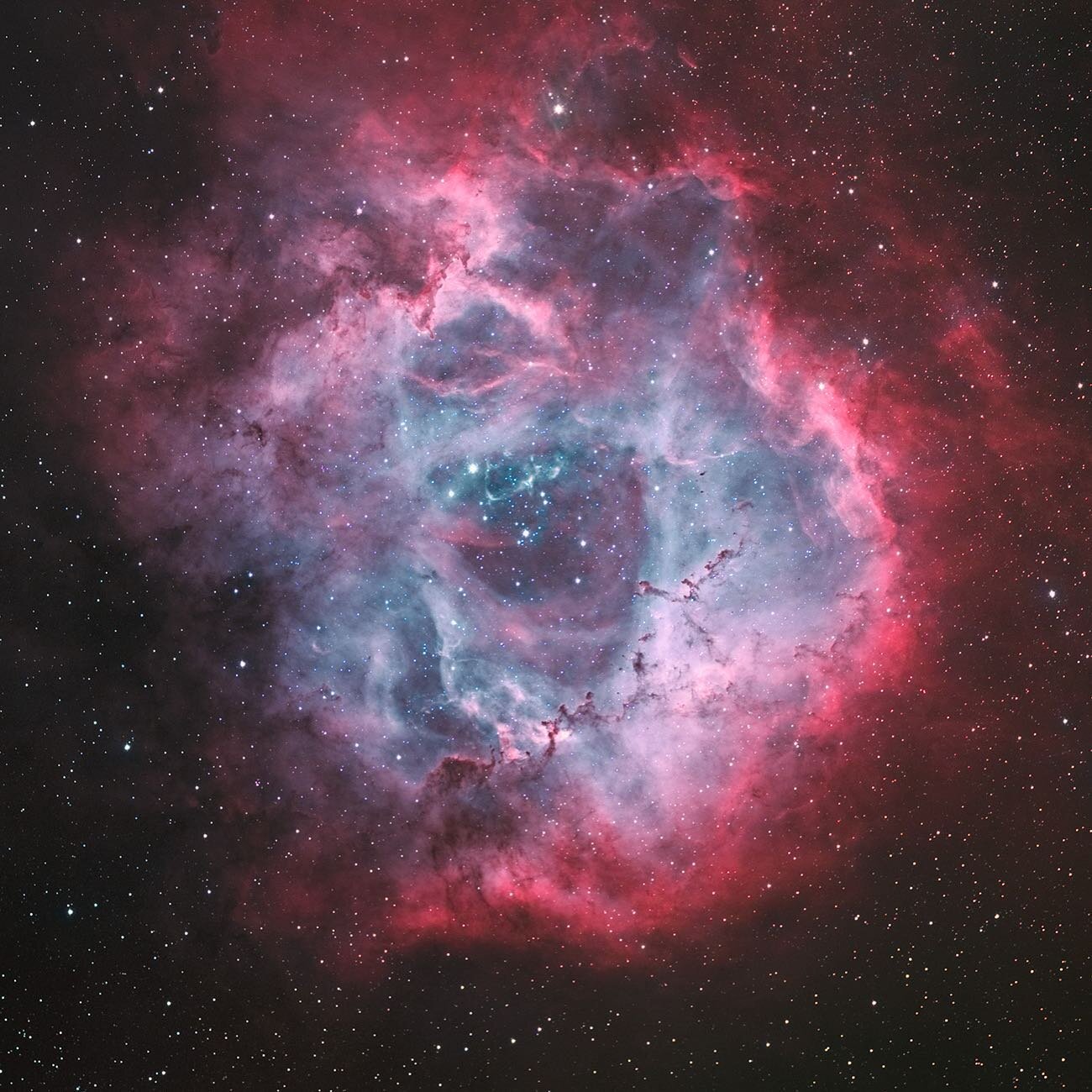
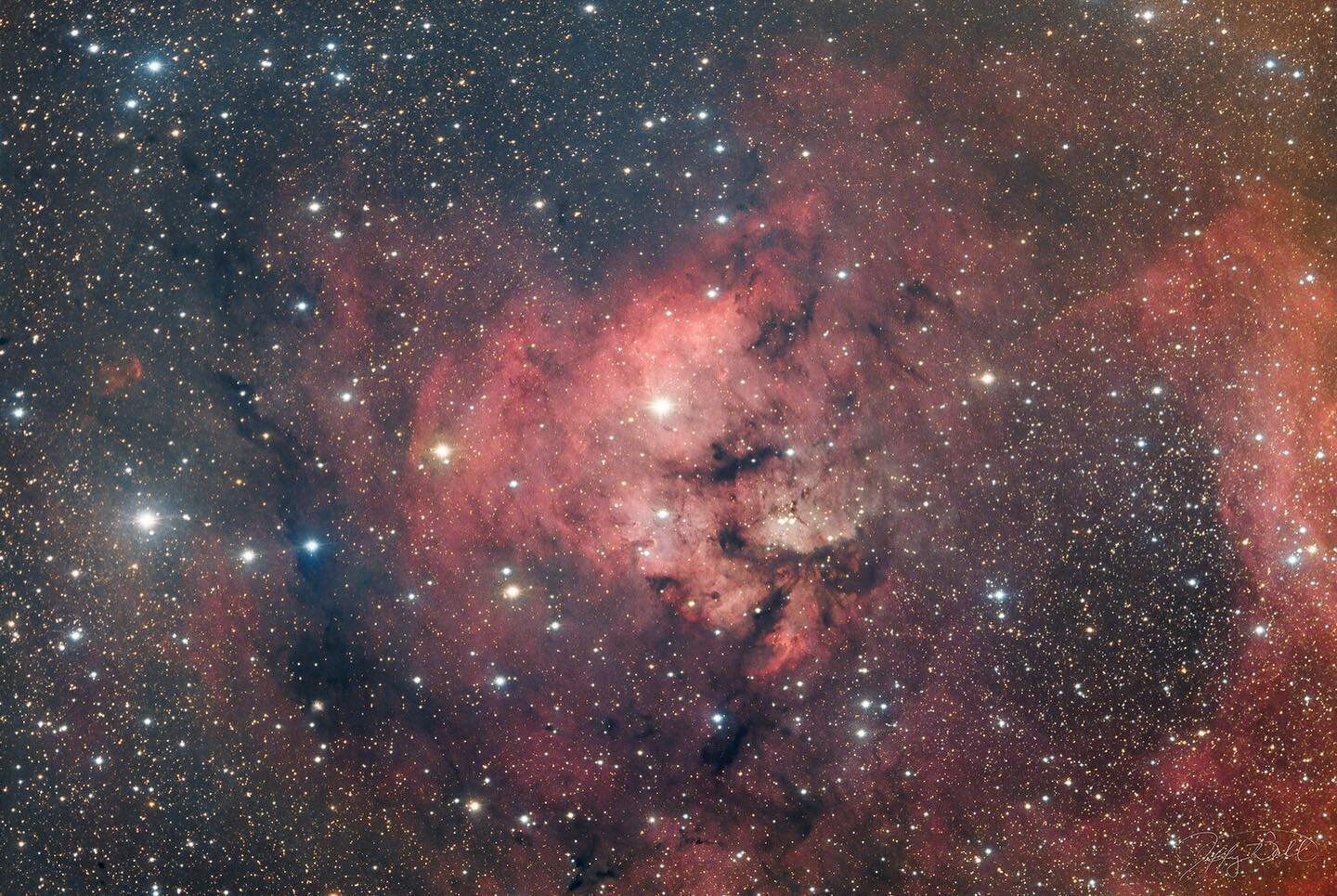
Angels in Monoceros: The Monoceros M2 Complex
The Monoceros R2 molecular complex (often shortened to Mon R2) is a massive giant molecular cloud and one of the nearest active star-forming regions to Earth. It's a dynamic stellar nursery embedded in dense gas and dust, where new stars—particularly massive ones—are actively being born.
Key Facts
Location: Southwestern part of the constellation Monoceros (the Unicorn), near the border with Orion. It's part of the larger Orion-Monoceros cloud complex.
Distance: Approximately 2,400–2,700 light-years (around 830 parsecs).
Size and Structure: The main dense core is relatively compact (a few light-years across), but the overall molecular cloud and associated nebulae span a wide area—reflection nebulae alone stretch up to about 2° in the sky. It's situated well below the galactic plane, which makes it stand out in certain observations.
Age and Activity: Star formation here began roughly 6–10 million years ago. It hosts an OB association (young, hot, massive B- and A-type stars) that illuminates surrounding dust, creating prominent reflection nebulae with bluish hues. There's also significant emission from ionized gas (red glows) and dark nebulae that appear as shadowy silhouettes blocking background light.
Notable Features:
A central hub of massive star formation with embedded clusters, molecular outflows, and HII regions.
Infrared observations (like those from VISTA or 2MASS) penetrate the dust to reveal hidden young stars and protoplanetary disks.
It's a key site for studying early stellar evolution, variability in young stellar objects (YSOs), and the interplay between massive stars and their natal clouds.
The most famous and photogenic part of Mon R2 is the region around NGC 2170 (the Angel Nebula), a striking reflection nebula with wing-like dust structures, glowing blue from scattered starlight, mixed with red emission and dark lanes. Wider views of the complex reveal a richer tapestry of colorful gas, dust filaments, and star clusters.
Credit: GROK 2/28/26
Click on image for larger view.
New Astro Camera: OM-3
Join me for a LIVE conversation about this new astro camera coming to the market. Is this the best option for you? How does it compare to other options? https://www.earthandskyphoto.com Correction: when discussing Bulb mode with Canon, I incorrectly said it had a limit of 30”. I meant to say manual exposure has a max of 30”. In bulb, you need to use a remote control or app for exposure time control. The problem is you can’t set exposure time for stills in the camera menu. I was made aware that Olympus no longer owns the OM system. It is owned by Japanese industrial Partners, a private equity firm. For content on the OM-3 for astrophotography, please see Ben Chapell’s Narrow Band channel. https://youtube.com/@TheNarrowbandChannel?si=GcWY-BM9skG9LPhY
Easter Veil (NGC 6992)
Part of the Cygnus Loop, the Eastern Veil Nebula is one of the brighter sections of the loop and is visible in telescopes, especially with the aid of contrast enhancing filters.
Image acquisition: Taken with an AP130EDTGT and modified Canon T5i camera. 60 exposures of 2 minutes at ISO 1600 unguided were combined and processed in Pixinsight with final enhancement in PS CS. Taken during Greenbank Star Quest 2018.
App recommendation: Sky Safari AR

Looking for a free star gazing app? Want augmented reality, too? This is the app that I use to control my telescope and to get a fix on what is up in the night sky you simply point your phone or iPad at the sky and the app shows you exactly what objects are visible Planets, stars, deep sky objects like galaxies, clusters, and nebulae. I have the paid version and I am not sure if the free version has any annoying features, but so far I have found none in my trial. Give it a download tonight
Astrophoto Setup at Green Bank Observatory
Pretty nice weather was had at the 2018 Green Bank Star Quest. Nearly every night had excellent moments of clarity. This is the setup I used for the week. The Astro-Physics 130EDFGT riding on the Astro-Physics Mach1GTO mount with the modified Canon T5i camera and new Rokinon 85mm f1.4 lens. I used both instruments in imaging for the 4 nights. More images are in the processing cue. In this image you can see the Green Bank Telescope in the lower left quadrant. The GBT was very active during our stay at Green Bank.
Northern Cygnus from Green Bank Star Quest 2018
A new image was added today from the recent Green Bank Star Quest.
The bright star in the field is Deneb, one of the stars of the summer triangle. The uncanny likeness of the two closest nebulae to Deneb to the North America continent and a Pelican are remarkable. The Butterfly Nebula is located off of the second brightest star in the image, Sadr. The North American Nebula is a great visual target with binoculars from a dark sky site. It is larger and more diffuse than most observers realize. The highest contrast area is in the vicinity of the Gulf of Mexico. For a detailed notation of the area, please see this link.
Image acquisition: Taken at the Green Bank Star Quest 2018. A test of new Rokinon 85mm f1.4 shot at f4. No guiding for the 20 five minute exposures. All processing in Pixinsight.
NASA Gamma Ray Bursts

A fantastic article on the origin of Gamma Ray Bursts and the multi-device detection system that is now in place.
Jeff's Blog
Join me on photography journeys from desert landscapes to deep sky wonders.