The San Juan River Exhibit Debut
On Friday night the San Juan River exhibit opened and was very well received. I am very happy with the look and feel of the exhibit. It is really my first attempt at building a gallery style show and I am hopeful to place the show in other galleries. Now my attention will turn to some other publications I am seeking on this as well as updating the website for the portfolio and individual webpages for each portfolio image. All prints will be in a limited production of 100 and will be available in one print size. More to come soon so stay tuned. Also, more Podcasts to come from Florida as well as on numbering prints. A lot to come, so stay tuned and thanks for your interest.
Getting closer to AP gear decisions!
OK, things are getting very clear now. I have settled on the 135 f2 Canon L lens for my main imaging lens for the next few months. After comparing the field of view with the 200mm, I really like the compositions I have in mind for the 135mm much better. Reviews for the 135 are very good and like I mentioned before, Loke Tan's work with the lens is excellent. I am not 100% sure on the camera yet. It is between the Hutech modified Canon 350D or the XTi. From my readings it appears that the 350D may have some advantages for one night sessions over the XTi and therefore be the most appropriate camera for my needs. The mount is a G11 which will be most graciously loaned to me by my very good friend Dave Tolley. So, the Astro-Photography picture is getting very clear and I am hoping to pursue my first compositions this summer. Stay tuned for further updates.
Update: The weather did not cooperate for photographic opportunities of the Lunar Eclipse, but we did catch some of the reddish glow of the total eclipse during the early moments of the penumbra eclipse. The clouds parted just enough to see the beautiful glow on the totally eclipsed portion of the moon.
Maybe I found it!
Wrapping up a crazy weekend with a very successful opening of the San Juan River exhibit. I am writing to follow up on some of the "return to astrophotography" musings I posted earlier. To reiterate some of my criteria for re-entry:
- Ease of setup. This means no computers, no autoguiding, and lightweight mounts and scopes.
- Quality data in one night. The system must be fast and produce superb images.
- Everything must come together in a unique package that I am not seeing done by anyone else. This is very challenging, but we will give it a try.
Addendum: After further research, it appears that the Canon 200mm f2.8L II lens is very good giving a little tighter field of view at a very affordable price. So this is perhaps the direction now.
Can it be done?
I have been researching the latest in astrophotography since my last photograph was taken nearly 3 years ago now. I am not sure I can do what I set out to do in my original post a few days ago. There are plenty of opportunities with scenic astrophotography with my current camera gear and I am preparing to explore those. My first efforts will be with next Saturday's Lunar eclipse at evening twilight. I have a composition in mind and I am hopeful for cooperative skies. But as far as imaging with a telescope, I am not sure I can setup a simple imaging system capable of acquiring quality data in one night of imaging. The major question I have is whether I can accomplish this without autoguiding. Astrophotography is complicated enough and the equipment starts to pile up unbelievably. I am trying to avoid the "need" for a computer at the telescope and thus eliminate an autoguiding setup. Autoguiding requires a separate scope, more batteries for computer and autoguider, and more cables. My hope is that I can image with the FSQ and focal reducer at f3.6 for at least 5 minutes with the Mach1 mount with periodic error correction turned on and calibrated. Will this work? I don't know, but I am in the process of evaluating the setup and its capabilities on paper at least. Stay tuned and hope for clear skies next Saturday.
Astrophotography revisited
Well, I am starting to get an itch to return to astrophotography. If I do, it is only because I feel that there is something unique I might be able to bring to the genre. I have been casually thinking about how to do it and here are some of my thoughts. First, it must be extremely convenient. What do I mean by this? Well, the equipment cannot be monstrous and I must be able to accomplish a significant image acquisition in one night. This means that I need to acquire enough data in one night to come up with a portfolio quality image. So that leads me to looking into fast short refractors, DSLRs, and very portable mounts with accurate tracking which require no autoguiding. The lead candidate for refractor is the Tak FSQ. The camera would be a modified Canon DSLR and the mount would be the new Astro-Physics Mach1. All of these together would yield a very light-weight setup, virtually airline transportation capable. I have no interest in investing in an off-site remote imaging station in the high elevations of New Mexico or Arizona. I primarily want a setup that I can take out on a clear night and get some significant imaging accomplished. When I get the chance to take the system to a remote location for an extended amount of time, the imaging system that I have chosen will more than meet those needs. So, just thinking out loud on what may or may not ever happen, but it is fun to think about.
The Herschel 400 Astronomical League Project is underway
It’s not too late to join. We are about 30 objects into the Herschel 400. Hope to get another session in soon. Please subscribe to the YouTube channel so you get notifications on LIVE STREAMS.
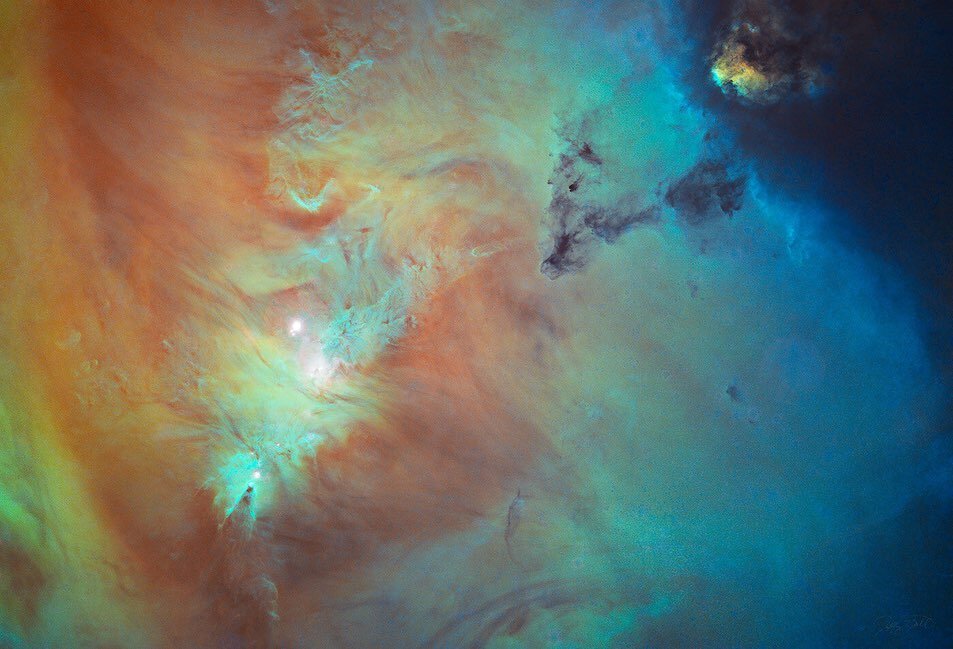
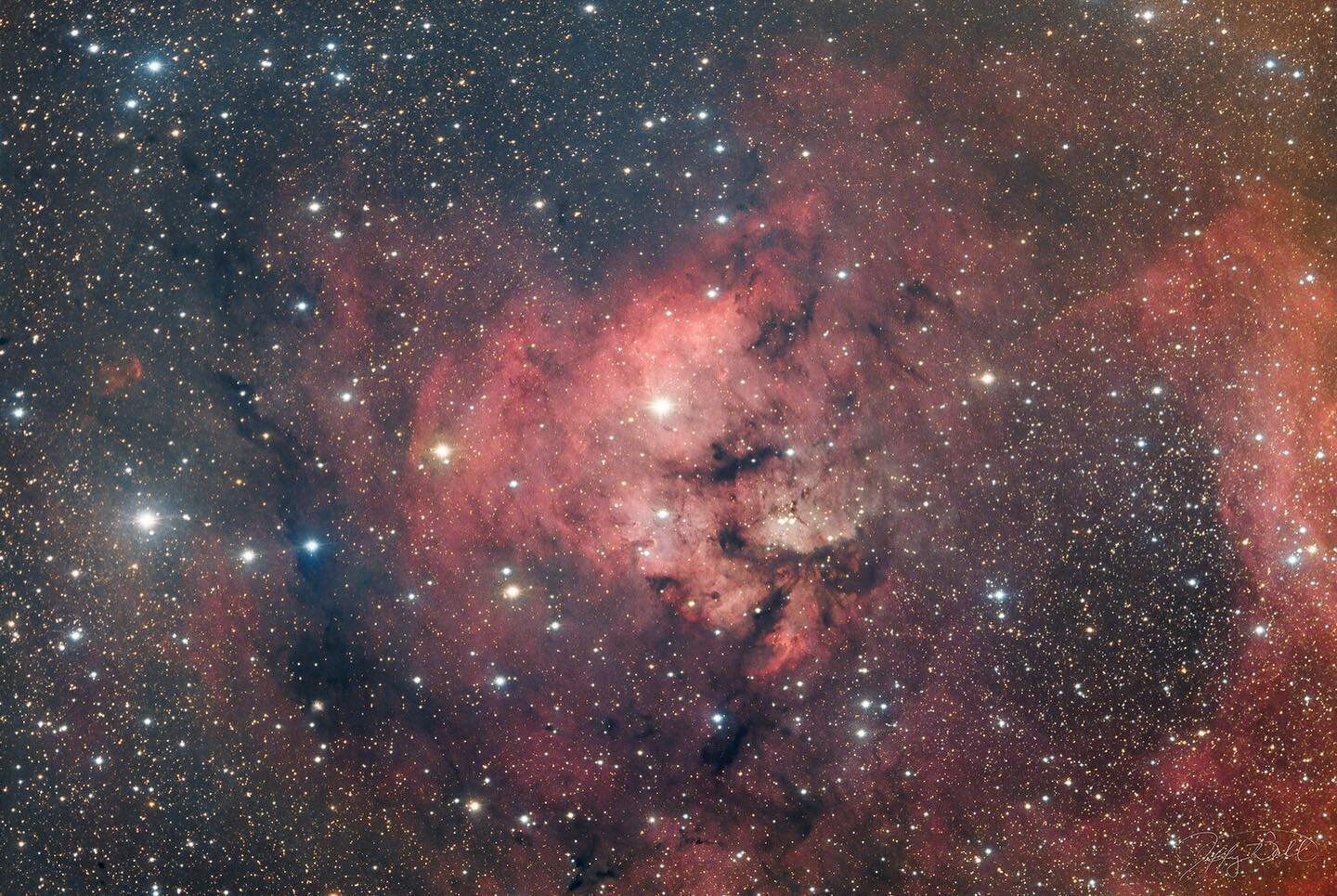
Angels in Monoceros: The Monoceros M2 Complex
The Monoceros R2 molecular complex (often shortened to Mon R2) is a massive giant molecular cloud and one of the nearest active star-forming regions to Earth. It's a dynamic stellar nursery embedded in dense gas and dust, where new stars—particularly massive ones—are actively being born.
Key Facts
Location: Southwestern part of the constellation Monoceros (the Unicorn), near the border with Orion. It's part of the larger Orion-Monoceros cloud complex.
Distance: Approximately 2,400–2,700 light-years (around 830 parsecs).
Size and Structure: The main dense core is relatively compact (a few light-years across), but the overall molecular cloud and associated nebulae span a wide area—reflection nebulae alone stretch up to about 2° in the sky. It's situated well below the galactic plane, which makes it stand out in certain observations.
Age and Activity: Star formation here began roughly 6–10 million years ago. It hosts an OB association (young, hot, massive B- and A-type stars) that illuminates surrounding dust, creating prominent reflection nebulae with bluish hues. There's also significant emission from ionized gas (red glows) and dark nebulae that appear as shadowy silhouettes blocking background light.
Notable Features:
A central hub of massive star formation with embedded clusters, molecular outflows, and HII regions.
Infrared observations (like those from VISTA or 2MASS) penetrate the dust to reveal hidden young stars and protoplanetary disks.
It's a key site for studying early stellar evolution, variability in young stellar objects (YSOs), and the interplay between massive stars and their natal clouds.
The most famous and photogenic part of Mon R2 is the region around NGC 2170 (the Angel Nebula), a striking reflection nebula with wing-like dust structures, glowing blue from scattered starlight, mixed with red emission and dark lanes. Wider views of the complex reveal a richer tapestry of colorful gas, dust filaments, and star clusters.
Credit: GROK 2/28/26
Click on image for larger view.
New Astro Camera: OM-3
Join me for a LIVE conversation about this new astro camera coming to the market. Is this the best option for you? How does it compare to other options? https://www.earthandskyphoto.com Correction: when discussing Bulb mode with Canon, I incorrectly said it had a limit of 30”. I meant to say manual exposure has a max of 30”. In bulb, you need to use a remote control or app for exposure time control. The problem is you can’t set exposure time for stills in the camera menu. I was made aware that Olympus no longer owns the OM system. It is owned by Japanese industrial Partners, a private equity firm. For content on the OM-3 for astrophotography, please see Ben Chapell’s Narrow Band channel. https://youtube.com/@TheNarrowbandChannel?si=GcWY-BM9skG9LPhY
Jeff's Blog
Join me on photography journeys from desert landscapes to deep sky wonders.